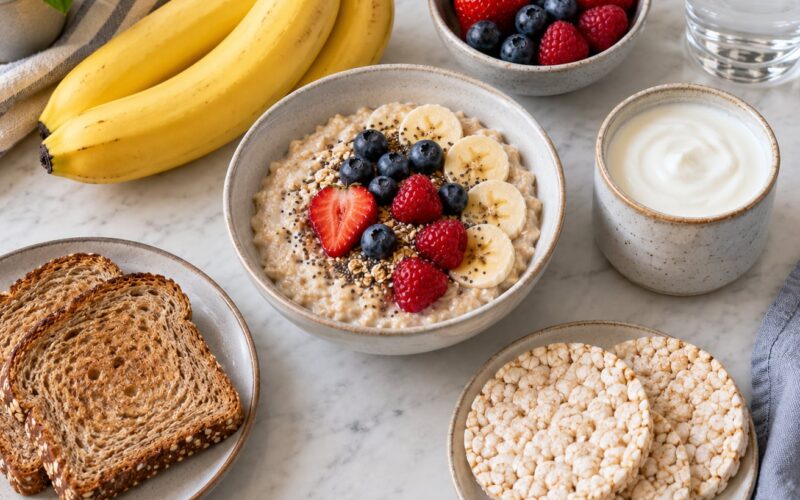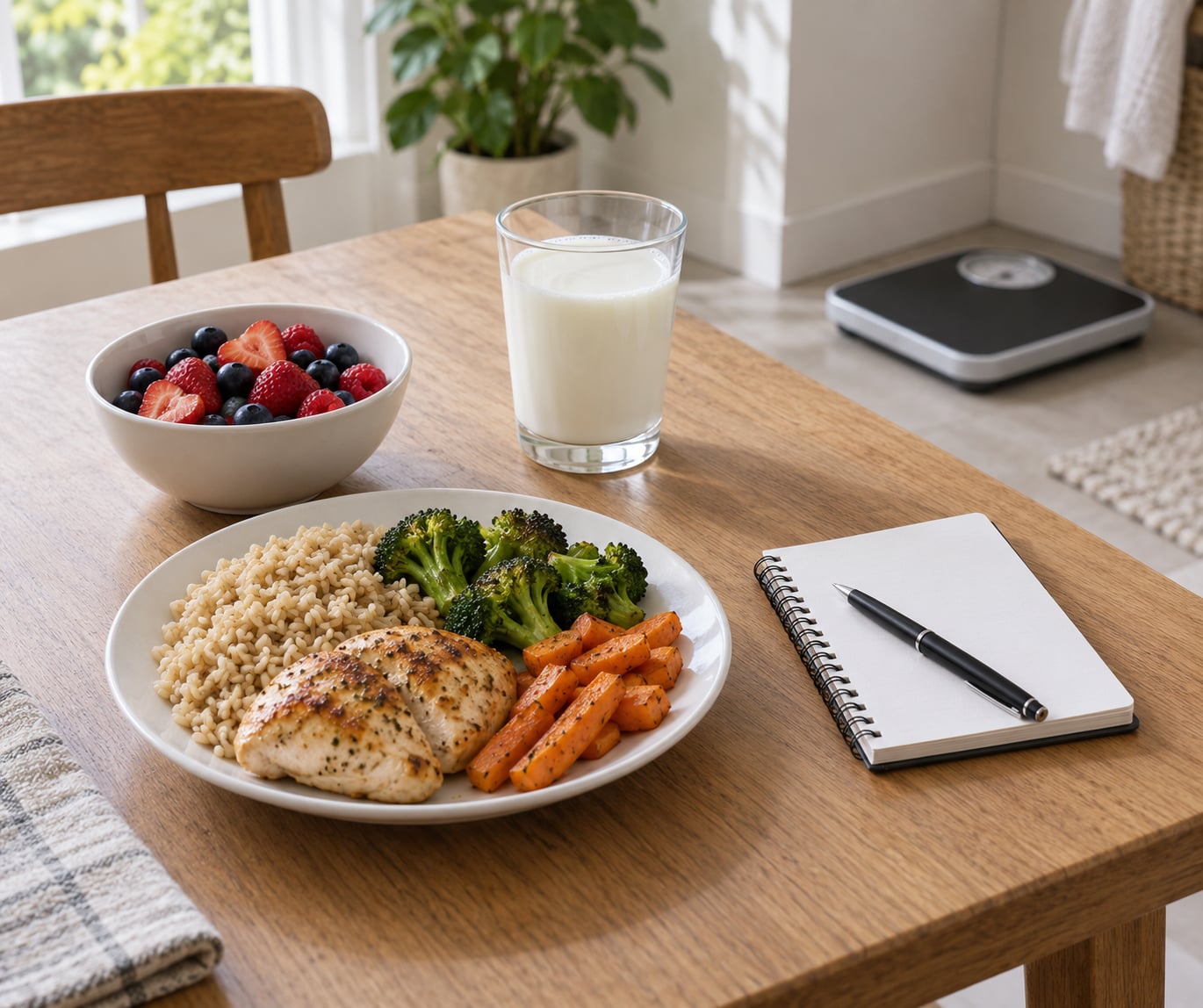
A slow bulk is a muscle-gaining phase run at a deliberately small calorie surplus, roughly 5-15% or 150-300 extra calories a day, so your bodyweight rises by only about 0.25-0.5% a week. It suits beginners who gain fat easily, lean intermediates, and anyone coming back to lifting after a layoff. Updated for 2026.
If you are working out what a slow bulk is and who should do one, the honest answer is that the surplus you can actually hold beats the surplus that sounds impressive on paper. Here is what the approach involves, who it fits, and who is better off staying at maintenance for now.
What follows is general information, not personal nutrition advice. If you have a medical condition, take medication, or have a history of disordered eating, talk to your doctor or a registered dietitian before changing your intake.
Table of Contents
- What Is a Slow Bulk?
- Why Do People Use a Slow Bulking Approach?
- Who Should Do a Slow Bulk?
- Beginners and skinny-fat trainees
- Intermediates already near 18-20% body fat
- Natural lifters who want to stay lean
- Anyone returning after a training layoff
- People who finished a cutting phase
- Who should skip it for now
- Is a Slow Bulk the Same as an Ordinary Bulk?
- What Does a Slow Bulk Look Like in Practice?
- How Do You Start a Slow Bulk?
- 1. Confirm the goal is worth a bulk
- 2. Establish what maintenance actually is
- 3. Add a small amount, not a large one
- 4. Hold protein steady first
- 5. Keep the food manageable
- 6. Reassess after several weeks
- 7. Adjust once, not daily
- How Much of a Calorie Surplus Do You Need?
- How Quickly Should You Gain Weight on a Slow Bulk?
- What Should You Eat During a Slow Bulk?
- How Do You Track a Slow Bulk?
- How Do You Know When to Stop Bulking?
- Frequently Asked Questions
- Can you build muscle without eating in a calorie surplus?
- How long should I do a slow bulk before deciding whether it works?
- Does a slow bulk cause more fat gain than eating at maintenance?
- Can you slow bulk while following a vegetarian or vegan diet?
- Should I move straight from a cutting phase into a slow bulk?
- Conclusion: Decide Whether Slow Bulking Fits Your Goal
What Is a Slow Bulk?
A slow bulk is a bulking phase done at a deliberately small calorie surplus of about 5-15% above maintenance, or roughly 150-300 extra calories a day, with a target rate of weight gain of around 0.25-0.5% of your bodyweight per week. The goal is to add muscle while keeping fat gain minimal, so the cutting phase that follows is short and manageable.
Three numbers define it: the size of the surplus, the speed of weight gain, and the protein target. Most slow bulks land somewhere between 1.6 and 2.2 grams of protein per kilogram of bodyweight per day, which is the range associated with the best muscle gains in the sports nutrition literature.
Two words get confused here. A lean bulk and a clean bulk usually mean the same thing as a slow bulk. A clean bulk does not mean eating only “clean” food. It describes the rate of gain, not the food choices.
Why Do People Use a Slow Bulking Approach?
The reason is arithmetic. A muscle-gaining surplus is only partly converted to muscle, and a larger surplus mostly buys fat. That fat then has to come off later, and the cut is the part most people dislike.
Slow bulking is usually chosen for one of four reasons.
- Strength and mass goals. You want more muscle and stronger lifts, and you would rather take twelve months than six.
- Recovery from a cut. After a long deficit, appetite and training quality are often depressed. A small surplus helps you rebuild.
- Avoiding a long cut. Gaining a little fat now costs far less than losing a lot of it later.
- Coming back after a layoff. Detrained muscle and a lighter appetite make a small, steady surplus the sane restart.
There is a less obvious reason too. With a small surplus you keep training performance steadier across months, which means more quality work in the gym when the phase finally ends.
Who Should Do a Slow Bulk?
The right answer depends mostly on your current body fat, your training history, and how well you can actually eat. These are the groups it tends to suit.
Beginners and skinny-fat trainees
If you are new to resistance training and store fat easily, a slow bulk is close to ideal. Beginners can add muscle at maintenance or on a small surplus, so you gain size without much fat.
Intermediates already near 18-20% body fat
If you are training seriously and already carrying some fat, a slow bulk keeps the gain proportion mostly muscle. Bulking hard from there usually ends with a cut far longer than the bulk.
Natural lifters who want to stay lean
Natural trainees gain muscle slowly, which suits a slow surplus. Barbell Medicine’s Jordan Feigenbaum has noted that slower rates of gain tend to produce less total muscle and fat, while faster rates produce more of both up to a point.
Anyone returning after a training layoff
Months off the gym means less appetite and a lower calorie baseline. A small surplus restores weight and training output without a dramatic rebound.
People who finished a cutting phase
Coming out of a deficit with a small surplus lets you regain lost muscle and training energy while keeping the fat you earned during the cut in check.
Who should skip it for now
Some people should not start a bulk yet, and being honest about that saves months of frustration.
- You are already above roughly 20% body fat as a man, or above the mid-20s as a woman. Cut first.
- You have never trained consistently. Maintenance plus progressive overload works better.
- You find eating more genuinely difficult. Body recomposition at maintenance suits you better.
- You have a history of disordered eating or an eating disorder. Get medical clearance first.
- You are not sleeping or training well. Fix that before adding calories.
Is a Slow Bulk the Same as an Ordinary Bulk?
No. An ordinary bulk uses a much larger surplus, and the difference shows up in how quickly your weight moves and how much fat comes with it. Here is how the four approaches compare.
| Approach | Calorie balance | Typical rate of change | Best fit |
|---|---|---|---|
| Slow bulk | About 5-15% above maintenance | 0.25-0.5% of bodyweight per week, mostly lean tissue | Beginners, lean intermediates, returners, natural lifters |
| Ordinary (dirty) bulk | 20-30% or more above maintenance | About 1% or more per week, mixed muscle and fat | Very lean, very sedentary trainees who tolerate a long cut |
| Maintenance or recomp | At or near maintenance calories | Little or no weight change | People who cannot hold a surplus, or are new to lifting |
| Cutting phase | 15-25% below maintenance | Steady weight loss, mostly fat | Anyone above their target body fat percentage |
Individual outcomes vary. The table describes typical patterns, not rules, and the fat you gain during a bulk depends heavily on how lean you were when you started.
What Does a Slow Bulk Look Like in Practice?
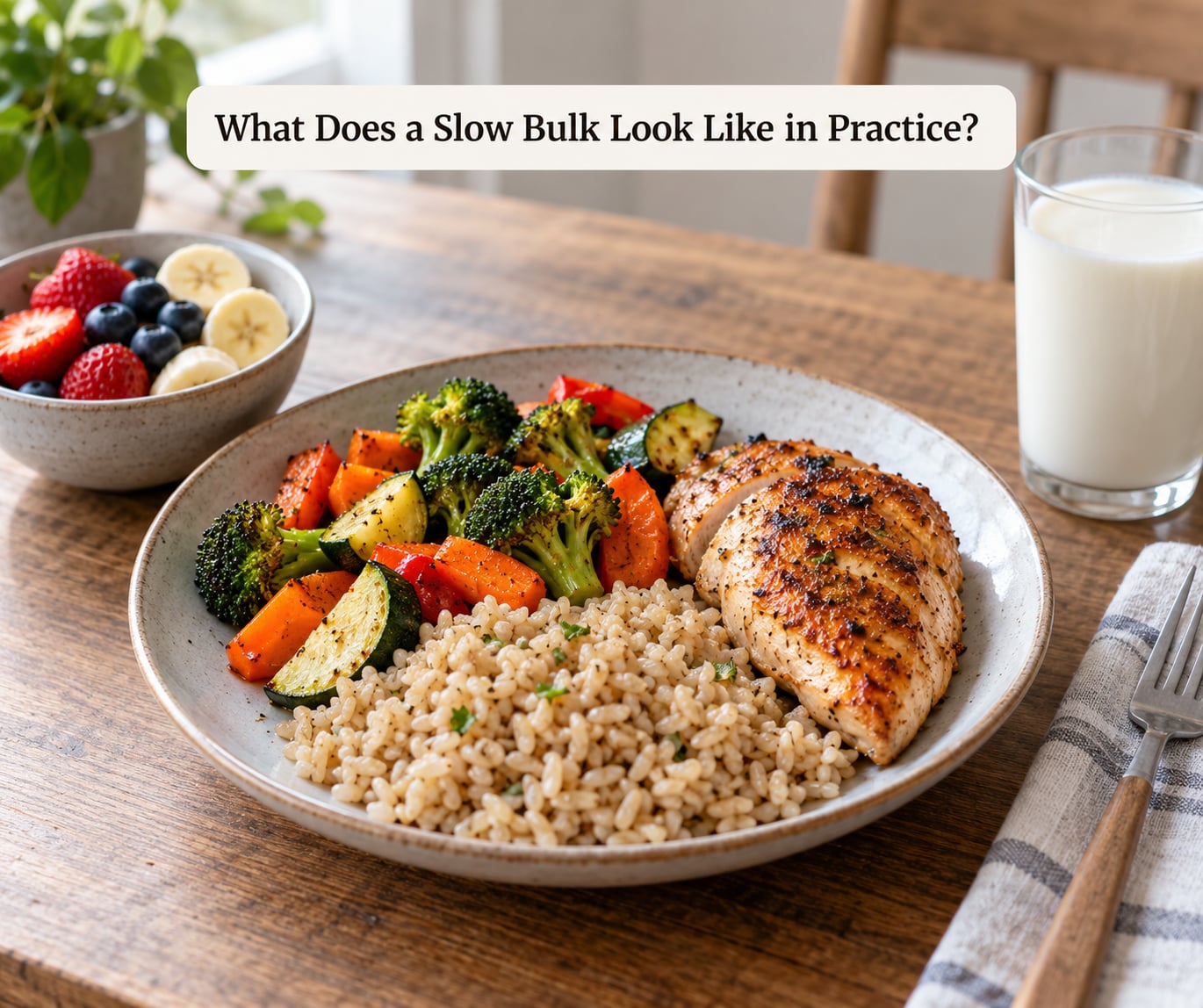
A slow bulk looks like a normal week of eating with one thing changed: breakfast gets a little bigger, or an evening snack appears that used to be an option. That is genuinely most of it.
Someone at 75 kg eating around 2,800 calories might add a mug of oats with milk to breakfast and a sandwich in the afternoon. That is roughly 400 extra calories, and it takes about three weeks before the scale trend clearly shows it. Nothing dramatic happens in week one.
The routine side matters just as much. Most of the weight is lifted in two to four sessions a week with progressive overload, some steps or cardio stays in place, and sleep holds at seven to nine hours. The surplus is the small part.
How Do You Start a Slow Bulk?
Start conservatively. The order below is what I would suggest to someone asking, and each step has a check for whether it worked.
1. Confirm the goal is worth a bulk
Decide whether you need more muscle, or whether you mainly want to look less lean. If it is the second one, a cut is the faster route. You know it worked when you can state the goal in one sentence.
2. Establish what maintenance actually is
Track your intake for two to three weeks at a stable weight. Most people guess low. You know it works when your weekly average holds flat for three consecutive weeks.
3. Add a small amount, not a large one
Add roughly 150-250 calories a day through one or two foods you already eat well, rather than a wholesale change in the whole diet. You know it works when the weekly average drifts up by a fraction of a percent.
4. Hold protein steady first
Protein protects muscle during a surplus, so set it before you fiddle with carbs and fats. At 80 kg, 1.8 g/kg is about 145 g a day, which is roughly a large chicken breast plus a scoop of protein powder.
5. Keep the food manageable
If a surplus wrecks your appetite, it will not last. Small, frequent, higher-volume meals usually beat three huge ones. You know it works when eating feels routine rather than like a chore.
6. Reassess after several weeks
Give it four to six weeks before deciding anything, using weekly averages rather than single readings. You know it works when you can explain your trend with data instead of memory.
7. Adjust once, not daily
If the average has not moved for two or three weeks, add about 100 calories. If your waist is climbing while your lifts are flat, take 100 off. One small change, then wait again.
How Much of a Calorie Surplus Do You Need?
There is no universal number, and anyone who gives you one without knowing your own intake is guessing. What the research supports is a range, not a figure.
Most slow bulks sit between 5-15% above maintenance, which for many adults works out to somewhere between 150 and 300 calories a day. A surplus of 400 calories a day is on the higher side of slow bulking and closer to a standard lean bulk, though it can still be sensible for someone lean and training hard.
The illustration below is arithmetic only, not a target. It assumes a maintenance level that is entirely hypothetical.
- Someone eating 2,500 calories at maintenance: 5% is about 125 calories, 15% is about 375.
- Someone eating 3,000 calories at maintenance: 5% is about 150 calories, 15% is about 450.
- Someone eating 2,000 calories at maintenance: 5% is about 100 calories, 15% is about 300.
For an individual target, ask a registered dietitian or your doctor. They can look at your actual history rather than a percentage of a guess.
How Quickly Should You Gain Weight on a Slow Bulk?
Aim for about 0.25-0.5% of your bodyweight per week, and treat that as a ceiling rather than a goal. That range is the whole point of the method.
At 70 kg, 0.25% is about 0.18 kg a week and 0.5% is about 0.35 kg. At 90 kg the same range is roughly 0.23 to 0.45 kg. Every reader will sit somewhere different on that scale, which is why the percentage works better than a fixed number.
Use a weekly average, never a single morning reading. Water, glycogen, sodium, digestion and menstrual cycle all move the scale day to day, and a slow bulk is slow enough that a single reading tells you almost nothing.
Slower is not always better, though. If you have been under-eating for a long time, the first weeks may include genuine recovery rather than fat gain, and the average can rise faster than planned without any problem.
What Should You Eat During a Slow Bulk?
Build the surplus from food groups you already tolerate well, because novelty is what kills most bulks. Most people do well with five anchors.
- Protein. Spread across the day. Meat, fish, eggs, dairy, soy, or a plant protein powder, depending on what you already buy.
- Carbohydrates. The easiest place to add calories without adding fat. Rice, pasta, oats, bread, potatoes, fruit, rice cakes.
- Fats. Calorie-dense and useful for people with small appetites. Olive oil, nuts, seeds, avocado, whole dairy.
- Fruit and vegetables. Keep these in place. Dropping them to make room for calories is the fastest route to feeling worse on a surplus.
- Fluids. Extra carbohydrate intake pulls water with it, and a rising weight trend can be entirely fluid.
For different preferences it looks like this. A vegetarian can build a surplus from lentils, tofu, tempeh, dairy and eggs plus nuts and olive oil. A vegan can use the same pattern with plant protein powder and fortified foods, and should pay attention to vitamin B12, iron and vitamin D. Someone who cannot cook can do the whole thing with oats, milk powder, ready-cooked chicken, rice pots and yoghurt.
Fibre still matters, and so does food quality. The 80-20 idea applies: get about 80% of calories from food you would happily eat at maintenance and let the extra 20% carry the surplus.
How Do You Track a Slow Bulk?
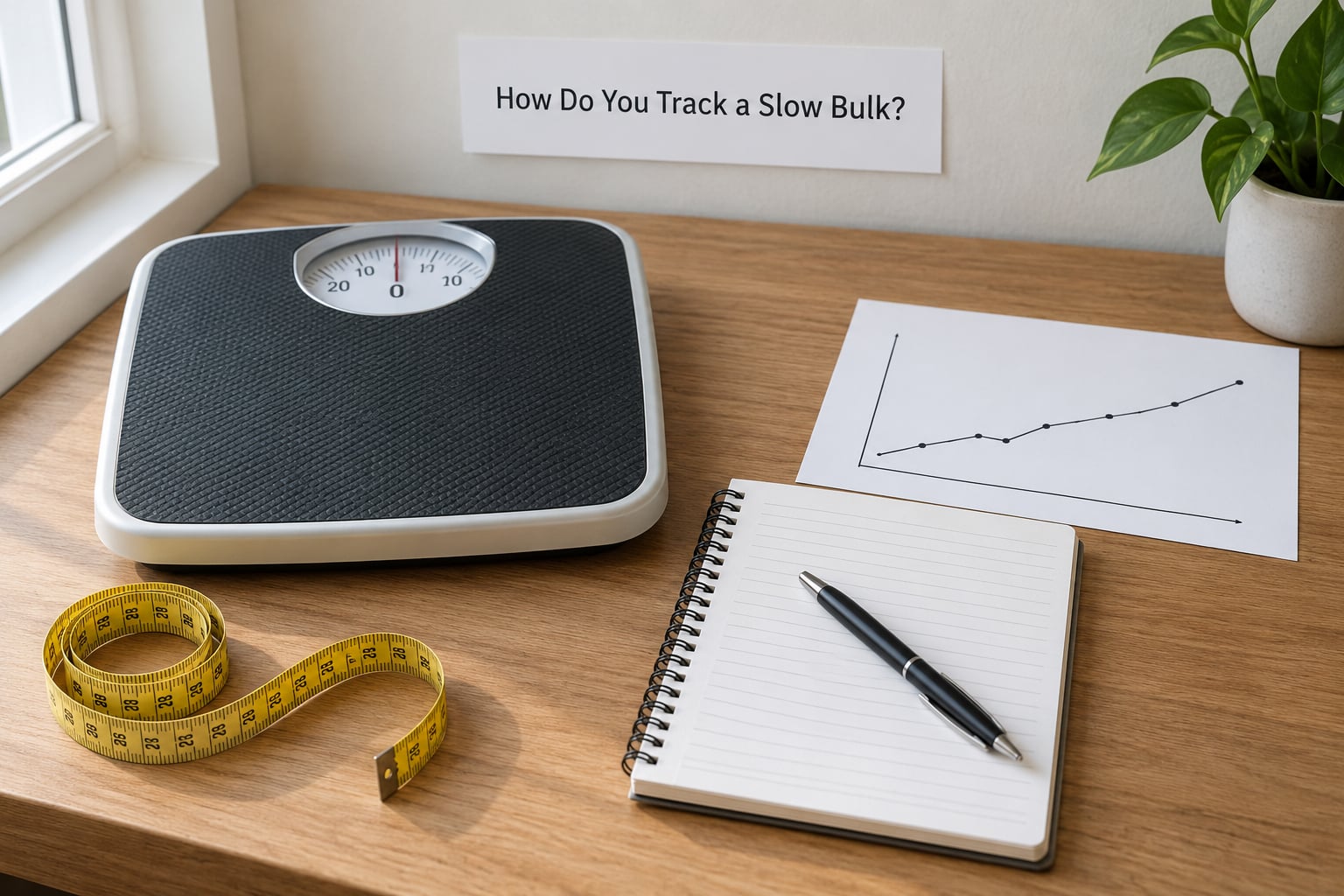
Weekly, not daily, and with more than one measure. A single scale reading is noise; a set of measures over a month is a signal.
- Weekly average bodyweight. Weigh daily under the same conditions and average the week. This is the primary signal.
- Waist measurement. At the navel, once a week. It catches fat gain before photos and mirrors do.
- Tape measurements. Chest, arm, thigh, waist, every four weeks. Upper arm and chest should outpace waist for a slow bulk to be working.
- Strength and performance. The main lifts and how many sets you tolerate. Flat for weeks on rising weight means the surplus is going somewhere you do not want.
- Hunger and sleep. Constant hunger or broken sleep is information. So is feeling fine and stable.
- Photos. Front, side and back, same lighting and same time of day, every four weeks.
No single measure should drive every decision. The scale says weight is up, the waist says some of it is fat, the log says lifts are climbing. Read them together and adjust once every two or three weeks.
If the average has not moved in three weeks, add about 100 calories and wait again. If the waist is climbing fast while measurements elsewhere are flat, take 100 off. Those two adjustments handle most problems.
How Do You Know When to Stop Bulking?
Stop when the reason you started has been answered, or when the signs turn. Four reasons come up most often.
- You reached a broadly defined goal. A weight, a lift, a stage, or a competition. Write it down at the start so you are not arguing with yourself later.
- Body fat is rising faster than you planned. A commonly discussed practical ceiling is around 15% for men and around 20-22% for women. Past that, a cut usually serves you better than more calories.
- You cannot stay consistent. A bulk that collapses every three weeks produces nothing. Fix the routine before pushing the calories higher.
- Recovery and performance are slipping. Persistent fatigue, worse sleep, dropping lifts, getting sick often. That is a sign to eat, not to add calories.
How long it lasts depends on the starting point. A person at 70 kg adding 0.2 kg a week needs roughly 25 weeks to add 5 kg. At 0.35 kg a week the same 5 kg takes about 14 weeks. That is why slow bulks run for months rather than weeks.
What comes after matters as much as the bulk. Plan the maintenance period or the cut before you start, and take professional advice if weight and eating patterns have been difficult for you.
Frequently Asked Questions
Can you build muscle without eating in a calorie surplus?
Yes, for a lot of people, especially beginners, people returning after a layoff, and anyone who gains fat easily. At maintenance calories with protein around 1.6 to 2.2 g/kg and consistent progressive overload, muscle gain is realistic, especially when body fat is already low. A surplus speeds things up but costs fat. Many people are better served by a few months of maintenance first.
How long should I do a slow bulk before deciding whether it works?
Give it at least four to six weeks before judging, because the weekly average lags behind what you eat. Then evaluate on the trend rather than the reading. After two to three months, lifts should be climbing and tape measurements at the arm and chest should be moving ahead of the waist. If none of that is happening, change one variable rather than the whole plan.
Does a slow bulk cause more fat gain than eating at maintenance?
It can, but far less than a standard bulk at the same target weight. Some fat gain is unavoidable when you eat above maintenance, and the amount depends mostly on how lean you were to begin with. A smaller surplus simply spreads that gain over more weeks. Maintenance or recomp avoids fat gain entirely, at the cost of slower progress.
Can you slow bulk while following a vegetarian or vegan diet?
Yes. Vegetarian bulking is straightforward with dairy, eggs, soy, lentils, tofu and nuts. Vegan bulking relies more on plant protein powder, soy, seitan, legumes and added fats such as olive oil and nut butters, plus a fortified spread. Keep protein around 1.6 to 2.2 g/kg, spread across meals, and check vitamin B12, iron and vitamin D with your doctor.
Should I move straight from a cutting phase into a slow bulk?
Often yes, but not on the day you finish. Give yourself two to four weeks at maintenance first so digestion, appetite and training output settle. Then start small, around 150 to 250 calories above maintenance, and let the rate climb toward 0.25-0.5% of bodyweight per week. Moving straight from a deep deficit into a large surplus is how people end up back where they started.
Conclusion: Decide Whether Slow Bulking Fits Your Goal
A slow bulk is a small calorie surplus, a slow rate of weight gain, and enough protein to protect what you build. That is the entire method, and the smallness is the feature.
It fits you if you are new to lifting, already fairly lean, training seriously and want to avoid a long cut, or returning after a break. It does not fit you if you are above your target body fat, cannot hold a surplus, or have a history of disordered eating.
So start with the part that costs nothing: write down what you are eating now for two or three weeks and find your maintenance. Once you know that number, adding a couple of hundred calories is a small, reversible decision rather than a leap of faith.