If you are searching for bananas for weight loss when to eat them, the honest answer is that no single hour matters most. A medium banana carries roughly 105 calories, 27 g of carbohydrate and 3 g of fibre, so it fits comfortably inside a calorie-controlled routine. What actually changes the result is portion, ripeness and what you eat with it.
I spent a long time treating bananas as a guilty snack before writing this. The fix was boring: one banana a day, eaten slightly under-ripe, paired with protein, and timed so it does not land right before a meal you already eat well. Here is the whole thing laid out.
Table of Contents
- Bananas for Weight Loss: Quick Guide
- Do Bananas Help with Weight Loss?
- The banana trick and banana peels: what holds up
- What Time of Day Is Best?
- Bananas for weight loss: when to eat them across the day
- Should You Eat a Banana Before or After Exercise?
- Which Ripeness Is Best for Weight Loss?
- How Many Bananas Should You Eat at Once?
- Are Bananas Better Than Other Fruit for Weight Loss?
- How to Include Bananas in a Weight-Loss Meal Plan
- Are There Any Reasons to Limit Bananas?
- Frequently Asked Questions
- Are bananas good for losing weight?
- What is the best time to eat a banana for weight loss?
- Is a banana before bed good for weight loss?
- Are green bananas better than ripe bananas for weight loss?
- How many calories are in one medium banana?
- Can I eat a banana after exercising for weight loss?
- The Bottom Line
Bananas for Weight Loss: Quick Guide
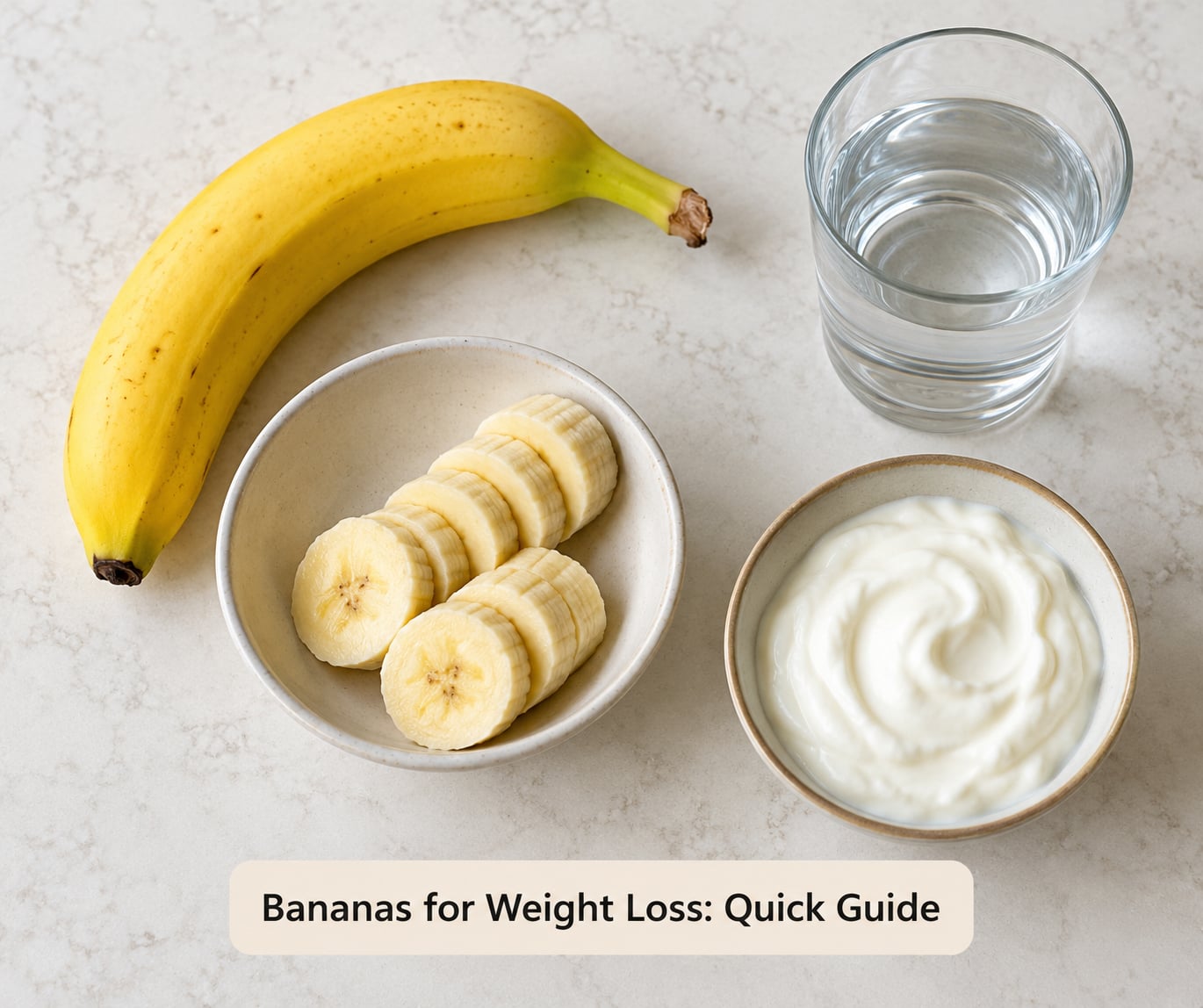
| Question | Practical answer |
|---|---|
| Best time of day | 60 to 90 minutes before exercise, or as a mid-afternoon snack before your largest meal |
| Best portion | One medium banana, or half a large one |
| Best ripeness | Slightly yellow with a little green at the ends |
| Best pairing | Greek yogurt, peanut butter, cottage cheese or a boiled egg |
| Calories per medium banana | About 105 calories, 27 g carbohydrate, 3 g fibre, 422 mg potassium |
| Calories per large banana | About 205 calories |
| Realistic daily range | One to two bananas, inside your overall calorie budget |
| What to avoid | Eating it alone as a “diet food” three hours before your next meal |
Two of those rows matter more than the rest. Ripeness decides how fast the carbohydrate arrives, and pairing decides what happens to your appetite afterwards.
Do Bananas Help with Weight Loss?
A banana will not burn belly fat. No single food does that, and anyone promising otherwise is selling something. What a banana can do is make a calorie deficit easier to live with, because it is portable, filling for its size and cheap.
Three things make it work as a weight-loss food. It has fibre, which slows digestion and takes the edge off hunger. It has volume and water, so a banana physically fills your stomach for very few calories compared with a pastry of the same weight. And it travels, which means it replaces a vending-machine snack rather than adding to one.
It also brings potassium, magnesium, vitamin B6 and a small amount of vitamin C. Potassium matters more here than most people expect, because diets high in refined food and low in fruit tend to run low on it, and low potassium diets are associated with higher blood pressure.
The banana trick and banana peels: what holds up
The “banana trick” circulating online usually means eating a banana at a specific time or in a specific order to unlock fat burning. There is no published human study showing that a banana eaten at a chosen moment produces extra fat loss. The mechanism people describe is real enough in part: a carbohydrate-heavy snack that crashes you leads to a bigger dinner, and avoiding that crash is worth planning for. That is portion and pairing working, not a trick.
Banana peels come up almost as often. Peels do contain fibre and nutrients, and there is laboratory interest in compounds from banana peel. Eating raw peel is a different matter and is not something I would put in a weight-loss plan, mainly because of the fibre quantity and the way it can upset digestion. Cooked peel dishes are just food, not a weight-loss intervention.
What Time of Day Is Best?
Bananas for weight loss: when to eat them across the day
Morning is the most searched answer and the least interesting one. A banana at breakfast is fine, but on its own it is mostly carbohydrate, and a carb-only breakfast tends to leave people hungry by mid-morning. If you eat one in the morning, put it next to protein rather than eating it as the meal.
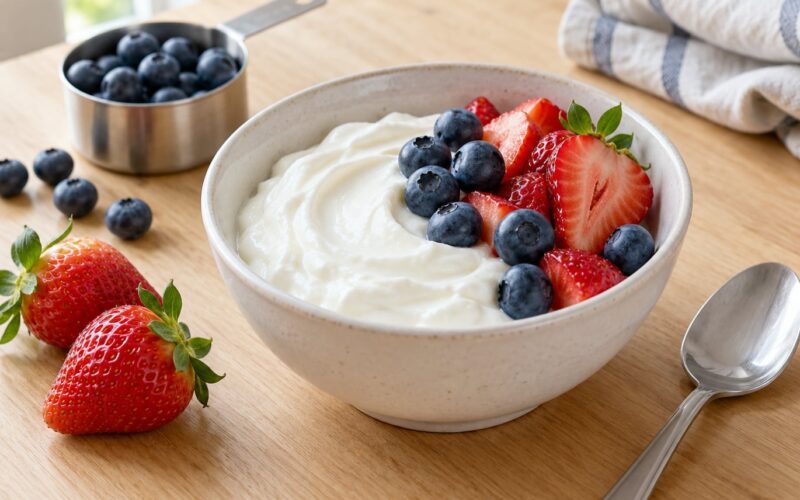
Mid-morning is where a banana earns its place. Eating it roughly an hour before lunch, paired with yoghurt, takes the edge off the meal and reduces the chance you arrive at lunch ordering the largest thing on the menu.
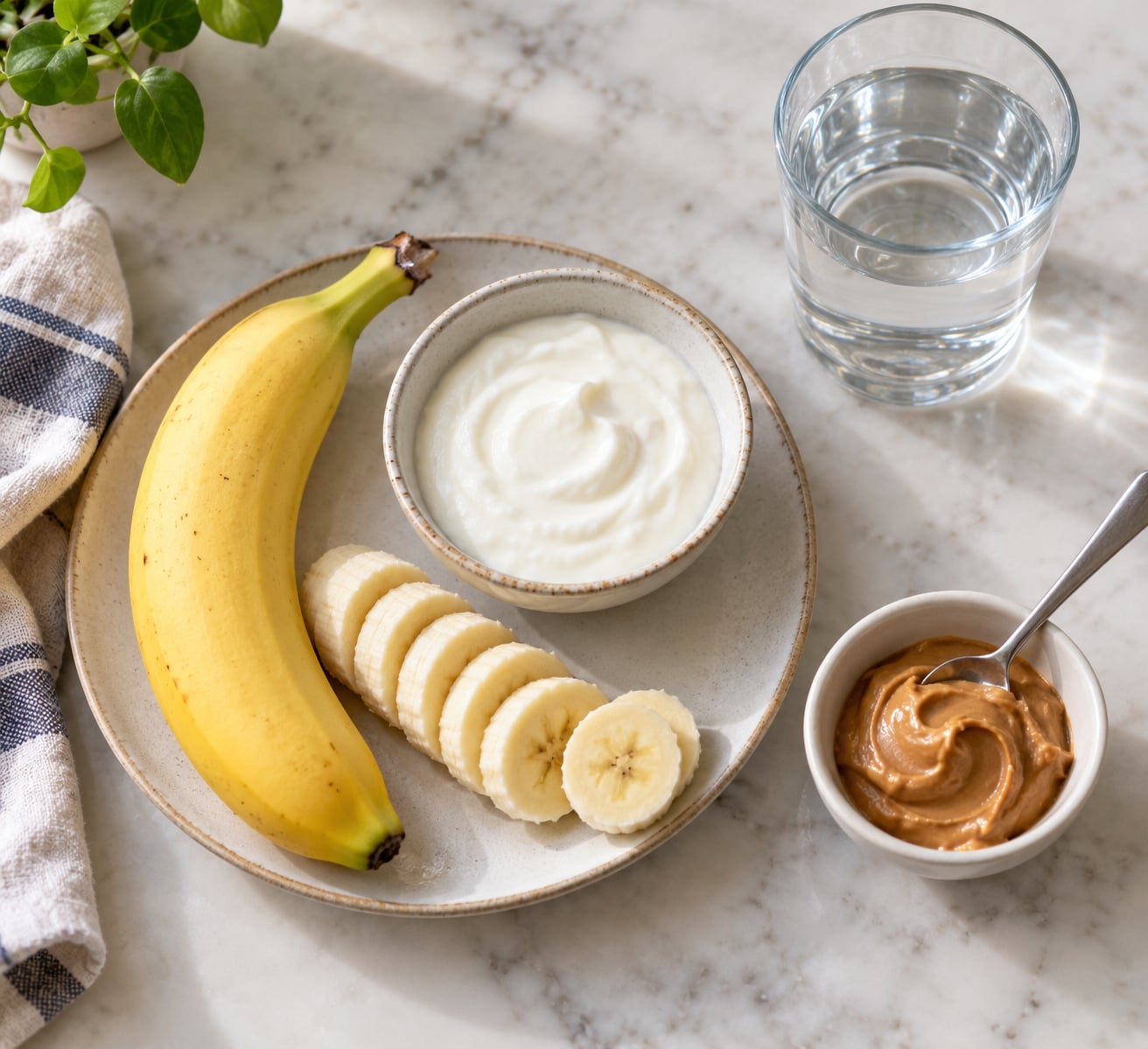
Mid-afternoon is the strongest window for most people. The 3pm slump is when unplanned snacking does most of the damage, and a banana with a spoon of peanut butter is a scheduled version of the biscuit you would otherwise eat. It lands before your last meal, so it can only reduce that meal rather than add to the day.
Evening is fine when you are still hungry after dinner, and it is the window people worry about most. A banana is not a problem for sleep. The real risks are reflux from eating large volumes late, and using a late snack to cover an under-eaten dinner.
If you want one rule rather than a schedule: eat the banana when you would otherwise eat something less useful. Timing is a tool for portion control, not a mechanism for melting fat.
Should You Eat a Banana Before or After Exercise?
Before, if the session is going to be long or hard. A medium banana roughly 60 to 90 minutes beforehand gives you about 27 g of carbohydrate, which is easy-to-digest fuel and usually sits well before you start. Eating it in the last 10 minutes before training is too late for much of that carbohydrate to do anything.
After, if your goal is recovery. Within about 30 to 60 minutes of finishing, a banana plus a protein source gives you carbohydrate to top up glycogen and amino acids to start repair. That combination matters more for muscle maintenance than for fat loss, and muscle is what keeps your calorie burn up while you diet.
For a steady 30-minute walk, the honest answer is that the banana is optional. It is a snack with a place in the day, not a workout requirement.
Which Ripeness Is Best for Weight Loss?
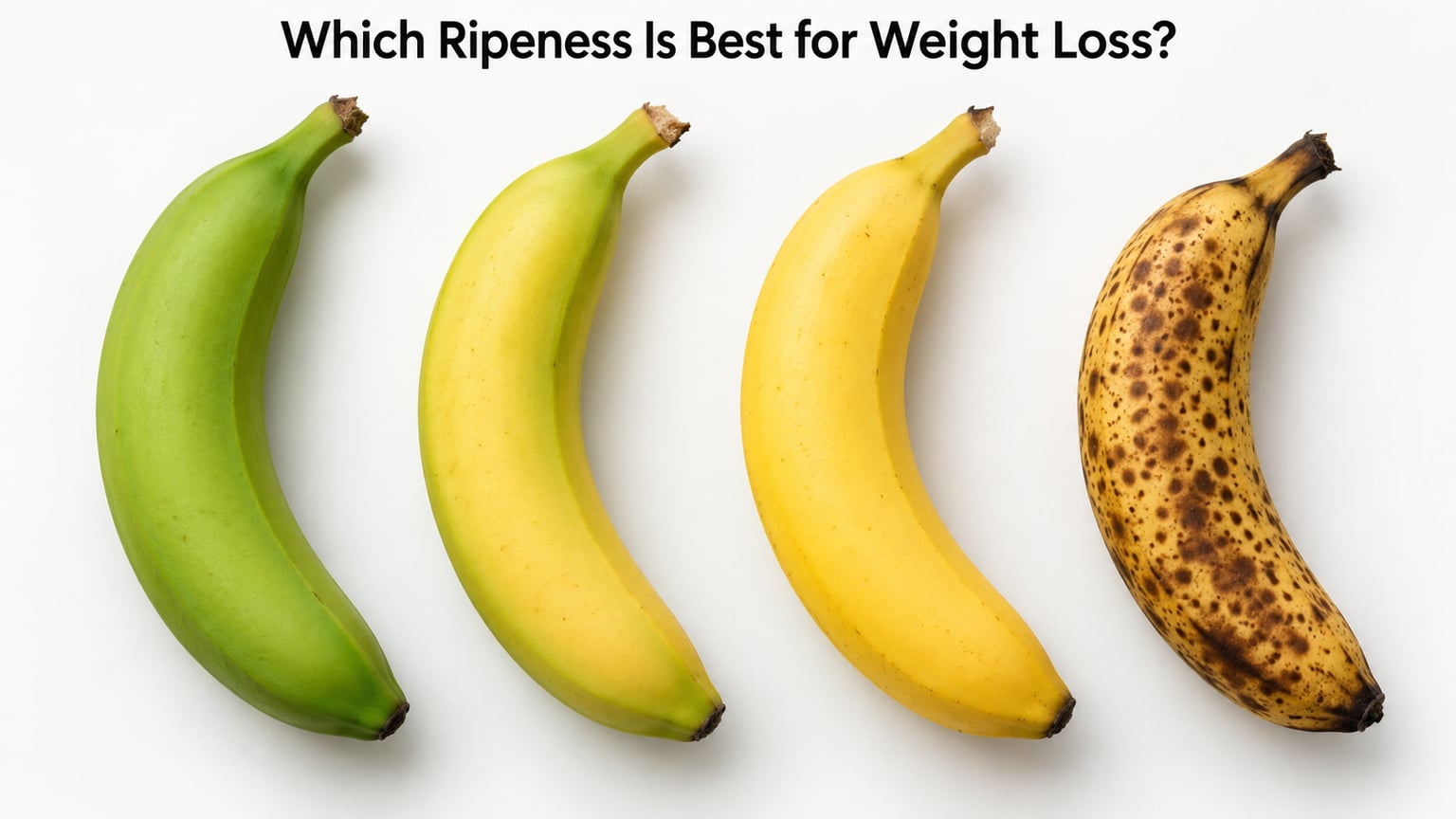
Resistant starch is the carbohydrate in a banana that your gut enzymes do not break down straight away. It behaves more like fibre, feeds gut bacteria and slows the absorption of what follows. As a banana ripens, that resistant starch converts into simpler sugars, which is why a green banana sits differently in your bloodstream than a spotted one.
| Ripeness | Glycaemic response | Texture and taste | Best weight-loss use |
|---|---|---|---|
| Green | Lowest of the four, more resistant starch | Starchy, firm, less sweet | Cooked as a vegetable, or sliced into oats while still firm |
| Slightly yellow with green ends | Lower middle, the practical middle ground | Creamy, mildly sweet | The best all-round choice for a filling snack |
| Fully yellow with brown speckles | Middle to higher | Soft, distinctly sweet | Post-workout recovery, where fast carbohydrate is useful |
| Brown and spotted | Highest, mostly converted sugar | Very soft, sweetest | Baking and smoothies, not the first choice for a blood-sugar-conscious snack |
Two practical notes. Green bananas that you dislike raw can be cooked as a vegetable, which is a normal side dish in much of the world. And ripeness does not create a magic zone: a fully ripe banana paired with protein and fat is still a perfectly reasonable snack. It just arrives faster, so it needs company.
How Many Bananas Should You Eat at Once?
For most adults aiming at steady weight loss, one medium banana a day is a sensible default, and two still fits for many people. Three is where people start absorbing roughly 300 calories and 80 g of carbohydrate from fruit alone, which is a real chunk of a day for someone eating around 1,500 to 1,800 calories.
Individual needs differ a lot. A 6-foot-2 man running 10 kilometres a day can carry three bananas without thinking about it. A sedentary person eating 1,200 calories cannot, and no fruit portion is exempt from the count.
The rule I use is simple: eat one banana with protein or fat rather than one banana alone, and let the combination, not the fruit, decide how full you stay. Greek yoghurt, peanut butter, cottage cheese or a boiled egg all work, and each changes how the rest of your day feels. In my experience, the banana eaten alone stops me feeling satisfied quite so long, which is usually the tell that the pairing is missing.
Are Bananas Better Than Other Fruit for Weight Loss?
No fruit is better for weight loss, because portion control beats fruit choice. That said, they suit different situations, and bananas are stronger in some than others.
| Fruit | Typical portion calories | Strength | Where banana wins |
|---|---|---|---|
| Banana | About 105 for a medium | Portable, cheap, keeps you going through a long gap | Best when you need fuel before or after training |
| Apple | About 95 for a medium | More water and fibre per calorie, very filling | Apple is the better choice if you are sitting down and not rushing |
| Blueberries | About 85 for a cup | Lowest calorie density, sweet without being sugary | Berries are easier to portion because a cup is a natural measure |
| Orange | About 80 for a medium | Juicier, hydrating, easy to peel at a desk | Orange wins for a quick, refreshing snack in hot weather |
The banana’s weakness is that it travels without packaging, which makes it easy to eat two or three without noticing. If your snacking habit is grazing rather than sitting down with a bowl, berries or an apple usually do more work.
How to Include Bananas in a Weight-Loss Meal Plan
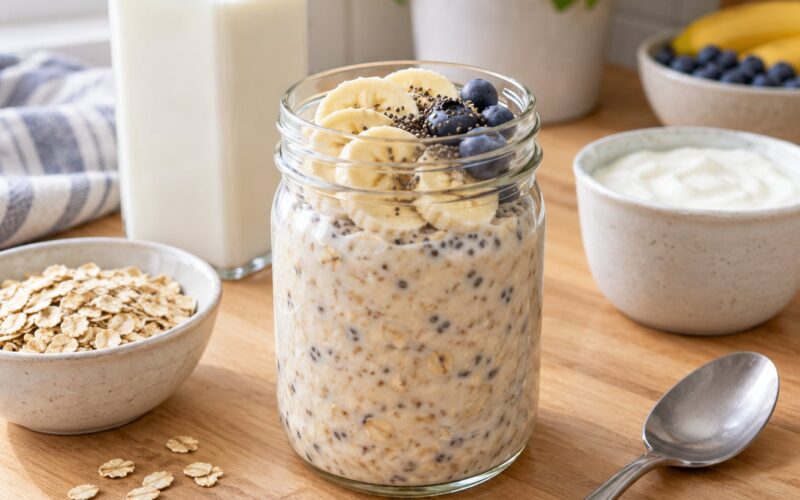
Breakfast: slice a slightly yellow banana into 40 g of oats with a spoonful of peanut butter. The protein and fat take the edge off the blood sugar response that plain oats and banana can produce.
Lunch: a banana is a poor lunch on its own. Use it as an ingredient instead, blended with spinach, protein powder and milk, or sliced over yoghurt as a lighter alternative to granola.
Snacks: this is where the banana earns its place. One medium banana with yoghurt at 3pm, or one banana with a handful of almonds when you get home from work.
Smoothies: a common mistake is blending a banana with juice. Use milk or yoghurt, add greens for volume, and skip the sweetened bases.
Dessert: a frozen banana blended alone thickens into something that eats like soft serve. Half a banana is plenty in a bowl of yoghurt with cinnamon.
Post-workout: one banana with a protein shake or a glass of milk within an hour of training.
A full day looks like this: banana at breakfast with peanut butter, one at 3pm with yoghurt after a light lunch, dinner with vegetables and a protein source, and dessert as fruit rather than something sweet. That is a normal, unremarkable day, which is exactly the point. One banana a day sits well inside a calorie deficit and does not cause weight gain on its own.
Are There Any Reasons to Limit Bananas?
Yes, and they are individual rather than general. If any of these apply, get advice from a doctor or registered dietitian rather than taking a generic article as your plan.
- Type 2 diabetes or blood sugar management: bananas contain about 27 g of carbohydrate, which is a meaningful load at once. Riper bananas release it faster. Portion, ripeness and pairing matter more here than timing, and your care team should guide the carb budget.
- Kidney disease or potassium restrictions: bananas are among the highest-potassium foods in ordinary diets. Advice on potassium intake is specific to the stage of the condition and changes between individuals.
- Reflux or GERD: late and large-volume fruit meals can trigger symptoms in some people. Smaller portions earlier in the day usually help.
- IBS or a low-FODMAP approach: bananas are low in FODMAPs when firm and higher when very ripe, so ripeness may need to be reversed for some people.
- Allergy or latex-fruit cross-reactivity: uncommon, but if bananas have caused reactions before, that is worth raising with a clinician.
General information only here, not a treatment plan. If you have a medical condition, take advice from a registered dietitian, your doctor or a pharmacist before changing what you eat.
Frequently Asked Questions
Are bananas good for losing weight?
Bananas can support weight loss but they do not cause it. One medium banana is about 105 calories with 3 g of fibre, which is a filling snack for a small calorie cost. They fit a calorie-controlled routine when you eat a set portion, pair them with protein or fat, and let them replace a snack you would otherwise buy.
What is the best time to eat a banana for weight loss?
There is no magic hour, but 60 to 90 minutes before exercise or as a mid-afternoon snack before your largest meal are the two most practical windows. Eating the banana with protein or fat slows digestion and makes it more filling. Timing only works when the portion is controlled.
Is a banana before bed good for weight loss?
A banana before bed is fine for most people. It does not disturb sleep, and the magnesium and potassium it contains are modest rather than decisive. Watch for two things: reflux from eating large volumes late, and using a nightly snack to compensate for an under-eaten dinner. One medium banana is a reasonable evening portion.
Are green bananas better than ripe bananas for weight loss?
Slightly under-ripe bananas are usually the better choice because they still contain more resistant starch, which behaves like fibre and slows how fast carbohydrate is absorbed. Fully ripe bananas are sweeter and softer, so they release energy faster, which is useful after exercise. For most people a partly yellow banana is the practical middle ground.
How many calories are in one medium banana?
One medium banana, about 7 to 8 inches long, contains roughly 105 calories, 27 g of carbohydrate, 3 g of fibre and 422 mg of potassium. A large banana runs closer to 205 calories. Calorie needs vary widely with body size and activity, so treat one or two bananas as a starting range rather than a fixed limit.
Can I eat a banana after exercising for weight loss?
Yes. Eating a banana within about 30 to 60 minutes after training gives you carbohydrate to replenish glycogen and pairs well with a protein source for muscle repair. For a long or hard session it is genuinely useful. For a short steady walk it is optional, and it still counts toward your daily calories like any other snack.
The Bottom Line
Start with one medium banana, buy it slightly yellow rather than spotted, and eat it with something containing protein. Put it where it replaces another snack rather than sitting beside your existing intake.
Timing, ripeness and pairing are refinements on top of that. The part that changes results is staying inside a calorie budget long enough for the habit to hold. Update this guide for 2026 whenever you revisit it, and if you are managing a medical condition, take the specifics to a registered dietitian.