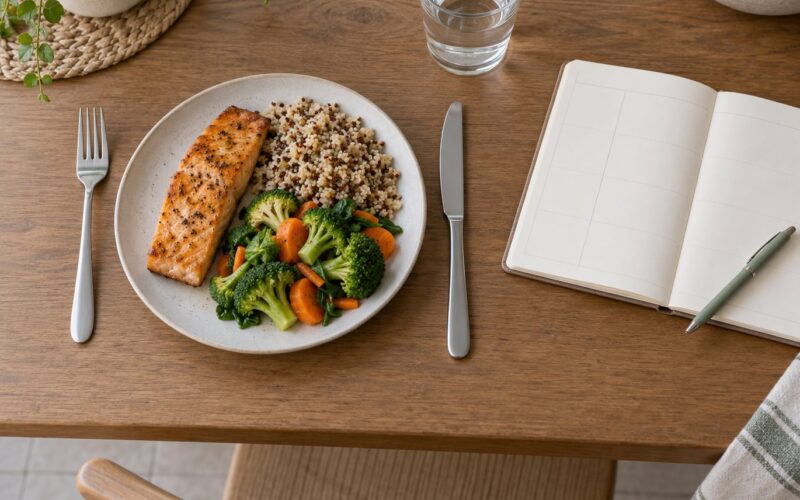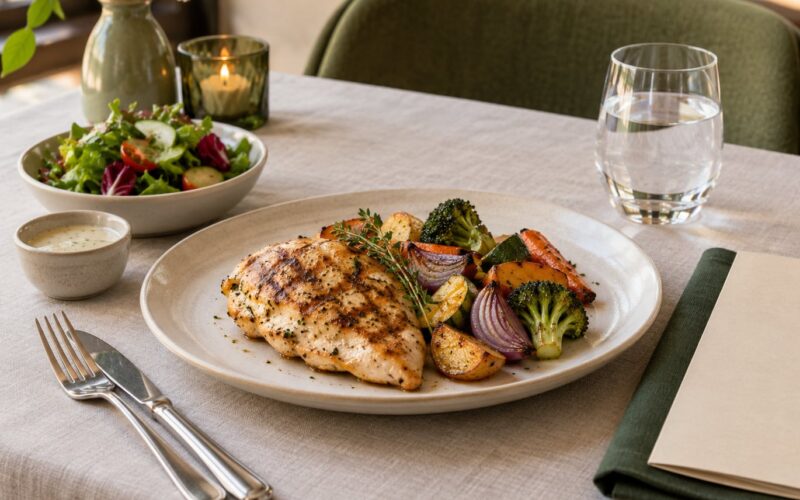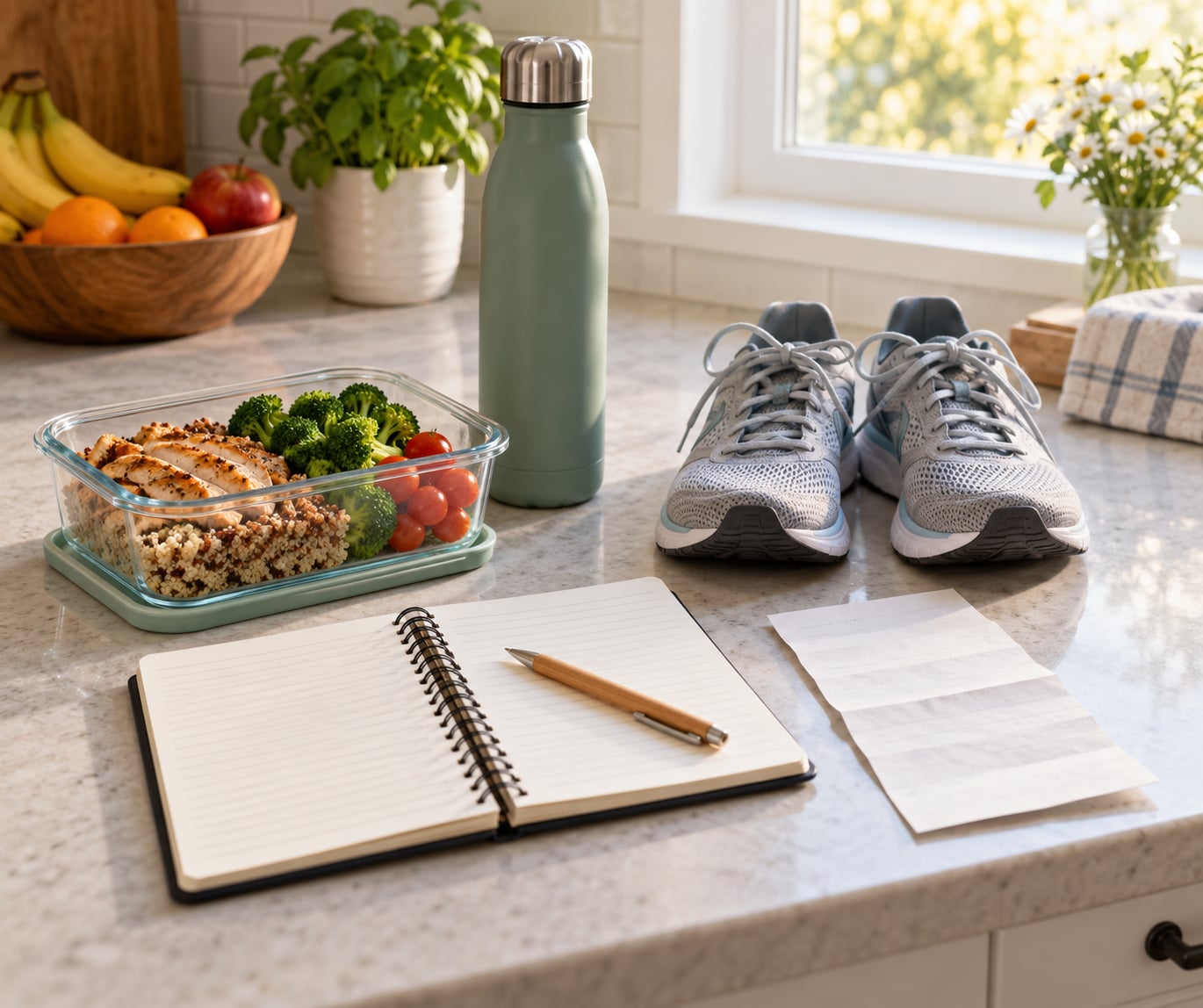
The honest version: you can hold your weight steady through Thanksgiving to New Year’s by planning a few meals ahead, eating a protein and vegetable base at every gathering, and moving a little most days. Published estimates differ. A New England Journal of Medicine study summarized by Columbia University Irving Medical Center puts the average seasonal gain at just under one pound, while UC Davis Health and other health systems cite one to two pounds.
That is the real target. Not a deficit, not a cleanse, just maintenance over roughly six weeks. It takes maybe fifteen minutes of planning per event, and it works for people who have already lost weight and want to keep it.
This guide covers how to survive the holidays without gaining weight using ordinary habits rather than rigid rules. It is general information for adults. If you have a medical condition, take medication, are pregnant, or have a history of disordered eating, talk to a doctor or a registered dietitian before changing how you eat.
Table of Contents
- What You Need
- Step-by-Step: How to Survive the Holidays Without Gaining Weight
- How to Build a Balanced Holiday Plate
- How to Handle Parties and Large Meals Without Gaining Weight
- How to Keep Snacks and Drinks From Adding Up
- How to Stay Active Without a Strict Fitness Schedule
- Common Mistakes
- How to Recover After the Holiday
- Frequently Asked Questions
- How can I prevent weight gain during the holidays?
- I gained 3 pounds overnight. Should I be worried?
- Is the weight I gain over the holidays water or fat?
- How do I stop rapid weight gain after the holidays?
- What should I eat before a holiday party so I do not overeat?
- Should I try to lose weight during the holidays?
- Conclusion
What You Need
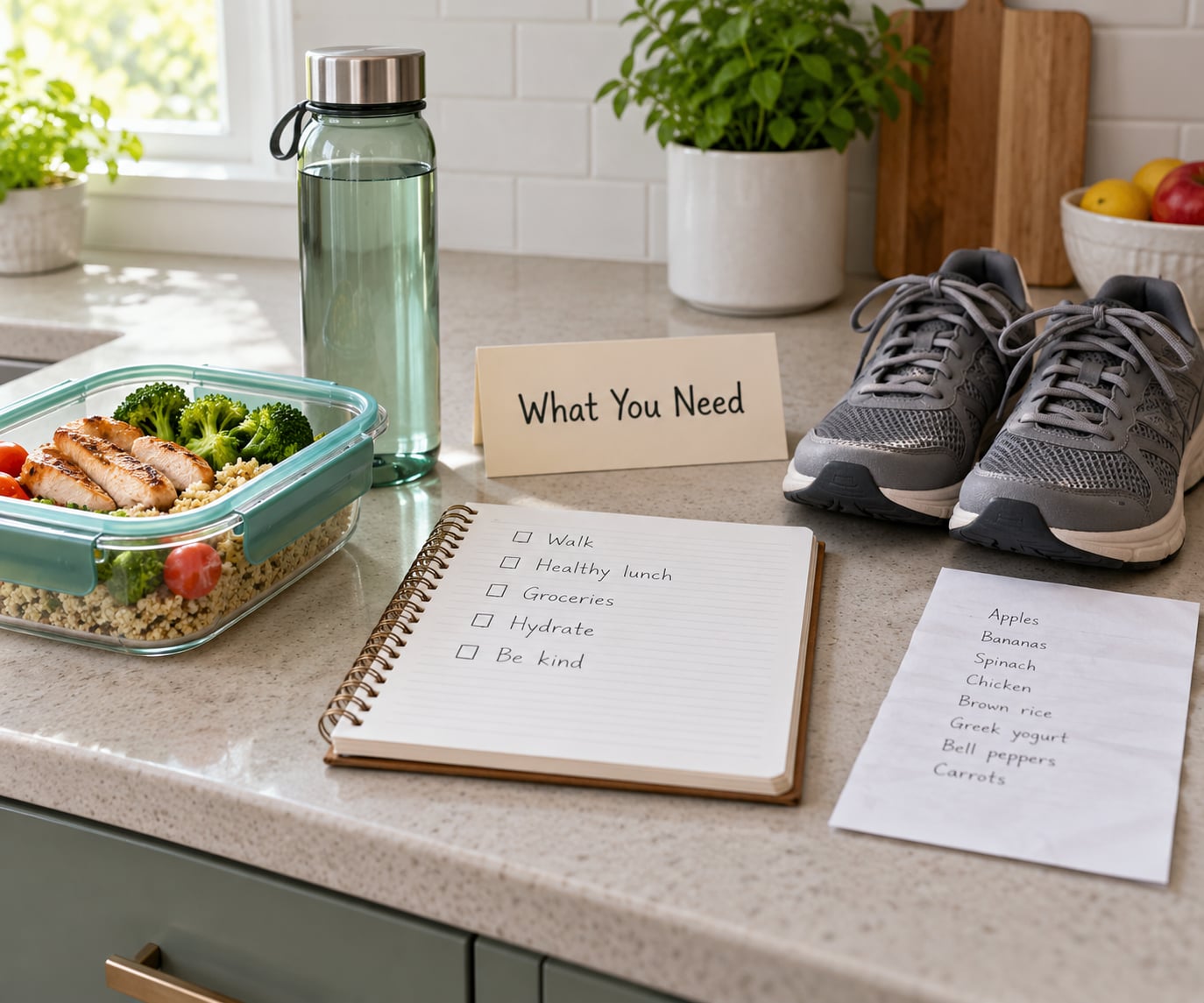
None of this costs money or requires a membership. You need five things ready before the first party, and all of them fit in a drawer or a closet.
- A loose meal anchor. Pick one meal a day that looks like a normal meal you already eat. It keeps you from arriving at a party having skipped everything since breakfast.
- A snack you actually like. Stock yogurt, fruit, nuts, cheese, hummus, or cut vegetables at eye level. Grazing problems start when the only visible snack is a cookie tin.
- A container and a freezer space. Leftovers you portion out and put away immediately stop the second and third helping three days later.
- A water bottle and a coffee cup you like. Most holiday sipping is thirst and habit, not hunger. Refillable, insulated bottles make plain water the default at an event.
- Shoes and a coat you do not mind wearing. A ten-minute walk works because it needs no plan, no gear, and no change of clothes.
- A one-page note. Write down your two non-negotiable foods and your two non-negotiable movement habits. A note is a plan; a good intention is not.
That list is the whole setup. The next sections show what to do with it, meal by meal and party by party.
Step-by-Step: How to Survive the Holidays Without Gaining Weight
How to Build a Balanced Holiday Plate
A balanced holiday plate is protein, a vegetable or fruit, one satisfying carbohydrate, and a moderate portion of whatever dish you actually came for. There is no good-food and bad-food list here, and the reason is practical rather than moral: foods you call off-limits become the foods you crave hardest three days later.
Build it in this order. Start with protein, roughly the size of your palm, because protein and fiber are what let you stop eating when you are full. Next add two or three forkfuls of vegetables or a salad, which take up space and slow you down. Then one serving of the starch you want, whether that is potatoes, stuffing, or rolls. Last, add a reasonable portion of the richer dish that makes the meal worth attending.
Vegetables first is the detail that helps most at a table full of casseroles. If the first thing on your plate is something green, the rest of the meal is easier to pace.
Eat slowly, at least for the first ten minutes. Holiday meals last ninety minutes and people rarely stop because they are full; they stop because the plates are cleared. If you have lost weight before, you already know that an all-or-nothing rule turns one holiday meal into a two-day binge, so a built plate beats a banned food every time.
How to Handle Parties and Large Meals Without Gaining Weight
To handle a party, do four things in order: eat a small protein snack about an hour before you leave, scan the whole spread before you fill a plate, choose the two or three things you most want, and sit somewhere away from the food table. That sequence is what most people skip, and skipping it is what causes the overeating.
The pre-party snack is a small plate of protein and fiber, such as cheese and crackers, yogurt, a few vegetables with hummus, or fruit with peanut butter. It takes the edge off without filling you up. Skipping food to save room works for some people on one occasion and reliably backfires for anyone with a history of restriction, so a small snack is the safer default.
Do one trip to the buffet, not three. Stand back, look at everything, and let the first thing on your plate be something from the vegetable tray or a salad. Sit down afterwards. Standing near the table and grazing adds up fast without anyone noticing, and it is the most common pattern people describe afterwards when they ask how they ate that much.
Choose your two favorites in advance and let the rest be background. Two desserts, a small portion, eaten slowly, is a decision. Four plates of everything is the thing people regret.
Family pressure is harder than the food. Scripts help, and the useful ones are short and boring:
- “It is so good, I am just going to have a small piece.” Then stop talking.
- “I already had some, I am stuffed.” Smile, change the subject.
- “I am saving room for dessert.” Everyone accepts this one.
- “Help yourself, I will grab some later.” People rarely check back.
- “That is my third helping of the night.” Humor deflates the moment better than a firm no.
Repeat the same line every time. You do not need a reason, and a long explanation invites negotiation.
When you host, put the food in the kitchen, serve a vegetable dish and a protein dish alongside the rich ones, and make dessert a choice people take rather than a course that expects finishing. When a potluck is expected, bring a dish you genuinely want to eat, such as a tray of roasted vegetables, a grain salad, or a tray of baked sweet potatoes. You guarantee yourself one known option, and other people eat it too.
How to Keep Snacks and Drinks From Adding Up
Snacks and drinks cause most of the drift, not the big meal. Three small glasses of punch or a cocktail in each hand adds up over an evening, and nobody counts them as food.
- Alternate. One alcoholic drink, then a glass of sparkling water with lime, then another drink. The pacing slows you down for free.
- Choose clear drinks with soda water. Spirits mixed with club soda and lime carry far fewer calories than beer, sweet wine, or holiday punch.
- Watch the named offenders. Eggnog, cream-based punch, cider, and hot chocolate are dessert in a glass. Have one, and enjoy it, rather than refilling for an hour.
- Keep food grazing physical. A bowl of nuts on a coffee table disappears without you ever deciding to eat them. Put snacks on a counter, not a low table near the sofa.
- Set a plate rule for leftovers. Snack on a plate, standing in the kitchen, out of the container. Portioning is most of portion control.
Alcohol deserves a plain note. It lowers inhibitions, which is the real reason the fourth slice of cake appears, and standard drink guidance is the same in December as the rest of the year. If you do not drink, the same approach works with sparkling water, mocktails, or a small glass of juice. If you drink, keep to what you already normally do, and alternate with water.
How to Stay Active Without a Strict Fitness Schedule
Movement during the holidays is about keeping the habit alive, not training. Most people lose their routine because the schedule disappears, so pick things that survive a chaotic week.
- Walk for ten to fifteen minutes after dinner. It is a social thing too, which is why it sticks.
- Take the stairs when you can, or walk the long way to the car in a parking lot.
- Dance in the living room when music is on. Counts, and nobody is watching.
- Do a ten-minute home routine in the morning, before the day’s plans fill up. Morning wins because it already happened by noon.
- Add gentle mobility or stretching days when energy is low. Ten slow minutes still counts as a day of movement.
Adapt any of this to your own ability and medical conditions. Walking and stairs are not for everyone, and chair movement, water exercise, or a short gentle session at home work just as well for a plan that has to last six weeks.
Non-food traditions help more than people expect: a family walk after dinner, a board game night, cookie decorating, a drive to see lights. They fill the evenings that would otherwise be spent on the couch with the cookie tin.
Common Mistakes
Most holiday weight trouble comes from a handful of habits, and each has a calm correction.
Skipping meals to save calories. You arrive at the party genuinely hungry and eat faster than you intended. Fix: eat your normal meals and add a small protein snack before events.
Starting a strict diet in December. A hard restriction followed by a holiday meal is the classic cycle people describe in weight-loss forums, and it ends the same way every year. Fix: keep your normal eating pattern and accept maintenance as the goal.
Making holiday food forbidden. A food you forbid is the food you think about all day. Fix: pick two non-negotiables, eat them deliberately, and stop there.
Overcompensating the morning after. Skipping food, punishing workouts, and weighing yourself at 6am are all responses to guilt, and none of them change the trend. Fix: return to your next regular meal and ignore the scale for a few days.
Trusting the scale on January 2. Holiday numbers are frequently water, not fat, and panic about them is what turns a two-pound change into a crash plan. Fix: weigh weekly, in the morning, and look at the trend over a month.
All or nothing. Progress, not perfection, is what holds weight over years. Two good days beat two perfect days followed by three days of giving up.
How to Recover After the Holiday
Recovery is a seven-day restart, not a punishment. The scale will lie to you for about a week, so let it and use the time for habits instead.
- Day 1-2. Eat your normal meals. Drink water, get to bed at your usual hour, and skip the weighing entirely.
- Day 3. Add back your usual movement: a walk or your home routine. Twenty minutes is enough to restart the habit.
- Day 4. Clear the leftover food and plan three normal meals and one snack. Structure beats willpower.
- Day 5-6. Return to your normal week: your meal pattern, your activity, your social schedule.
- Day 7. Weigh in, then compare to your last pre-holiday weigh-in rather than to a number from November. Look at the trend over a month before drawing conclusions.
Most of the drop you see in the first week is water leaving, especially if the past month was salty, high in bread and pasta, and included alcohol. Sodium, carbohydrate loading, and alcohol all hold water in the body, and that weight leaves on its own within days of returning to normal eating.
If your weight is still climbing steadily a month after the season, or you have gained a large amount in a short window, talk to a doctor or a registered dietitian. That conversation is about finding a plan that works, not about a lecture.
Frequently Asked Questions
How can I prevent weight gain during the holidays?
Keep three habits steady: eat a protein and vegetable base at every meal, do not arrive at a gathering starving, and move for ten to fifteen minutes most days. A short list written down ahead of the season helps more than willpower, because December removes decisions, not intentions. Aim to hold your weight steady rather than to lose it.
I gained 3 pounds overnight. Should I be worried?
Usually that is water, not fat. Sodium, larger carbohydrate portions, alcohol and constipation all hold fluid in the body, and a heavy, salty meal can put several pounds on the scale in a day. Fat tissue does not appear that fast. Drink normally, eat your normal meals, and judge the number after a week of regular eating instead of in the morning after.
Is the weight I gain over the holidays water or fat?
Both, in different proportions, and the water part is larger than most people expect. A New England Journal of Medicine study, summarized by Columbia University Irving Medical Center, found the average American gains just under a pound across the season, though other health systems cite one to two pounds. If your scale jumps several pounds overnight, that is fluid from sodium, carbohydrates, alcohol and digestion, and it clears within days.
How do I stop rapid weight gain after the holidays?
Return to your normal meals rather than cutting them. Eat three regular meals and one or two planned snacks, drink water, and restart movement at twenty minutes a day. Do not weigh yourself daily for the first week, since holiday fluid skews the number. Weigh once on day seven and compare the trend against the month before the season, not against a single morning reading.
What should I eat before a holiday party so I do not overeat?
A small protein and fiber snack an hour before you leave works best: yogurt, cheese and crackers, vegetables with hummus, or fruit with nut butter. It takes the edge off hunger without filling you up, so you eat the meal at a normal pace. Skipping food all day to save room tends to backfire, especially if you have a history of restrictive eating.
Should I try to lose weight during the holidays?
No. Six weeks is a short window, and a deficit now usually turns into heavier eating later. Maintenance is realistic and protects the progress you have already made. The seasonal gain people report is usually one to two pounds, and a small gain you hold steady is far better than a fast loss followed by a rebound. If you want to lose weight, plan it for February.
Conclusion
Start with three things. Write down your two non-negotiable foods so the decision is made before you are standing at a buffet. Keep one protein and vegetable plate as your anchor meal on the six big days. Take a ten-minute walk after dinner, even in a coat, in the cold.
Everything else is detail. Skip the weigh-in until the trend is readable, keep your normal meals between events, and remember that the target this season is holding steady, not shrinking. That is how to survive the holidays without gaining weight, and it leaves you with the same progress you started the season with, plus a good memory of the meals you actually enjoyed.