You can track fat loss and progress without a scale by measuring the same things every week under the same conditions: waist circumference, progress photos, strength numbers, energy, habits and how your clothes fit. A bathroom scale reports total mass, and total mass moves with water, glycogen and whatever you ate at dinner, so it tells you less than most people assume.
Here is the honest version. Learning how to track progress without a scale takes about five minutes a week once the routine is set up, and it costs almost nothing. The hard part is not the tape measure, it is being consistent enough that a change means something.
Table of Contents
- What You Need
- Step-by-Step: How to Track Progress Without a Scale
- 1. Set a Non-Scale Baseline for Tracking Progress Without a Scale
- 2. Take Progress Photos on a Schedule
- 3. Track Strength and Fitness Changes
- 4. Notice Energy, Sleep, and Recovery
- 5. Monitor Habits and Consistency
- 6. Check Clothing Fit and Comfort
- The Scorecard at a Glance
- Common Mistakes
- Frequently Asked Questions
- What is the best way to track progress without a scale?
- How often should I take progress photos without using a scale?
- Can waist measurements tell me if I am losing body fat?
- What should I track if I am exercising at home?
- How do I avoid becoming discouraged when progress is slow?
- When should I talk with a doctor or registered dietitian about my progress?
What You Need
You need four things, and none of them cost much.
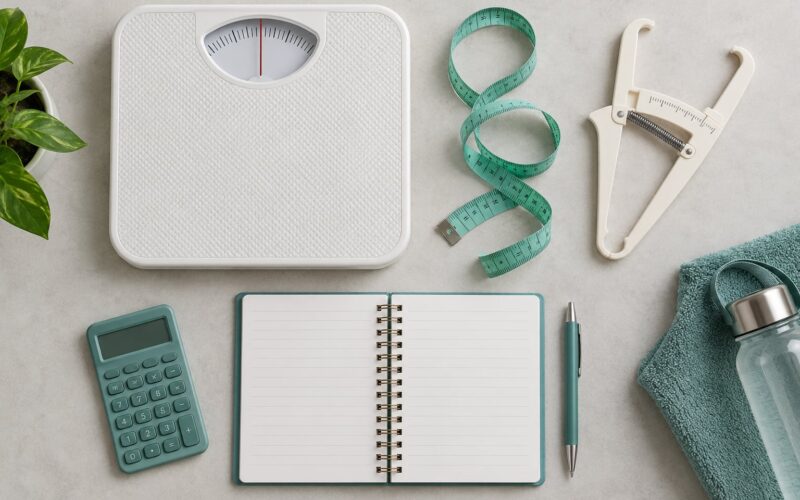
- A soft measuring tape. The retractable fabric kind, not the metal one. Metal tape compresses soft tissue and gives you a smaller number than you will ever reach again.
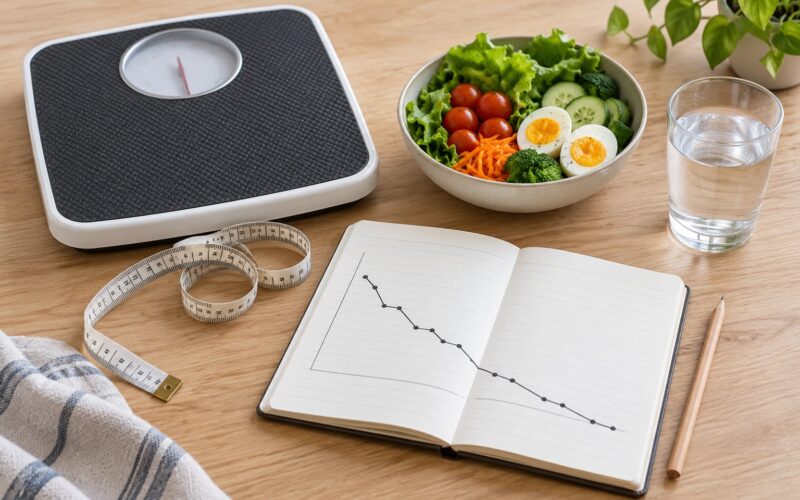
- A notebook or a notes app. A single table works fine: date, waist, hip, front photo, training note.
- A phone camera and a fixed spot to stand. A taped mark on the floor near a window beats any app you will forget about.
- Two or three anchor garments. One pair of jeans or trousers, one belt, one shirt or dress that fits exactly right now. These become your ruler.
You do not need a body composition scanner, a smart scale or a monthly clinical test to do this well. Those tools exist and I will touch on them later, but they are an upgrade, not a starting point.
Pick a weekly check-in day and time before you start. Sunday evening with a notebook works as well as Monday morning. The specific slot matters far less than never moving it.
Step-by-Step: How to Track Progress Without a Scale
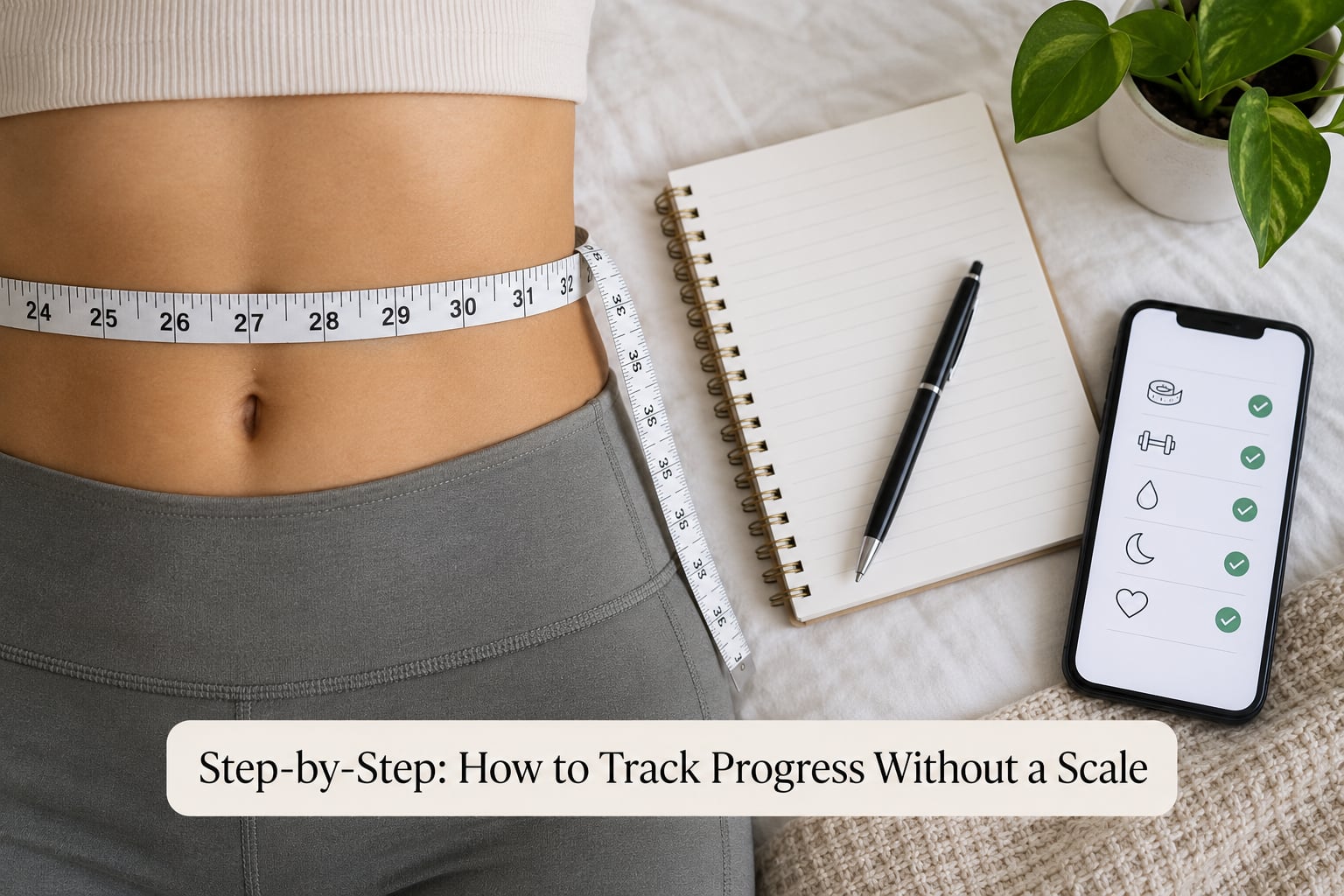
1. Set a Non-Scale Baseline for Tracking Progress Without a Scale
Take your starting measurements before anything changes. Waist at the navel level, hip at the widest point, chest across the fullest part, thigh mid-way, upper arm at the midpoint. Write each number down with the date.
Measure in the morning, after using the bathroom, before eating and drinking, with the tape snug but not digging in. Pull gently, breathe normally, and do not suck in your stomach. That last rule matters more than people expect.
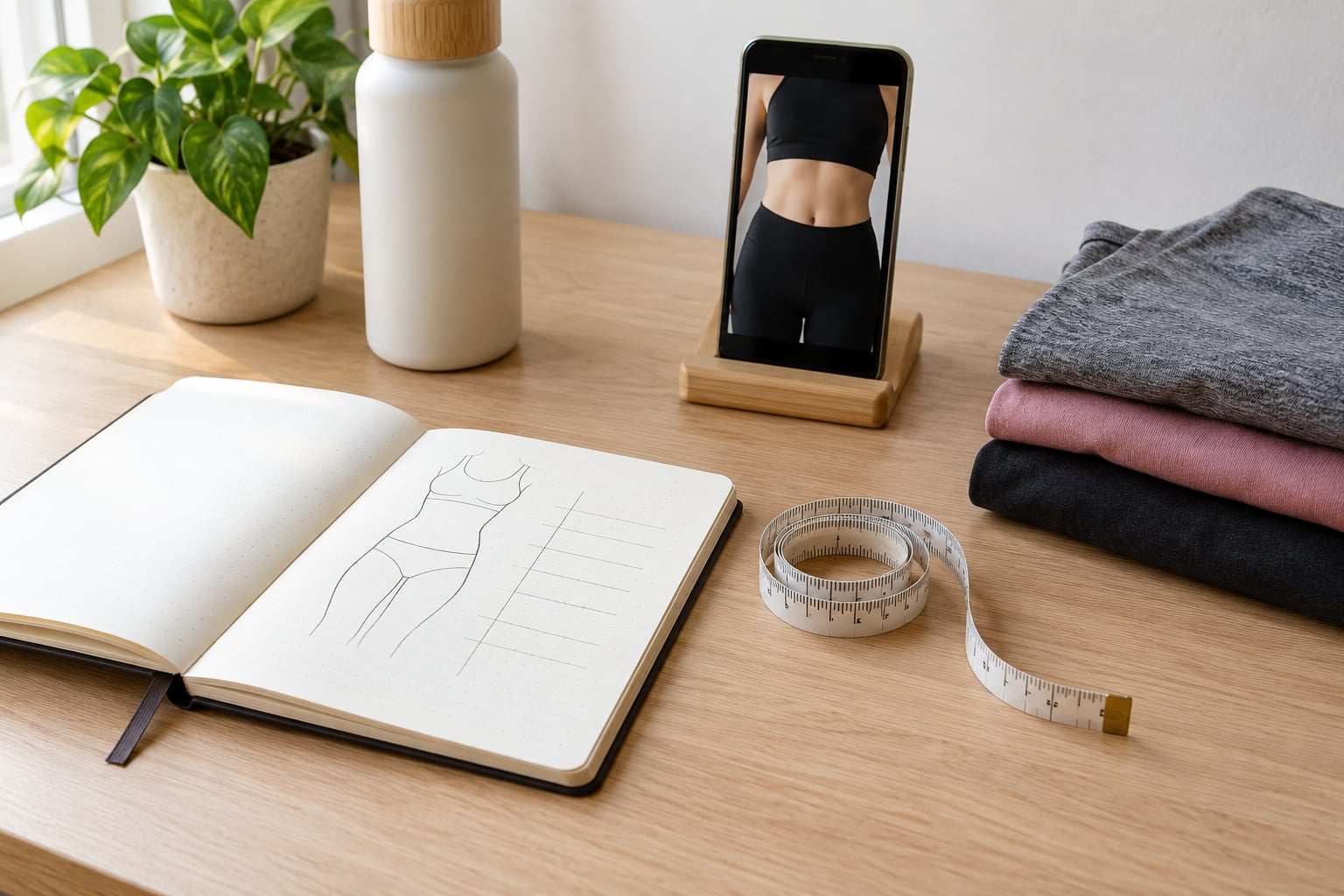
Add a baseline photo set: front, side and back, in the same clothing you will use every time. Standing with your feet hip-width apart and arms relaxed at your sides keeps the frames comparable.
The baseline is a reference point, not a verdict. Nobody looks at their week-one photo and feels good, and that is the correct reaction.
2. Take Progress Photos on a Schedule
Compare photos every two to four weeks. Any more often and you are looking at posture, lighting and bloating rather than shape change.
Keep four things fixed: same time of day, same lighting, same distance from the camera, same clothing. Morning photos work best for most people because the body looks the same. A phone propped on a shelf at chest height gives you a consistent angle.
Look for changes in how your clothes hang, how the waistband sits, and whether you can see more definition. Do not look for thinness in one specific spot. Faces and abdomens often change at different speeds from hips and arms, and there is no reliable outside-in order of fat loss.
Put new photos in a separate folder. Comparing this month’s set with the previous one tells you plenty; hunting for the old set when you are tired and hungry tells you nothing.
3. Track Strength and Fitness Changes
Write down what you lifted and how it went, and you will get a progress signal the scale cannot argue with.
For resistance training, record sets, reps and load. The same lift going from 20 kilograms for 6 reps to 20 kilograms for 10 reps is real progress even on a week your waist reads exactly the same. For walking, note distance or time. For home workouts, note the routine and how many rounds you finish before your form falls apart.
This method catches body recomposition, where fat goes down and lean mass holds steady or climbs. That combination keeps body weight close to unchanged while your shape and capability improve, and it is the most common reason a scale stays flat through a genuine cut.
Log it weekly rather than daily. Training numbers move on a scale of months, so daily entries just add noise.
4. Notice Energy, Sleep, and Recovery
How you feel is data too, as long as you rate it instead of guessing. Give yourself a one-to-five score each evening for energy, sleep quality and mood. A weekly average of 3 across a month is more informative than a single good Tuesday.
Recovery is the practical signal most people ignore. If your usual session stops feeling hard, if stairs stop needing two stops, if soreness after a routine drops from four days to one, something has changed. So has resting heart rate if you happen to track it with a watch, which tends to drift down as fitness improves.
Persistent fatigue, dizziness, feeling cold all the time, hair thinning or menstrual changes are not progress markers. If you notice any of those, stop pushing through the numbers and talk to a doctor or registered dietitian.
5. Monitor Habits and Consistency
When you are not weighing, the habits become your measurement. They also tell you far more about why progress stalled than any photo does.
Track a short weekly checklist: meals eaten, servings of vegetables, protein at each meal, sugary drinks, movement minutes, water, sleep hours. A yes or no for each keeps it to under a minute.
Two weeks of ticked boxes with no change in measurements or photos usually points at the plan, not at your metabolism. That is useful information, because it is something you can fix this week.
6. Check Clothing Fit and Comfort
Clothing fit is the most abused progress signal and the most accessible one. Jeans that need a different button, a belt that moves one notch, a shirt that no longer pulls across the back, a ring that spins freely. These are real changes in dimension even though the fabric is not a measuring device.
People on Reddit talk about belt notches and anchor garments more than any other non-scale method, and the reason is simple: a notch you can feel beats a number you have to interpret. One poster on r/loseit described using a specific pair of trousers and a skin-tight shirt as the benchmark instead of the scale.
Two cautions. Fit also changes with posture, bloating and whether you are on a cycle, so treat it as one data point rather than a verdict. And if your anchor garment is loose from the start, it tells you nothing, so pick ones that fit you properly right now.
The Scorecard at a Glance
Here is how the methods compare, including what each one cannot tell you.
| Method | How often | What it tells you | Main limitation |
|---|---|---|---|
| Body measurements | Weekly | Waist and hip change, which often shows first | Only shows change, not body fat |
| Progress photos | Every 2 to 4 weeks | Shape change and posture | Easily distorted by lighting and angle |
| Strength log | Weekly | Lean mass and capability | Slow to move, needs a training habit |
| Energy, sleep and recovery | Daily rating | Whether the plan is sustainable | Subjective and easy to score generously |
| Habits checklist | Weekly | Whether the plan was actually followed | Measures input, not outcome |
| Clothing fit | Monthly | Dimension change you notice daily | Affected by posture and bloating |
If you want fewer moving parts, run the three that pull the most weight: waist measurement, a photo set every four weeks, and your training log. Add habit boxes once those feel automatic.
Common Mistakes
Checking too often. Measuring daily or photographing weekly guarantees disappointment, because the changes you are looking for are measured in weeks. Fix: measurements once a week, photos every two to four.
Changing your method each week. A new app, a new measuring site, a new photo angle each time means you can never compare. Fix: write down the protocol once, then repeat it exactly.
Trusting the wrong signals. Sweating, muscle soreness and feeling hungrier are not fat loss. Sudden face fat changes are water and genetics, not a plan working faster. Fix: trust circumference, photos and strength, and ignore everything you cannot repeat.
Ignoring strength and habits. Appearance alone leaves out the two things that actually decide whether a cut works. Fix: add a training log and a weekly checklist.
Waiting forever on a plateau. Four to six weeks of unchanged waist, unchanged photos and unchanged training numbers means the plan needs adjusting, not more patience. Fix: change intake or add movement, then give it another four weeks.
One more thing. If tracking triggers shame spirals, restriction or obsession, that is worth raising with a registered dietitian or doctor rather than pushing through. Nothing here is medical advice, and anyone with a medical condition, a history of disordered eating, or medication affecting appetite should get individual guidance before changing how they eat or exercise.
Frequently Asked Questions
What is the best way to track progress without a scale?
Waist circumference measured under identical conditions is the most useful single method, because abdominal fat tends to change early. Add standardized progress photos every two to four weeks and a weekly training log, and together those three cover the case where fat drops while lean mass holds steady. Habit checkboxes fill the gap by showing whether the plan was actually followed.
How often should I take progress photos without using a scale?
Every two to four weeks is the practical range. Weekly photos mostly show changes in lighting, posture and bloating rather than body shape, which is enough to make you doubt a plan that is working. Use the same time of day, the same lighting, the same distance from the camera and the same clothing each round, and put each new set in a fresh folder so you compare against the previous one only.
Can waist measurements tell me if I am losing body fat?
They tell you that your dimensions are changing, which is useful but not identical to knowing body fat. A waist measurement cannot separate fat from muscle or water, so it works best as a trend line over months rather than a single reading. Measuring at the navel, in the morning, before eating and without sucking in your stomach keeps the numbers comparable. Losing fat and gaining muscle can both shrink a waist.
What should I track if I am exercising at home?
Track what repeats week to week: the routine you ran, how many rounds you finished, and where your form started to break down. For strength work, record reps per set at a given load. Add a daily one-to-five rating for sleep and energy, since home training progress is easy to feel and easy to forget. Home exercisers also benefit from a weekly step or distance figure, since it is an easy target to nudge.
How do I avoid becoming discouraged when progress is slow?
Judge the plan on four to six weeks of data, not on a bad week. Waist, photos, training log and habits together will show a trend long before a daily mental check does. Write the weekly numbers down and review them once a week, which stops you testing the plan every morning. If nothing has moved after six honest weeks, adjust the plan instead of adding more willpower to it.
When should I talk with a doctor or registered dietitian about my progress?
Talk to a professional if you hit a plateau you cannot shift, if you are using a GLP-1 medication or had bariatric surgery, or if you are perimenopausal, since all three change the usual timeline. Seek medical advice sooner for fatigue, dizziness, feeling cold constantly, hair thinning, menstrual changes, chest pain or shortness of breath during exercise. A dietitian can also help if tracking has started to trigger restriction or obsessive behaviour.
Start with one thing. Take your baseline measurements and a front, side and back photo set today, then repeat both on a fixed weekly schedule and see where you are in four weeks. Add the training log once those two feel boring rather than informative, which usually takes about a month.