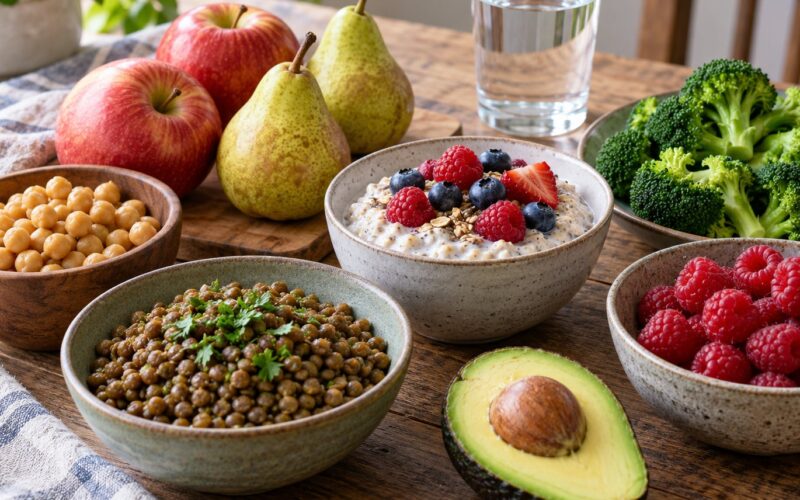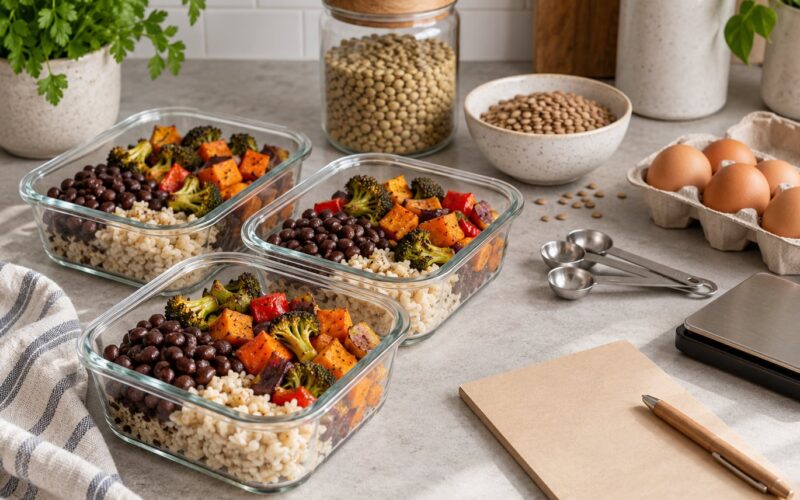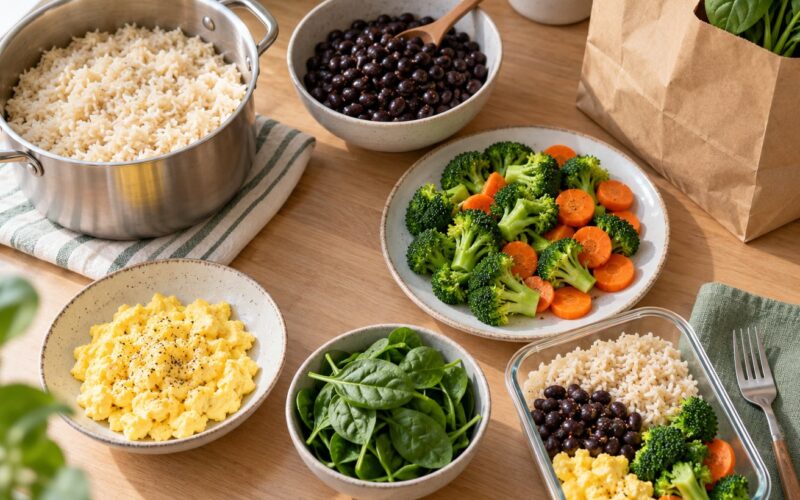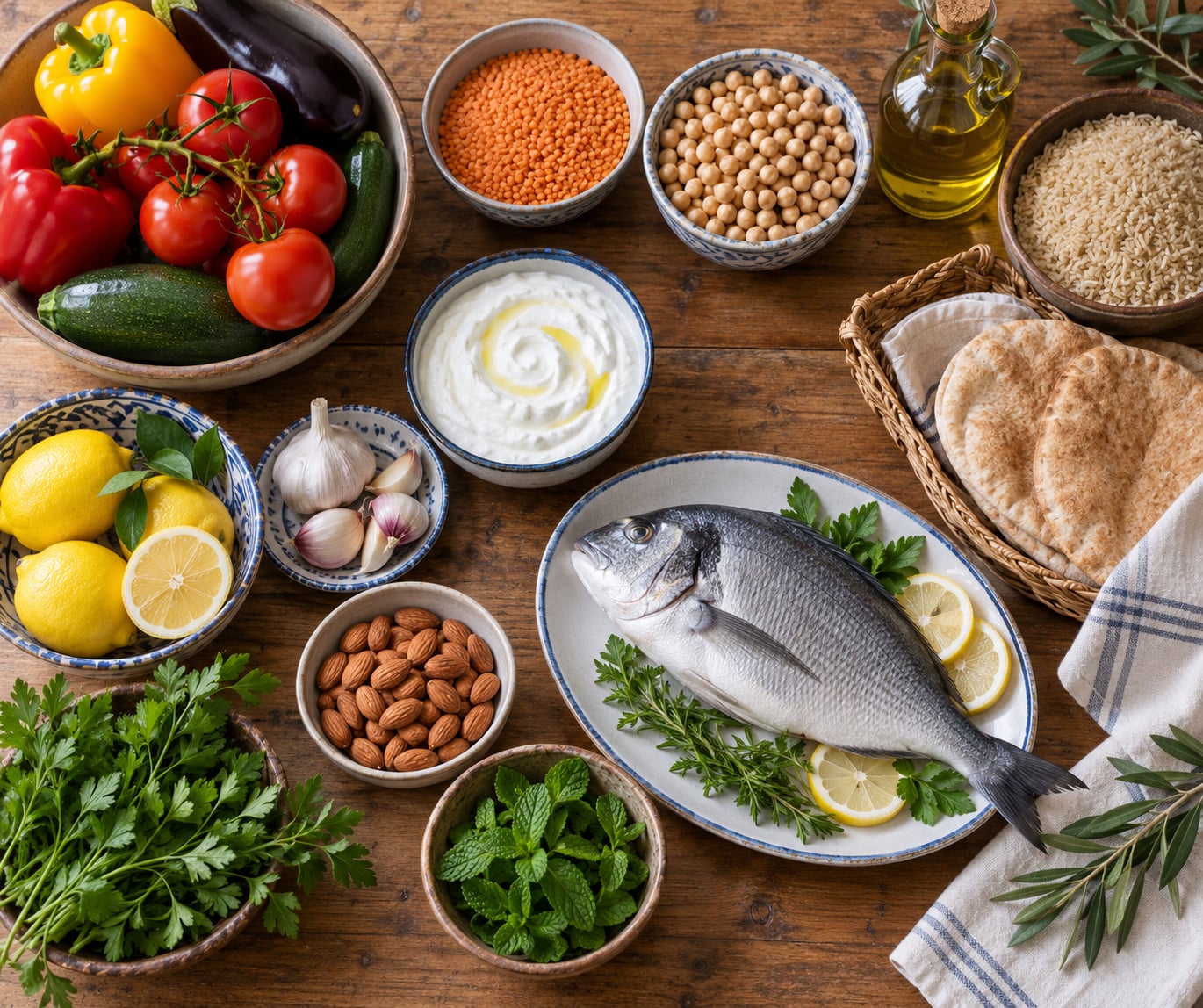
A Mediterranean diet grocery list for beginners is simply the shopping version of the traditional eating pattern found in Greece, Italy, Spain, southern France, Turkey and North Africa: plenty of vegetables, fruit, whole grains, beans, fish, olive oil, yogurt, nuts and herbs. Think of it as a plate you fill repeatedly rather than a set of foods to ban.
The pattern follows roughly one rule at mealtime. Half the plate is vegetables and fruit, a quarter is whole grains, a quarter is protein, and olive oil goes on top of everything. That is the same ratio people describe on r/mediterraneandiet, and it matches how Harvard School of Public Health and the Oldways Mediterranean Diet Pyramid frame the pattern.
Below is one complete list you can shop from today, with amounts for a single person and for a family of four, budget swaps, and a short list of foods to eat less often rather than never. One caveat before we start: this is general nutrition information, not individual advice. If you have a medical condition, are pregnant, or manage diabetes, kidney disease or food allergies, talk to your doctor or a registered dietitian about your own plan.
Table of Contents
- Mediterranean Diet Grocery List for Beginners at a Glance
- 1. Fresh Vegetables: the six that cover half your week
- How to shop a Mediterranean diet grocery list without wasting produce
- 2. Seasonal Fruit: the everyday carbohydrate that needs no cooking
- 3. Extra-Virgin Olive Oil and Other Healthy Fats
- What to buy on this grocery list if you are not using olive oil
- 4. Beans, Lentils and Chickpeas: the plant protein backbone
- 5. Fish and Seafood: two tins and one fresh fillet will carry you a week
- 6. Eggs, Poultry and Lean Proteins
- 7. Whole Grains and Starchy Foods
- 8. Dairy or Fortified Alternatives
- 9. Nuts, Seeds and Nut Butters
- 10. Pantry Staples, Herbs and Flavour Builders
- Start with the small jars, not the big ones
- Frequently Asked Questions
- What are the most important foods for a Mediterranean diet grocery list?
- Are canned beans and canned tuna suitable for beginners?
- How much fruit and vegetables should I buy each week?
- What can I buy instead of olive oil?
- How can I shop for a Mediterranean diet on a budget?
- Do I need to buy special Mediterranean diet foods?
- Conclusion
Mediterranean Diet Grocery List for Beginners at a Glance
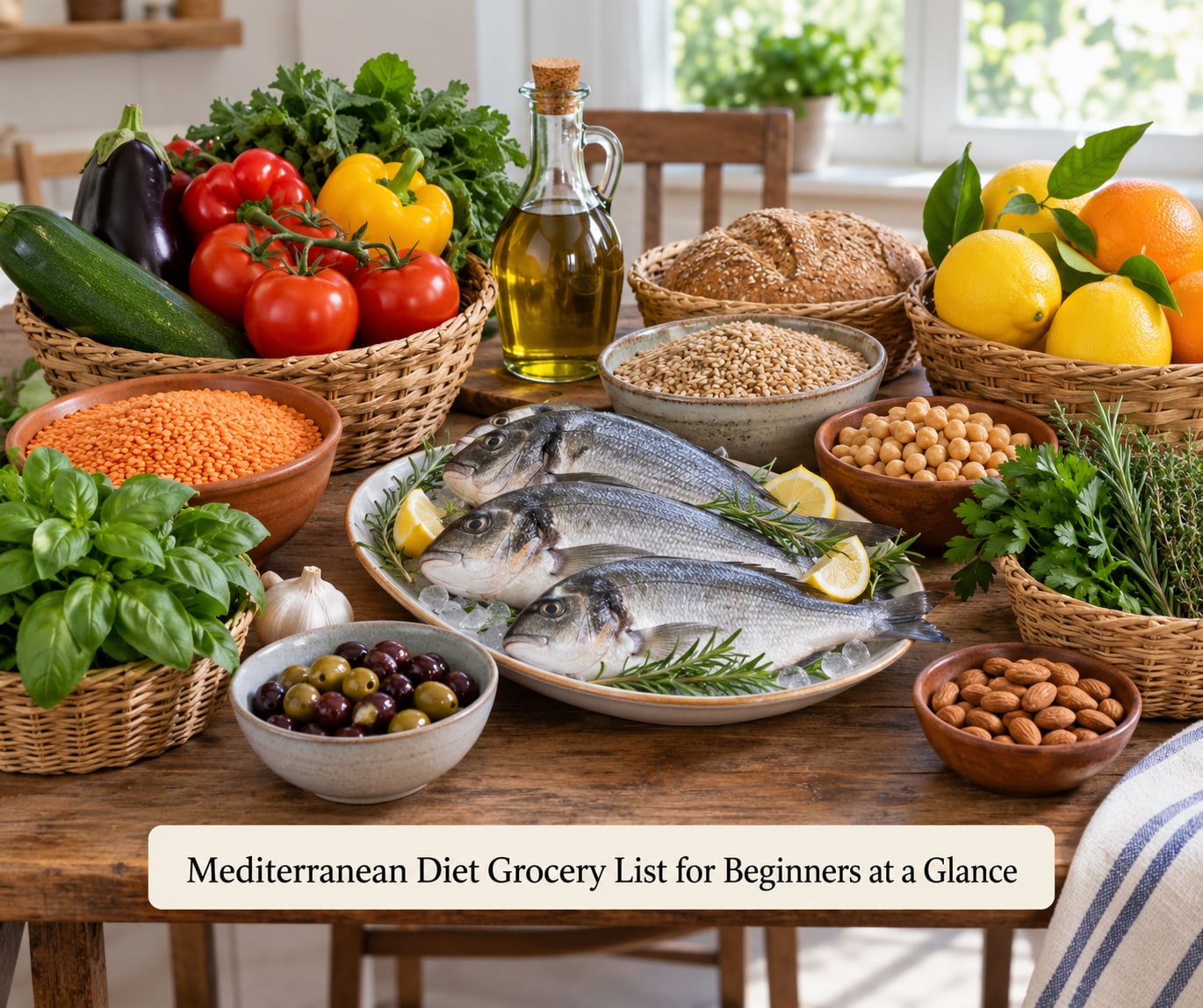
Buy from the perimeter first. Produce, dairy, eggs and the freezer sit along the outside walls of most stores, and that is where nearly everything on this list lives. The middle aisles are for the shelf-stable pieces: tinned tomatoes, canned beans, dried lentils, rice, pasta and olive oil.
This table covers the whole week for two people. Scale it up for a family of four by roughly doubling, and scale it down for one person by buying the smaller pack size wherever it exists.
| Category | Two adults, one week | What it looks like |
|---|---|---|
| Vegetables | 8 to 10 pounds | Two heads of leafy greens, a bag of salad mix, plus tomatoes, cucumbers, peppers, zucchini, eggplant, broccoli |
| Fruit | 7 to 10 pieces | Three bananas, four apples or oranges, a punnet of berries, a small lemon or lime |
| Legumes | 8 cans or 2 bags | Chickpeas, cannellini or black beans, plus a bag of dry lentils |
| Fish | 4 to 6 servings | Four tins of tuna or sardines, or two tins plus one fresh fillet |
| Poultry, eggs, other protein | 1 to 1.5 pounds | Two chicken breasts or thighs, one dozen eggs |
| Whole grains | About 3 dry pounds | Brown rice or quinoa, whole-wheat pasta, whole-grain bread or pita, oats |
| Dairy | 1 large tub, 1 block | Plain Greek yogurt, feta or halloumi, a small amount of hard cheese |
| Fats and nuts | 1 bottle, 1 bag | Extra-virgin olive oil, almonds or walnuts, tahini or hummus |
| Flavour builders | 1 small haul | Garlic, onions, lemons, tomatoes in a tin, vinegar, oregano, paprika, cumin, bay leaves |
If you only buy twelve things in week one, buy these: extra-virgin olive oil, one tin of tuna, canned chickpeas, dry lentils, whole-wheat pita, brown rice or quinoa, plain Greek yogurt, feta, baby spinach, tomatoes, lemons, and garlic. Add onion and a jar of almond butter and the week is covered.
1. Fresh Vegetables: the six that cover half your week
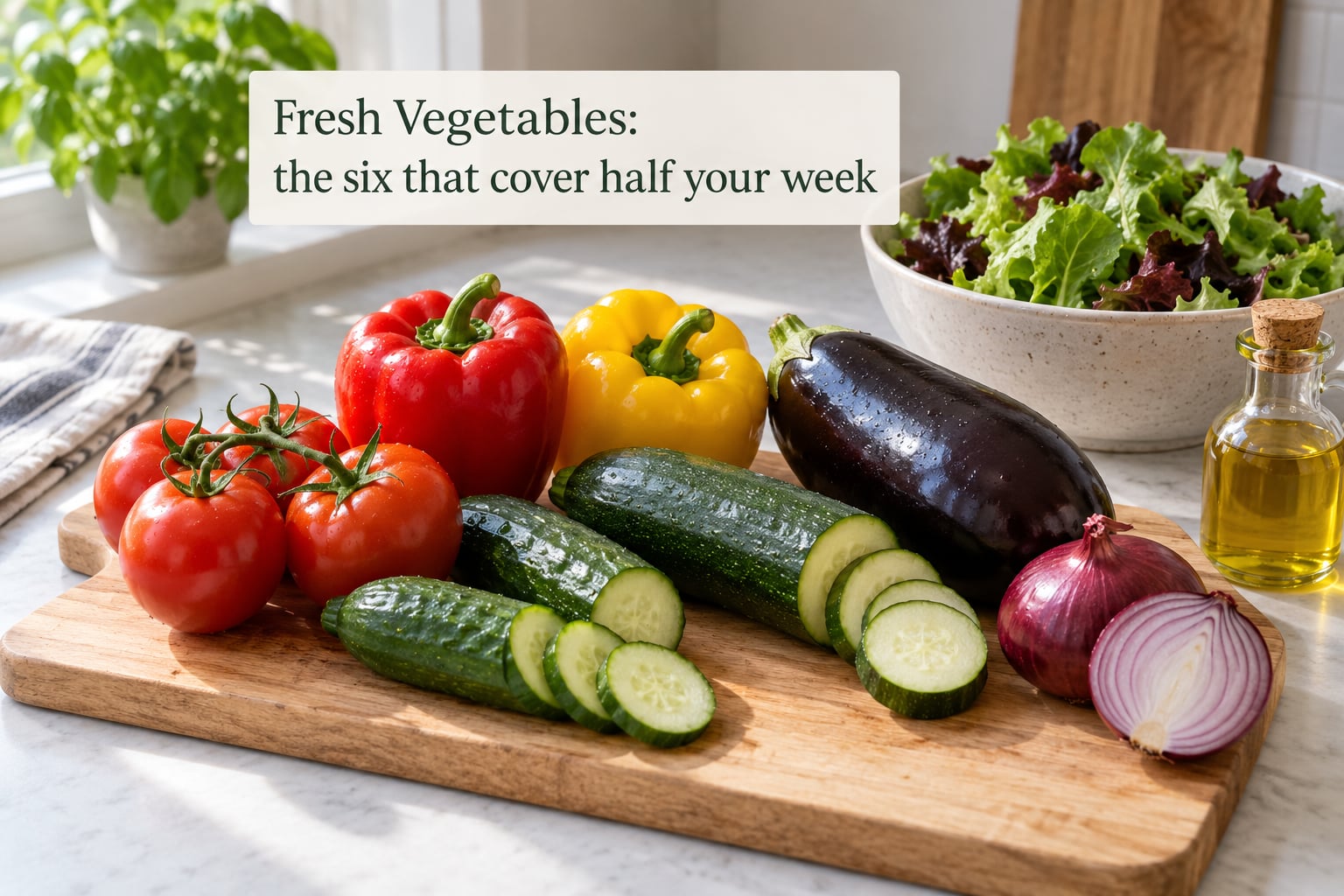
Vegetables are the base of the pattern, and you do not need a huge variety to start. Six types will carry a beginner through an entire week of salads, roasted trays and one-pot dinners without repeating a meal back to back.
- Leafy greens — baby spinach, kale, arugula or romaine. Buy two bags a week if one is for salad and one gets cooked.
- Tomatoes — fresh in season, tinned the rest of the year. Tinned plum tomatoes are usually picked riper and cheaper.
- Cucumbers and bell peppers — almost no prep, and they make a lunch you can eat at a desk.
- Zucchini and eggplant — roast them in a hot oven with oil, salt and a lemon wedge until soft and browned.
- Broccoli and cauliflower — steam, roast or stir-fry. They hold up well in a fridge for three or four days.
- Onions and garlic — the base of nearly every savory dish on this list. Never skimp here.
How to shop a Mediterranean diet grocery list without wasting produce
The most common complaint in planning threads is produce rotting in the crisper. Two habits fix it: shop produce every three or four days rather than once a week, and buy frozen for the vegetables you only cook occasionally.
Frozen broccoli, peas, green beans and spinach are picked and frozen at peak, so the nutrient loss is small and the price is lower. Use fresh for anything you eat raw, like salad leaves, tomatoes and cucumbers.
Roasting is the lowest-effort cooking method there is. Chop, toss with a tablespoon of olive oil, spread on a hot tray and leave it alone. Steam broccoli and cauliflower for four minutes and dress them with lemon instead of butter.
2. Seasonal Fruit: the everyday carbohydrate that needs no cooking
Fruit replaces a lot of the sweets people give up when they start this way of eating. Shop whatever is in season and good value, and eat it whole rather than juiced.
- Bananas and apples — the easiest portable snack, and they travel without a container.
- Oranges, clementines and grapefruit — segment them and add to a salad with fennel and olives.
- Berries — good on yogurt, in oatmeal, or straight off the board.
- Grapes — buy the small seedless kind for snacking.
- Peaches, plums, figs, pears — summer fruit, wonderful grilled or baked with a spoon of honey.
Breakfast is the easiest place to add it: sliced banana or berries stirred into oatmeal. Snacks do not need to be a packaged bar either, since a piece of fruit with a handful of walnuts takes about the same time to prepare.
3. Extra-Virgin Olive Oil and Other Healthy Fats
Olive oil replaces butter, shortening and coconut oil as the everyday added fat. It goes on roasted vegetables, drizzled over beans, whisked into dressing and used for a whole-week flatbread that beats anything from a packet.
Buy a bottle you will finish rather than a fancy one you will hide. Extra virgin is the first pressing and it is what most people mean when they say olive oil. A dark green or tin can is fine; the back label matters more than the front.
Portions are smaller than beginners expect. A tablespoon per person per meal is a normal serving, so a 500 ml bottle covers roughly a month of daily dinners for two people. Grounding the oil in lemon juice, vinegar and herbs makes a dressing that tastes good enough to use every day.
What to buy on this grocery list if you are not using olive oil
Avocado works in the same slot, and a small amount of tahini thins out with water and lemon into a sauce. If you are avoiding oil entirely, extra-virgin olive oil is not required by the pattern, but it is the most authentic choice and the one most Mediterranean cooks reach for first.
4. Beans, Lentils and Chickpeas: the plant protein backbone
Legumes are the cheapest protein on this list and the most overlooked one. A can of chickpeas costs a fraction of a can of tuna, keeps for months on the shelf, and turns into soup, salad or a tray bake in one pan.
Start with dry lentils rather than canned. They cook in about twenty-five minutes with no soaking, they thicken a soup on their own, and one dry pound becomes roughly six servings. Red lentils need no soaking at all, which makes them the safest choice for a first cook.
Three beginner meals are worth learning by heart:
- Lentil soup — onion, carrot, celery and garlic softened in olive oil, lentils and stock added, simmered until soft, finished with lemon.
- Chickpea salad — chickpeas, cucumber, tomato, red onion, parsley and a lemon and olive oil dressing. No cooking at all.
- Stuffed peppers — halved peppers filled with a mix of rice, canned beans, diced tomato and herbs, baked until the tops brown.
When buying canned, choose beans packed in water or in their own juice. Rinse them under a tap afterwards and the sodium drops noticeably.
5. Fish and Seafood: two tins and one fresh fillet will carry you a week
Fish is the most intimidating category for beginners because fresh fish looks expensive and unfamiliar. Start with tins. Tuna, sardines and mackerel packed in olive oil or water are shelf-stable, quick and use the same pantry staples you already bought.
Two or three servings of fish a week fits the pattern comfortably. That does not mean fish every day, and it does not mean you need to grill anything. A tin of sardines broken over whole-grain toast with lemon takes four minutes.
For fresh fish, buy salmon, cod, trout or mackerel fillets, and use one of three methods: bake at 200°C until the flesh flakes, pan-sear skin-side down for four minutes then flip for two, or grill on a very hot pan. Cook to an internal temperature of 145°F / 63°C and keep raw fish separate from cooked food on the board.
Nobody has to like fish to start. Anchovies melted into a tomato sauce, salmon in a grain bowl and white fish in a broth all deliver the same ingredient without the strong flavour.
6. Eggs, Poultry and Lean Proteins
When people ask how much of the plate protein fills, most of the answer on this pattern comes from beans, lentils and fish. Poultry and eggs fill the rest, and they are useful because they are fast and cheap.
Buy chicken thighs rather than breasts when you can. They stay moist through a weeknight cook, take well to roasting with lemon and oregano, and cost less. Rotisserie chicken from the deli is a legitimate shortcut for a family that has no time to cook.
Eggs are a normal part of this way of eating, usually a few per week. There is no widely agreed ceiling for most healthy adults, and anyone with a specific condition should ask their own clinician rather than follow a number from a website.
For safety, cook poultry to 165°F / 74°C and ground meat to 160°F / 71°C, keep raw poultry in the bottom tray of the fridge, and wash hands and boards after handling it.
7. Whole Grains and Starchy Foods
A whole grain keeps all three parts of the kernel, which means more fibre and B vitamins than the refined version. Most of the difference on a label comes down to one word: check that whole grain or whole wheat appears first in the ingredient list.
- Brown rice or quinoa — the weekly base. Both cook in a rice cooker or one pot and reheat well.
- Whole-wheat pasta — the swap beginners notice least, and it holds sauce better than people expect.
- Oats — the fastest breakfast on the list. Top with yogurt, fruit and walnuts.
- Whole-grain bread and pita — for wraps, for toast with hummus, and for adding to a tray bake.
- Farro, barley or couscous — buy one when it is on offer and you have time to learn it.
Cook grains in stock rather than water and you get seasoning for free. A quarter cup of dry grain per person is a normal serving, which means half a cup dry makes two helpings.
8. Dairy or Fortified Alternatives
Plain Greek yogurt is the workhorse of this list. It adds protein to breakfast, stands in for sour cream in sauces, and takes a spoonful of honey when you want something sweet. Full-fat and 2% versions are both fine; choose the one you will actually eat.
Feta and halloumi are the cheeses that appear in Mediterranean cooking. Grate a little parmesan or pecorino over pasta rather than serving a block of cheese with every meal.
If you avoid dairy, fortified soy yogurt and unsweetened plant milks work in the same meals. Check labels for two things: added sugar per serving, and protein. A vanilla almond drink can carry as much sugar as dessert while a plain soy yogurt typically matches Greek yogurt.
Yogurt with fruit stirred through is a protein-rich snack that needs no assembly, which makes it a good option between meals.
9. Nuts, Seeds and Nut Butters
Nuts and seeds do three jobs here: they add fat to a vegetable-heavy plate, they bring texture, and they turn a bowl of yogurt into something filling. Buy them in whatever size you will actually finish, because a large jar that goes stale is wasted money.
- Almonds and walnuts — walnuts bring plant omega-3 fats, almonds bring vitamin E and a longer shelf life.
- Cashews and pistachios — useful for roasting with vegetables or blending into a sauce.
- Chia, flax and pumpkin seeds — spoon them into oatmeal or yogurt the night before.
- Tahini and nut butters — thin almond or cashew butter with warm water and lemon for a quick dressing.
A small handful, roughly 30 grams, is a normal portion. That is about what fits in your closed fist, which is a more useful measure than weighing scales in a kitchen you will rarely use.
10. Pantry Staples, Herbs and Flavour Builders
This is the section that makes the food taste good, and it is where people cut too many corners. Salt, sugar and heavy sauces do most of the work in a fast meal. Lemon, garlic, vinegar, dried herbs and good olive oil do the same job with less.
- Tinned tomatoes — the base of sauces, stews and soups. Plain crushed or chopped, not sweetened.
- Vegetable broth — enough of it to cook grains or lentils in makes water taste like something worth drinking.
- Vinegar — red wine vinegar, white wine vinegar or a decent balsamic, used for dressings and pickles.
- Lemons, capers and olives — acidity and salt in small amounts, which is what makes beans and greens taste finished.
- Dried herbs and spices — oregano, thyme, rosemary, bay leaves, paprika, cumin and sumac.
- Hummus or its ingredients — chickpeas, tahini, lemon and garlic blend in two minutes with a food processor.
Start with the small jars, not the big ones
The most practical approach is to buy pantry items in the small size, use them for a month, then buy the larger size once you know how often you cook. A big bag of lentils that sits in a cupboard for a year teaches you nothing, and the same is true of a huge jar of olive oil.
A practical first shop costs less than people expect. Most of the cart is produce, beans, oats and yogurt, which are inexpensive. Olive oil, fish and nuts are the three items people call expensive, and each has a sensible swap.
Frequently Asked Questions
What are the most important foods for a Mediterranean diet grocery list?
Start with six groups: fresh vegetables, fruit, a whole grain such as brown rice or whole-wheat pasta, a plant protein such as chickpeas or lentils, a fat such as extra-virgin olive oil, and a dairy item such as plain Greek yogurt. Add fish or eggs a few times a week and herbs, garlic and lemon to make it taste good. If you only buy twelve things in week one, buy olive oil, a tin of tuna, canned chickpeas, dry lentils, whole-wheat pita, brown rice, Greek yogurt, feta, spinach, tomatoes, lemons and garlic.
Are canned beans and canned tuna suitable for beginners?
They are arguably the easiest starting point. Canned beans need only rinsing and work in salads, soups and tray bakes, and tinned tuna and sardines need no equipment beyond a fork. Choose fish packed in water or olive oil rather than in a sweet or salty brine, and drain or rinse it. If a metallic taste bothers you, sardines and mackerel usually do not have it.
How much fruit and vegetables should I buy each week?
For one adult, aim for about 8 to 10 pounds of vegetables and 7 to 10 pieces of fruit per week. That is roughly half your plate at two meals a day. Buy leafy greens, tomatoes, cucumbers and peppers fresh, and choose frozen for broccoli, cauliflower, peas and green beans that you cook less often. Shop the fresh items every three or four days rather than once a week to cut waste.
What can I buy instead of olive oil?
Avocado works in the same role, and tahini thinned with water and lemon makes a sauce that behaves like olive oil dressing. If you want to cut the cost, buy a larger bottle of olive oil instead of a small premium one and use it for everything. The pattern does not require olive oil specifically, but it is the traditional added fat in the countries this eating pattern comes from.
How can I shop for a Mediterranean diet on a budget?
Spend less on the items people call expensive and more on the ones that are genuinely cheap. Dry lentils, canned beans, oats and frozen vegetables cost very little. For the pricier items, buy frozen or tinned fish instead of fresh, use canned tomatoes instead of fresh out of season, choose store-brand olive oil, and buy nuts in the small size so none go stale. Cooking once on Sunday and eating twice from the batch keeps the cost down further.
Do I need to buy special Mediterranean diet foods?
No. Nothing on this list requires a special shop or an imported ingredient. Olives, feta, farro and tahini are easy to find in most supermarkets, and every one of them has a substitute: black olives for green, any brined cheese for feta, barley or brown rice for farro, and a nut butter for tahini. Buy the familiar versions first and add the more regional items later if you enjoy them.
Conclusion
The simplest version of this mediterranean diet grocery list for beginners is smaller than it sounds. Buy produce, a can of beans, a bag of lentils, a whole grain, one protein, olive oil, Greek yogurt, garlic, lemons and dried herbs. That is a week of real meals, and it costs less than a takeaway order for the same number of nights.
Shop the perimeter first, buy fresh produce every few days rather than once a week, and swap rather than restrict. Nothing on this list is forbidden, and eating a burger or a bag of chips occasionally does not undo a week of lentils and roasted vegetables. Adjust the quantities after one real week, once you know what you actually finish.