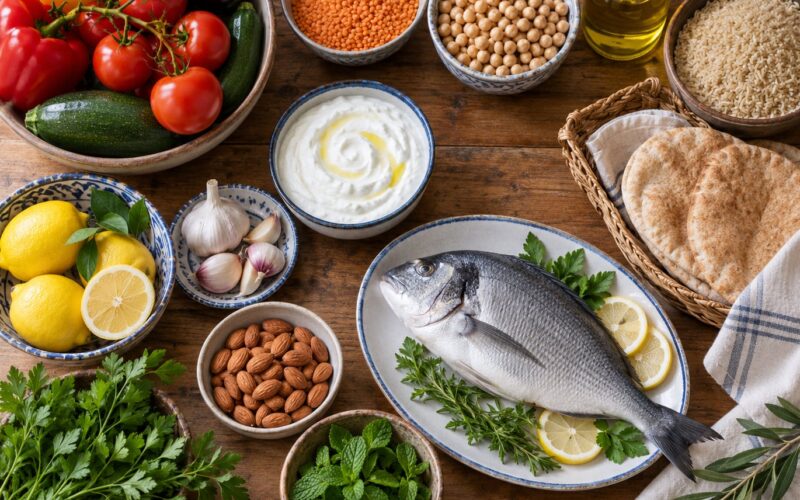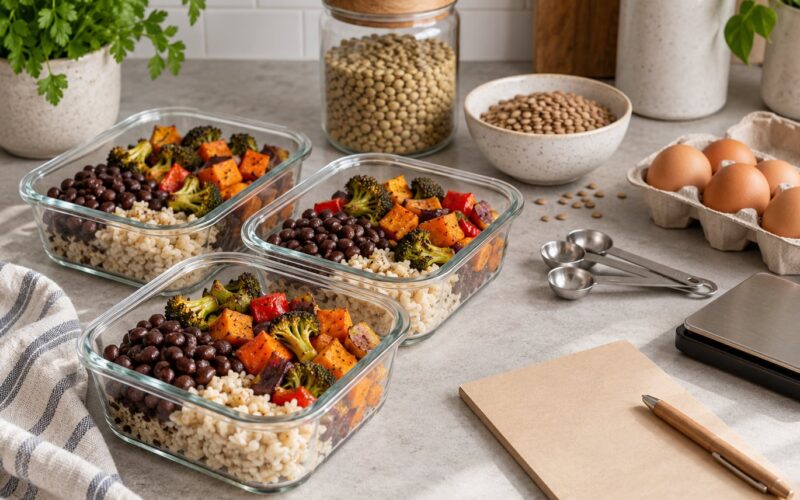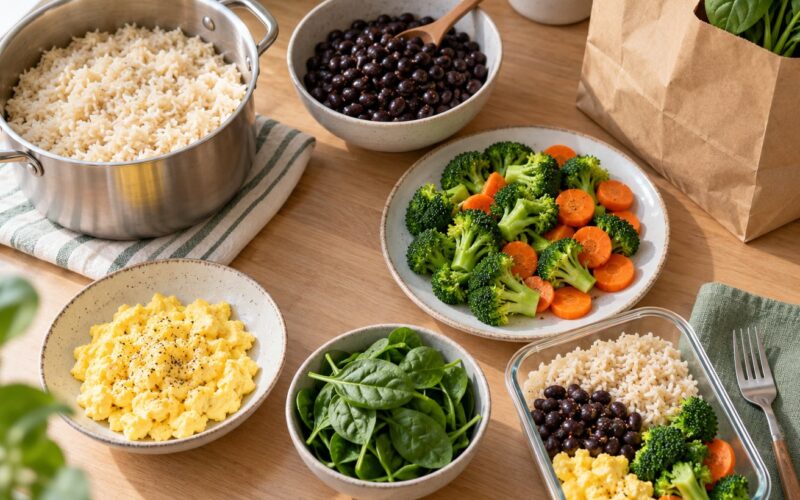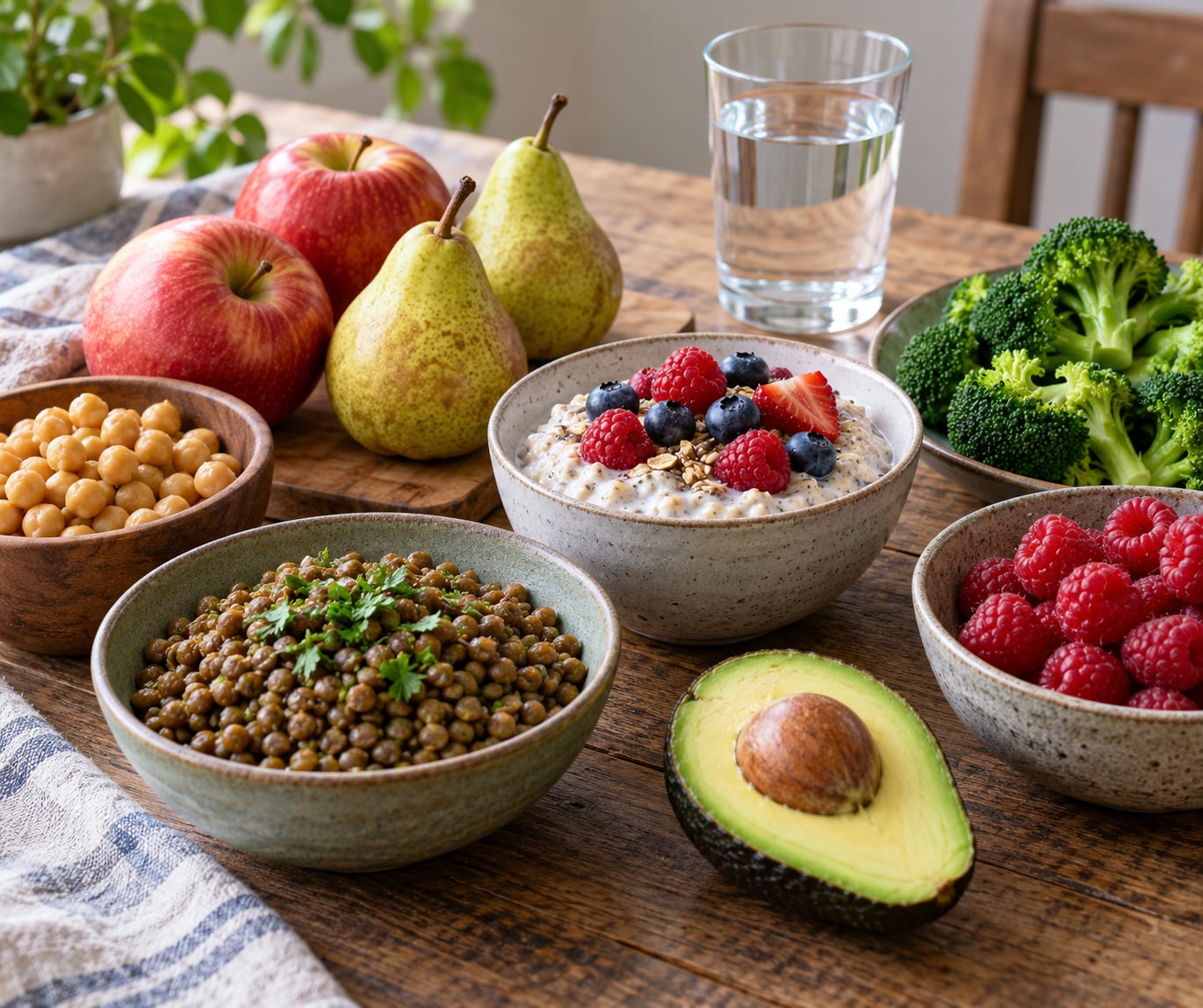
The best high fiber foods that keep you full are the ones that combine fiber with water, protein, or fat and give your stomach real physical volume. Fiber that dissolves into a gel slows how fast food leaves your stomach, while insoluble fiber stretches the stomach wall and switches on stretch-receptor fullness signals. Most people eat roughly half the fiber they should, so a few deliberate swaps usually do more than a supplement.
Below is a list of 15 everyday foods, ordered roughly by how much fullness you get for the calories. Each entry covers what it is, why it works, and a concrete serving idea you can use today. Numbers are approximate and depend on preparation, so treat them as a guide rather than a measurement.
One note before we start: this is general nutrition information, not medical advice. If you have a diagnosed digestive condition, are pregnant, or have symptoms that worry you, talk to a doctor or registered dietitian before you change what you eat.
Table of Contents
- High Fiber Foods That Keep You Full at a Glance
- 1. Lentils
- 2. Black Beans
- 3. Oats
- 4. Chia Seeds
- 5. Flaxseed
- 6. Avocado
- 7. Apples
- 8. Pears
- 9. Raspberries
- 10. Broccoli
- 11. Brussels Sprouts
- 12. Whole-Wheat Pasta
- 13. Brown Rice
- 14. Quinoa
- 15. Chickpeas
- Frequently Asked Questions
- What food holds the most fiber?
- Does eating fiber make you feel more full?
- How can I hit 25g of fiber a day?
- What food fills you up the longest?
- Do high fiber foods bloat you?
- Is 1 apple a day enough fiber?
- How to Add More Fiber Without Disrupting Your Digestion
- Conclusion
High Fiber Foods That Keep You Full at a Glance
Here is the whole list in one table, with approximate fiber per standard serving and the simplest way to eat it. The daily targets most nutrition guidelines use are about 25 grams for women and 38 grams for men.
| Food | Fiber per serving | Why it supports fullness | Easy serving idea |
|---|---|---|---|
| Lentils | About 15 g per cup cooked | Fiber, protein and bulk in one bowl | Half a cup of cooked lentils in soup |
| Black beans | About 15 g per cup cooked | Protein and fiber pair to slow digestion | Half a cup rinsed and folded into rice and salsa |
| Oats | About 4 g per half cup dry | Beta-glucan forms a viscous gel in the stomach | Overnight oats with berries and yogurt |
| Chia seeds | About 10 g per ounce | Absorb liquid and swell into a gel | Two tablespoons soaked in half a cup of water |
| Flaxseed | About 5 g per tablespoon ground | Adds fiber and a thick texture that slows a meal | A tablespoon stirred into warm oatmeal |
| Avocado | About 7 g per half fruit | Fiber plus monounsaturated fat and volume | Sliced on toast with a boiled egg |
| Apples | About 4 g per medium fruit | Skin fiber, water and chew resistance | One whole apple with a tablespoon of nut butter |
| Pears | About 5 g per medium fruit | Very high water and fiber for the size | A whole pear eaten slowly with cheese |
| Raspberries | About 8 g per cup | Very low calories for the volume | A cup stirred through Greek yogurt |
| Broccoli | About 5 g per cooked cup | Adds fiber and chew volume to a plate | Steamed florets with lentils and brown rice |
| Brussels sprouts | About 6 g per cooked cup | Roasting concentrates flavor while fiber stays | Shaved raw into a slaw with chickpeas |
| Whole-wheat pasta | About 6 g per cup cooked | Whole grain instead of refined, more chew | Half a plate pasta, half a plate vegetables |
| Brown rice | About 3.5 g per cup cooked | Keeps its bran layer and chews slowly | One-third cup cooked next to grilled chicken |
| Quinoa | About 5 g per cup cooked | Bulk and texture in grain bowls and salads | Half a cup cooked as a salad base |
| Chickpeas | About 12 g per cup cooked | Fiber and protein that carry a salad or curry | Hummus with carrot sticks for dipping |
1. Lentils
Lentils are the rare food where fiber, protein and bulk all arrive together. Half a cup of cooked lentils delivers roughly 8 grams of fiber and about 9 grams of protein, and that combination digests far more slowly than either one on its own. People on beginner fitness forums repeatedly name them as one of the gentlest legumes to add, with red lentils usually the easiest to tolerate.
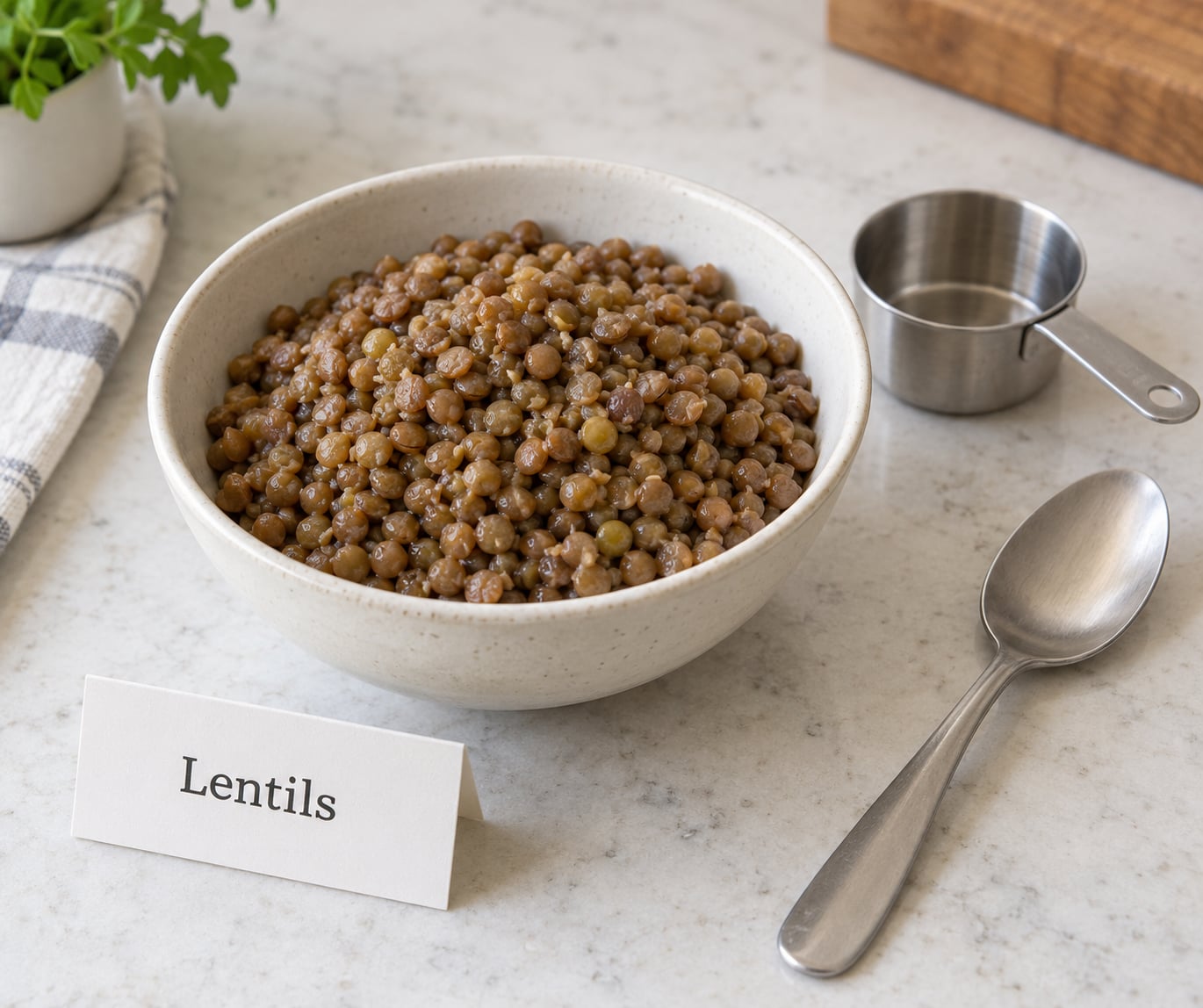
Use them as a base rather than a side. A cup of lentil soup with diced carrot and celery is an easy weeknight dinner that holds together until well past dinner time, and a half cup of cooked lentils folded into a salad gives a bowl of greens the staying power it normally lacks.
Red and green both work. Green lentils hold their shape, which suits salads, while red lentils collapse into curries and dals where you want the thick texture anyway.
2. Black Beans
Black beans are a classic example of fiber and protein working as a team. A cup of cooked black beans carries about 15 grams of fiber and 15 grams of protein, and the protein is what stretches the gap between hunger signals. Volume eaters on Reddit describe swapping white rice for black beans to roughly double the fiber of a bowl without changing the calorie count much.
Three easy uses: fold half a cup into brown rice with salsa and cheese, spoon them into tacos with salsa and avocado, or drop them into a vegetable soup in the last ten minutes of cooking.
If beans make you uncomfortable, rinsing canned beans under cold water until it runs clear helps a lot. That discards a good chunk of the dissolved sodium and some of the fermentable sugars that cause gas, and it costs you nothing.
3. Oats
Oats are the cleanest example of soluble fiber at work. Oats carry beta-glucan, a soluble fiber that dissolves into a gel and delays gastric emptying, so food leaves your stomach more slowly and the blood sugar rise after eating is gentler. Half a cup of dry rolled oats gives you about 4 grams of fiber for roughly 150 calories.
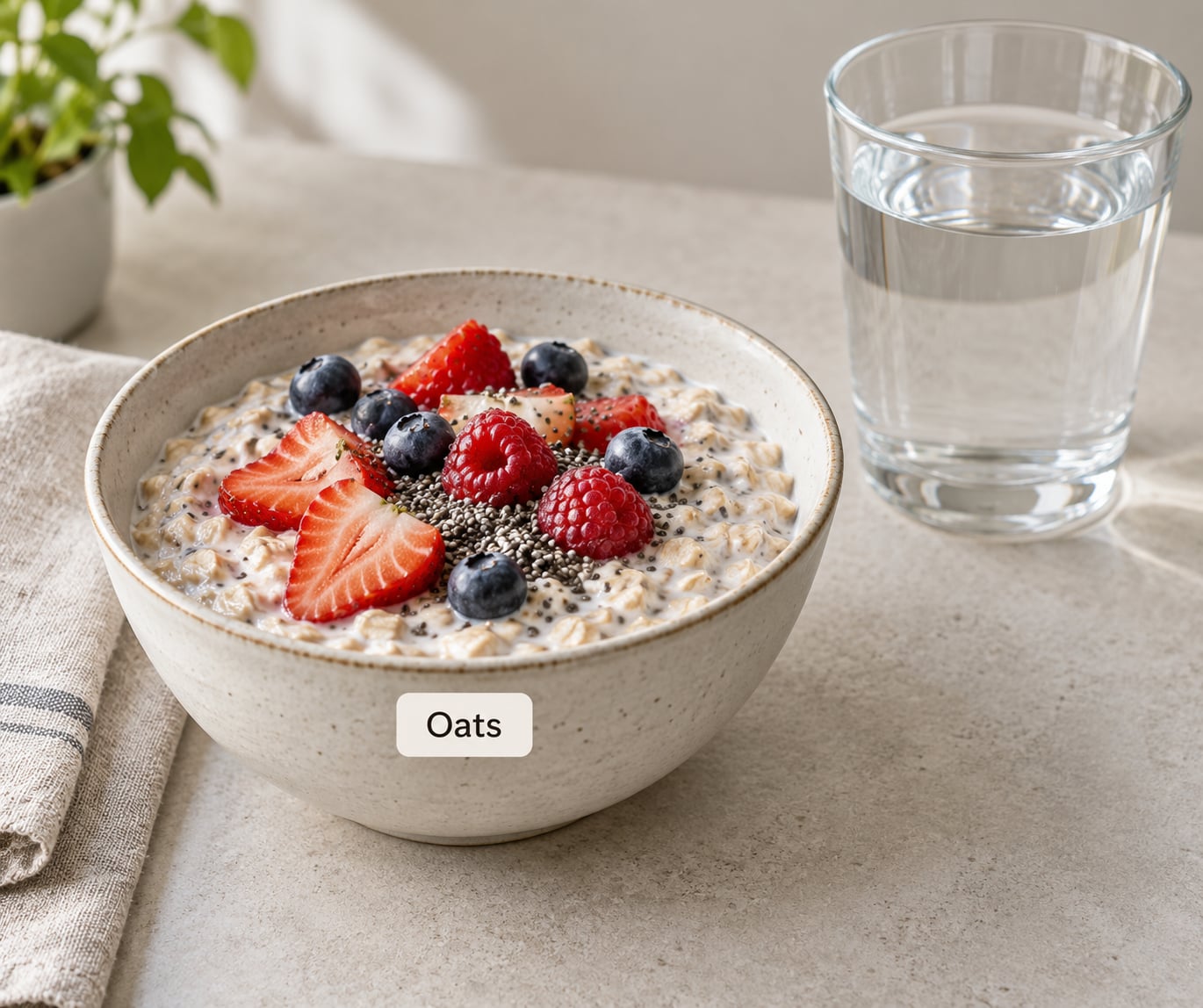
Steel-cut and rolled oats both work, and instant varieties still carry the beta-glucan even when they are less useful for blood sugar. For breakfast, half a cup of dry oats cooked with milk and topped with banana is about as simple as it gets. Overnight oats are the better choice when you want a morning that runs itself: stir half a cup of oats into a jar with milk and yogurt, refrigerate overnight, and add berries in the morning.
Cooked oatmeal cools to a thick gel. That is the whole trick, and it is why a bowl of oats holds you until lunch far better than a bowl of most breakfast cereals.
4. Chia Seeds
Chia seeds are small, but an ounce carries close to 10 grams of fiber along with plant-based omega-3 fats. The mechanism is simple and visible: the seeds absorb liquid and swell into a gel you can feel, which is why chia pudding stays satisfying for hours. Regulars on beginnerfitness forums treat chia and oats as their most reliable morning combination for fullness without bloat.
Soak two tablespoons in half a cup of water or milk and refrigerate for at least two hours, ideally overnight. Stir the gel into smoothies, spoon it over yogurt with raspberries, or mix it into a bowl of oatmeal the night before.
Drink a glass of water alongside. Chia works by pulling fluid into the gut, and plenty of fluid on the side keeps things moving comfortably.
5. Flaxseed
Ground flaxseed delivers about 5 grams of fiber per tablespoon and adds soluble fiber that thickens whatever it is mixed into. Whole flax seeds pass through undigested, so the ground form is the one that counts if fiber is the goal.
Mix one tablespoon into warm oatmeal where it thickens the liquid naturally, or fold it into muffin and banana bread batter. It works in smoothies too, though ground flax will thicken a blender drink into something closer to a pudding.
Keep ground flaxseed in the fridge or freezer. The oils in it go off at room temperature, and a bitter or stale taste is the quickest signal that it has been sitting too long.
6. Avocado
An avocado is unusual among fruits because it carries fiber, fat and volume at once. Half of a medium fruit gives you roughly 7 grams of fiber plus monounsaturated fat, and fat matters here because it slows gastric emptying and makes the fiber more satisfying than fruit eaten alone.
It is a supporting player rather than the meal itself, which is the part people skip. Half an avocado on toast with a boiled egg makes a real breakfast. Sliced into a salad with chickpeas it adds creaminess without a heavy dressing, and a quarter with lime and salt on a small plate is a perfectly respectable snack on its own.
7. Apples
An apple with the skin on gives you about 4 grams of fiber, a lot of water, and something you have to actually chew. That chew resistance is part of the fullness effect, and it is why people notice a real difference eating an apple whole rather than drinking it as juice.
Eat it whole with a tablespoon of nut butter, or with Greek yogurt and a small handful of walnuts for added protein and fat. Sliced with cinnamon works too, though whole keeps you working for the bite.
8. Pears
Pears are close to apples on fiber and even further ahead on water per bite, about 5 grams of fiber in a medium fruit. The flesh has a fine, dense texture that keeps a pear filling despite how light it feels in the hand, and it travels without a cooler or a container.
The simplest serving is the whole fruit, eaten slowly. Dice a pear into warm oatmeal with cinnamon for breakfast, or pair thin slices with a hard cheese for a snack that carries both fiber and protein. Avoid peeling it, since most of the fiber sits right under the skin and in the layer just beneath it.
9. Raspberries
Raspberries are close to the best fiber-to-calorie ratio in the produce aisle. A cup gives you about 8 grams of fiber for roughly 60 to 80 calories, and the seeds add a little texture that slows you down. The berries are also delicate enough to freeze in a single layer, which makes them a cheap way to keep fruit in the house through winter.
Stir a cup through Greek yogurt for a high-fiber breakfast that also delivers protein. They blend into smoothies without turning watery the way most berries do, and they work in a salad with goat cheese, arugula and a light vinaigrette.
Buy them dry and eat them dry. Raspberries picked at peak moisture spoil quickly, and soft berries are easy to overeat by the handful while reaching for the bowl.
10. Broccoli
Broccoli is a volume food first and a fiber source second. One cooked cup gives roughly 5 grams of fiber and very few calories, and high fiber foods that keep you full rarely come cheaper than that. It also brings vitamin C and vitamin K, which most people are short on.
Steam florets for three or four minutes and they stay crisp and green. Roasting on a hot sheet pan with oil and salt takes longer and caramelizes the edges, which is the version that converts people who never liked it. A stir-fry with garlic and a splash of soy sauce works in about the same time as the steaming.
Serve it next to something with protein and a whole grain. Half a plate of broccoli with lentils and brown rice is a complete meal that holds for hours, and a large pile of it with salmon is just as filling for a fraction of the calories of a pasta dinner.
11. Brussels Sprouts
Brussels sprouts are a small cabbage with a full serving of fiber in about a cup when cooked, roughly 6 grams. Like broccoli, they carry more water and bulk than their calorie count suggests, so they take up real space on the plate.
Halve them, toss with oil and salt, and roast at high heat until the cut faces brown. That is the method that works for most people. For a faster weeknight option, shave raw sprouts thinly and toss them with a lemon dressing and a little grated cheese. A cup of raw shredded sprouts keeps about 2 grams of fiber and still adds crunch.
Start with a smaller portion than you think you want. Cruciferous vegetables are higher in fermentable fiber than most vegetables, which is exactly what makes them filling and also what bothers some stomachs.
12. Whole-Wheat Pasta
Whole-wheat pasta is a swap rather than a super-food. Refined pasta is made from the starchy endosperm of the wheat kernel, and whole-wheat pasta keeps the bran and germ, which is where most of the fiber sits. The result is roughly 6 grams of fiber per cooked cup against about 2 for the refined version.
Use the half-plate method: half a plate of pasta, half a plate of vegetables, plus a protein like beans, lentils or grilled chicken. A sauce of tomato, garlic and olive oil is an easy way to add some of that missing fiber back in.
If the texture is what turns you off, try a higher bran or whole-wheat penne, which holds up better in a baked dish. Very high bran varieties can taste grainy, and those are the ones people write off permanently.
13. Brown Rice
Brown rice is white rice with the bran layer left on, so it keeps both fiber and most of the B vitamins. One cooked cup gives about 3.5 grams of fiber and roughly 215 calories, and the nuttier texture makes you chew more than the polished version.
Portion guidance matters more than people expect. A third of a cup of cooked rice is a normal side serving alongside a protein and a large serving of vegetables. A cup as the centerpiece of a bowl is a much bigger commitment than most home cooks realize.
Cook a batch on Sunday and use it across the week, mixing it with white rice if you want a gentler starting point. Combine it with black beans and salsa for a bowl that hits double digits in fiber grams without much effort.
14. Quinoa
Quinoa is a seed rather than a true grain, and that is mostly a botanical footnote. What matters is that one cooked cup delivers about 5 grams of fiber and more protein than most grains, around 8 grams, which gives it a similar fullness profile to a grain without the protein gap.
Cook a batch and chill it, then use it as the base for a grain bowl with roasted vegetables and chickpeas. It works cold in a salad with cucumber, herbs and a lemon dressing, and it can stand in for rice in a stir-fry or a pilaf.
The light, nutty flavor makes it easy to over-season. Toast the grains dry for a minute before adding liquid, and the difference is noticeable.
15. Chickpeas
Chickpeas deliver about 12 grams of fiber and nearly 15 grams of protein per cooked cup, and they hold their shape in a salad, which keeps a bowl feeling substantial. For high fiber foods that keep you full without feeling heavy, chickpeas are one of the more versatile picks on this list.
Blitz them into hummus with lemon, olive oil and garlic, and serve it with carrot sticks, cucumber or whole-grain pita for dipping. Add them to a chickpea and spinach curry, fold them into a salad with chopped parsley and tomato, or scatter them over a grain bowl at the end of the week.
Unlike dried chickpeas, which often need hours of soaking and cooking, canned chickpeas are ready in minutes. Half a can drained and rinsed makes an easy addition to almost any leftover meal.
Frequently Asked Questions
What food holds the most fiber?
Chickpeas and black beans lead the list by volume, with about 12 to 15 grams per cooked cup, and lentils sit close behind at roughly 15 grams per cup. Seeds are denser still: an ounce of chia seeds carries about 10 grams in a much smaller serving. If you want fiber without a large portion, ground flaxseed and chia are the most efficient options per tablespoon.
Does eating fiber make you feel more full?
Yes. Fiber supports fullness in two ways. Soluble fiber dissolves into a gel that slows how quickly food leaves your stomach, while insoluble fiber holds water and adds bulk that stretches the stomach wall. Protein and fat in the same meal add to the effect, which is why fiber eaten with a protein source usually holds longer than fiber eaten alone.
How can I hit 25g of fiber a day?
It takes about three real sources, not one. Half a cup of cooked lentils gives roughly 8 grams, a cup of oatmeal with berries and chia adds another 8, and a cup of raspberries or a pear close to 5 grams. Add beans, whole grains and vegetables across the rest of the day and the total adds up without a large calorie bill.
What food fills you up the longest?
Viscous, gel-forming fiber lasts the longest because it stays in the stomach rather than moving through quickly. Oats, chia seeds, flaxseed and psyllium all swell with water and form a gel, while beans and lentils add protein alongside fiber. Foods with high water and chew resistance, like pears and whole apples, also hold longer than their juice equivalent.
Do high fiber foods bloat you?
They can, mostly during the first week or two while your gut bacteria adjust to fermenting more substrate. Beans, lentils, Brussels sprouts and broccoli are the usual triggers because they carry fermentable fiber. Rinsing canned beans well, starting with red lentils, adding 5 grams of fiber a week and drinking extra water usually settles it. Persistent pain or swelling is a reason to speak with a doctor.
Is 1 apple a day enough fiber?
One medium apple with the skin on gives you about 4 grams, which is a solid start but roughly a sixth of the 25 gram daily target for women and a tenth of the 38 gram target for men. An apple is one piece of a plan rather than the plan itself, and pairing it with protein such as yogurt or nut butter stretches the fullness much further.
How to Add More Fiber Without Disrupting Your Digestion
Ramp up slowly over two to three weeks rather than overnight. Add roughly 5 grams of fiber a week to your current intake, and give your gut time to adapt before adding the next increment.
Drink enough water, and drink it alongside the fiber rather than after you feel thirsty. A simple target is roughly half a liter of fluid for every additional 10 grams of fiber you add, on top of your normal daily intake.
Spread your fiber across meals instead of loading it into dinner. A bowl of lentil soup at lunch leaves room for your body to settle before the next meal.
Start with the foods already in your diet. Adding lentils to a soup you eat weekly, or switching white rice for brown rice twice a week, is far gentler than a full overhaul. If you know you are sensitive to fermentable carbohydrates, a registered dietitian can help you work through low-FODMAP alternatives, since beans, onions and garlic are the usual culprits behind the gas people associate with fiber.
Conclusion
Start with one or two foods you already cook. Half a cup of lentils in a soup you already make, or brown rice twice a week instead of white, gets you most of the benefit without any real friction. Add more from the list as your tolerance grows, and pair every high fiber food with protein, fat or water so it actually keeps you full.
If bloating, constipation or pain persists once your intake has settled, stop guessing and talk to a doctor or registered dietitian. That is a much better use of time than pushing through a plan your gut is not happy with.