If you have never liked broccoli and no plan is going to fix that tonight, here’s how to eat more vegetables anyway: change how they’re cooked, start from the one you already tolerate, and add small amounts to food you love. You do not have to become a different person.
Most advice about this starts with a lecture about vitamins. You have probably heard it, and it did not help. The problem for a lot of adults is not a lack of knowledge, it’s that vegetables were cooked badly, forced at a table, and stored in the fridge until they turned to sludge.
If you are wondering how to eat more vegetables if you hate vegetables, this guide is for you. It takes about 30 days of small changes and costs very little, and the whole method is built around lowering the volume on a food you dislike rather than pretending the dislike isn’t there.
Table of Contents
- What You Need
- How to Eat More Vegetables: Step-by-Step
- 1. Start With Vegetables You Already Tolerate
- 2. Add Vegetables to Familiar Foods
- 3. Change the Texture and Cut
- 4. Use Flavor Builders to Mask Vegetable Taste
- 5. Make Vegetable Portions Easy to Repeat
- 6. Build a Vegetable Routine Instead of a Perfect Diet
- 7. Keep Trying Without Turning Vegetables Into a Punishment
- What If You Only Tolerate a Few Vegetables?
- Common Mistakes
- Frequently Asked Questions
- How can I eat more vegetables when I really dislike them?
- What vegetables are easiest to eat for people who hate vegetables?
- Are frozen and canned vegetables good alternatives to fresh vegetables?
- How can I hide vegetables in meals without making them unhealthy?
- How many vegetables should I eat each day?
- Can increasing vegetables help with weight loss?
- Conclusion
What You Need
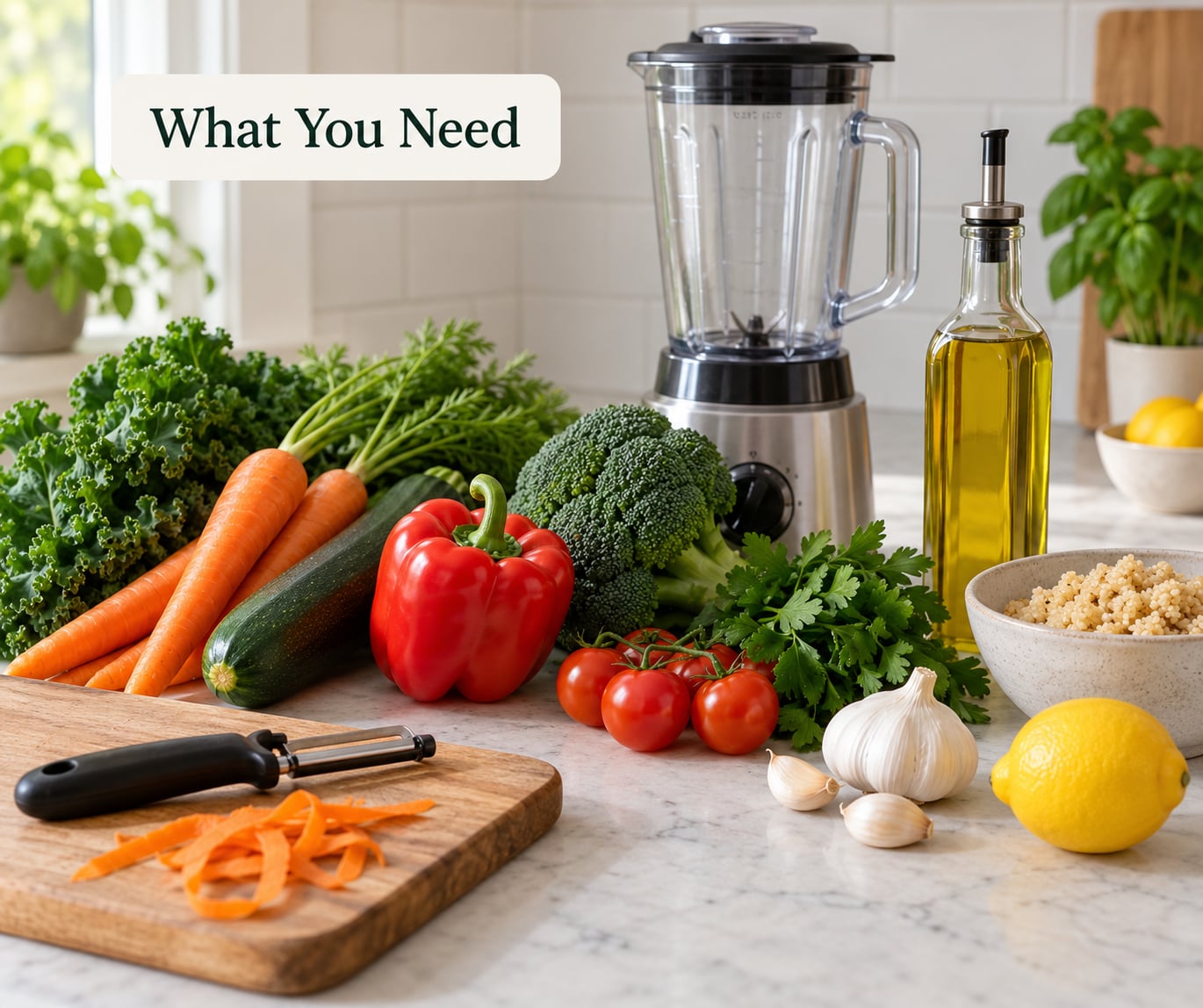
None of this is equipment you will have to shop for specially. Most people who struggle with vegetables have the basics already and just don’t use them the right way.
- Two or three vegetables you don’t hate. Corn, carrots, sweet potato, peas, butternut squash and zucchini are the usual candidates. Pick the ones you can eat without making a face.
- One sharp knife and a sheet pan. Dry, hot heat is the whole trick, and both are cheap.
- Olive oil, garlic, salt, black pepper, smoked paprika. Four bottles that turn a plain vegetable into a dish.
- Lemon juice or any vinegar. A squeeze fixes bitterness and dullness faster than anything else.
- A blender or immersion blender. For sauces, soups and purées where the vegetable disappears into dinner.
- Cheese, butter, nuts or seeds. Fat makes vegetables taste like part of the meal rather than a side dish.
- One frozen bag as a backup. Frozen mixed vegetables have no prep, no waste and no planning.
- A container of cooked grains. Rice, couscous or quinoa makes it easy to add a vegetable you would never have picked.
You do not need a spiralizer, a juicer or any of the single-purpose gadgets. If you have one, fine. If not, a knife does the same job.
How to Eat More Vegetables: Step-by-Step
1. Start With Vegetables You Already Tolerate
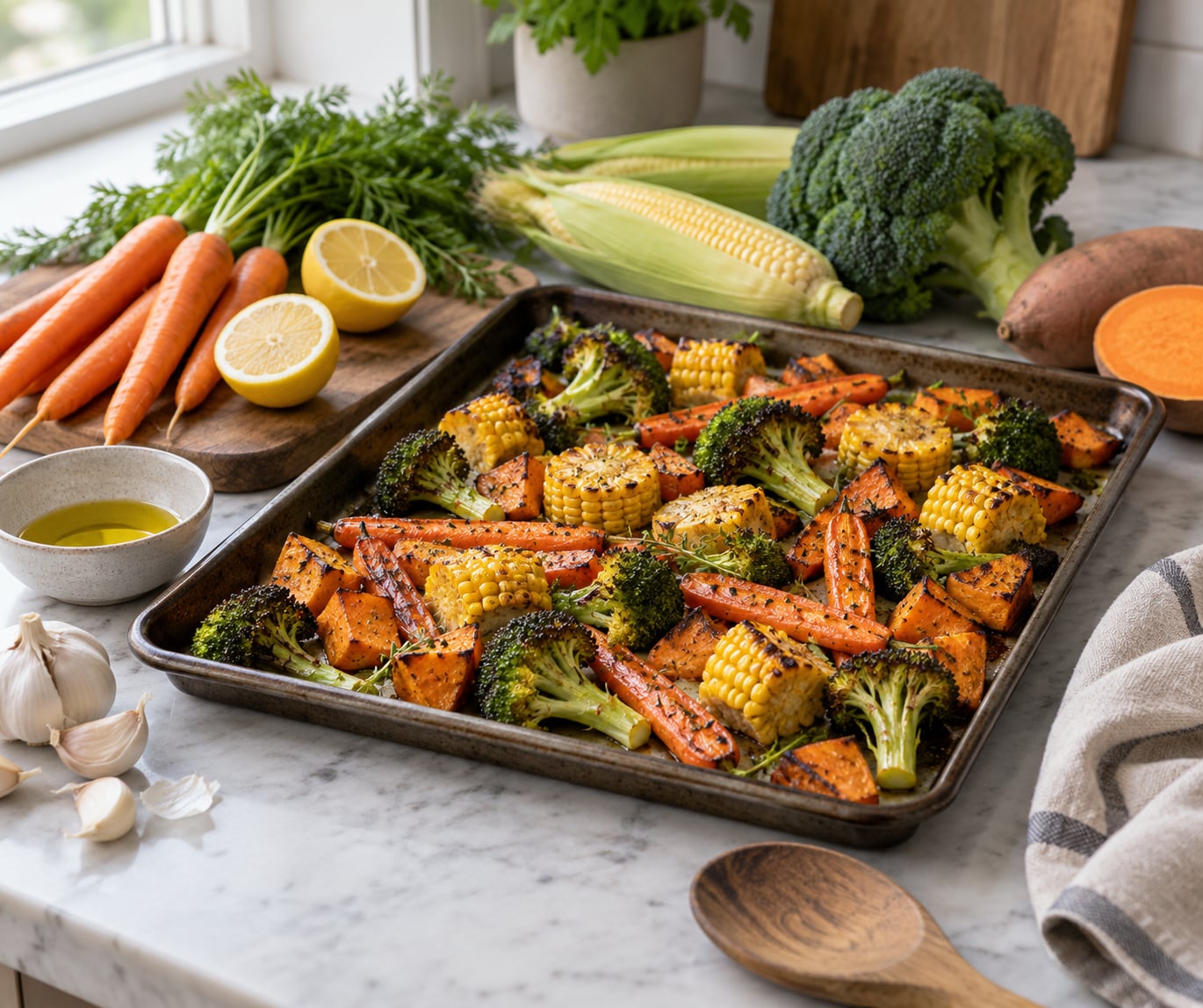
Find the vegetable you dislike least and eat it on purpose four or five times a week for two weeks, cooked the way you prefer. Corn charring on a hot pan, carrots roasted until the edges go dark, or frozen peas straight from the bag all count.
This works because it removes the hardest part of the week, which is deciding. When people say they hate vegetables, they usually mean they hate the 40 minutes of figuring out what to make on a Tuesday. Take that decision away and the intake usually rises on its own.
How you know it worked: three weeks in, that vegetable stops feeling like the compromise option and becomes something you just eat.
2. Add Vegetables to Familiar Foods
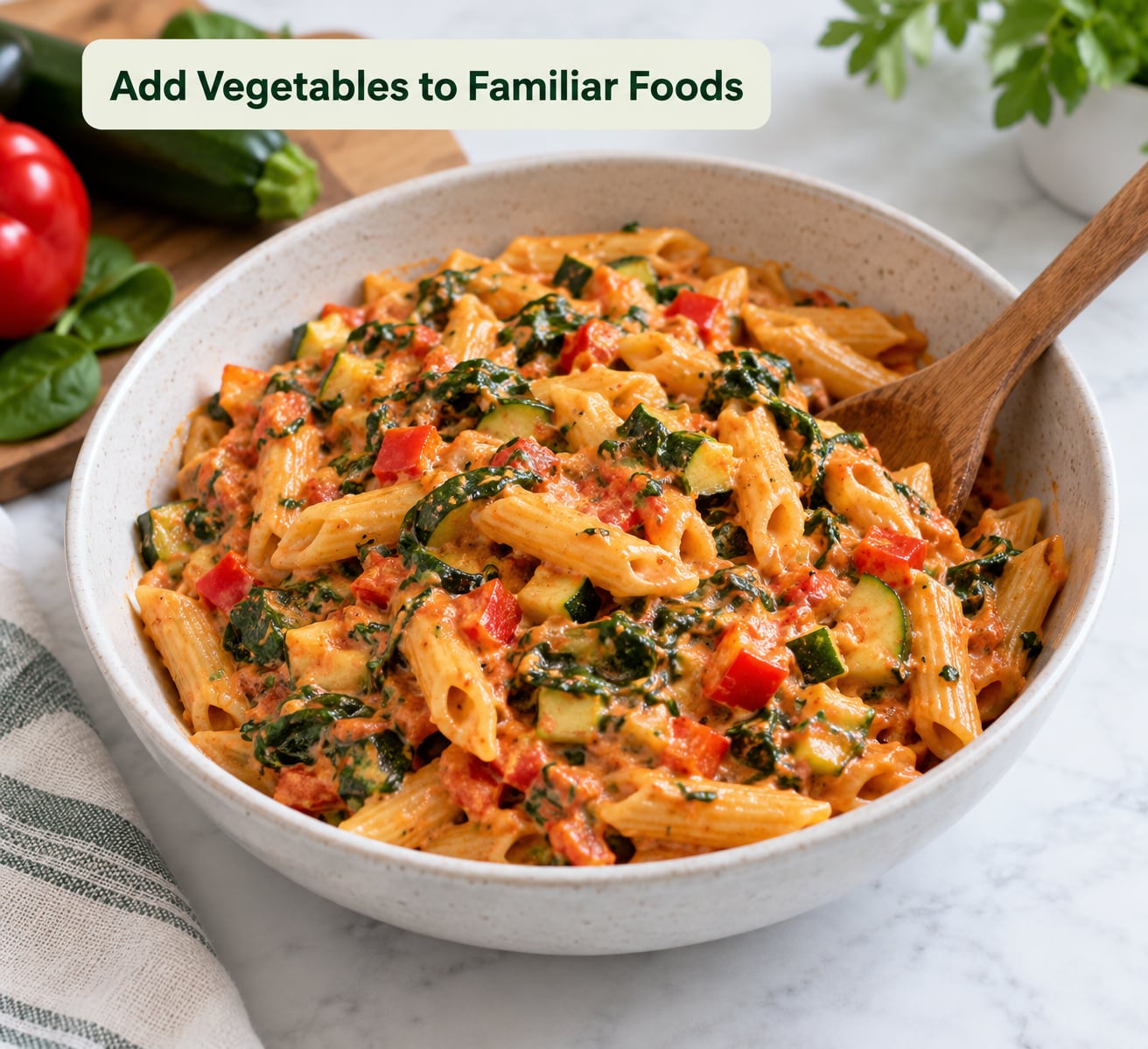
Fold grated carrot, courgette or finely chopped pepper into a jar of pasta sauce, or blitz roasted red pepper into the sauce while it simmers. Add chopped spinach to a curry or chilli, grated courgette to meatballs, or roasted peppers to a sandwich.
The texture rule here is important. Chop fine enough that each forkful tastes like the dish around it, and never let a vegetable sit as a visible lump on the plate. Onions and peppers in small amounts inside a curry or tomato sauce is the version most people describe as working.
If you are cooking any meat alongside, keep to safe internal temperatures: 165F / 74C for poultry, 160F / 71C for ground meat, and 145F / 63C for whole cuts and fish.
How you know it worked: you finish the meal and only afterwards realise there was a vegetable in it.
3. Change the Texture and Cut
Boiling is the single most damaging thing you can do to a vegetable, and it is what most people were served as children. Water leaches flavour, leaves everything soft, and creates the mushy plate that people describe as the thing they cannot get past.
Roast instead. Cut into even pieces, oil them, salt them, and put them on a hot tray at 200C / 400F or higher until the edges char. Air fryers do the same job faster. Broiling and a hot pan work too. Cutting thick instead of thin gives you a soft middle and a crisp outside, which is a completely different eating experience.
A few other texture fixes: salt cubed cucumber or courgette in a bowl, leave it ten minutes, and drain off the water that comes out. Peel anything with a tough skin. Roast mushrooms until they squeak. If a vegetable is only objectionable cold, serving it warm changes the complaint entirely.
How you know it worked: you eat a roasted version of something you used to push around the plate.
4. Use Flavor Builders to Mask Vegetable Taste
Every bitter vegetable is bland until something strong goes on it. Acid is the fastest fix: a squeeze of lemon, a splash of balsamic, a spoon of pickled or fermented veg. Salt and a hot pan come next.
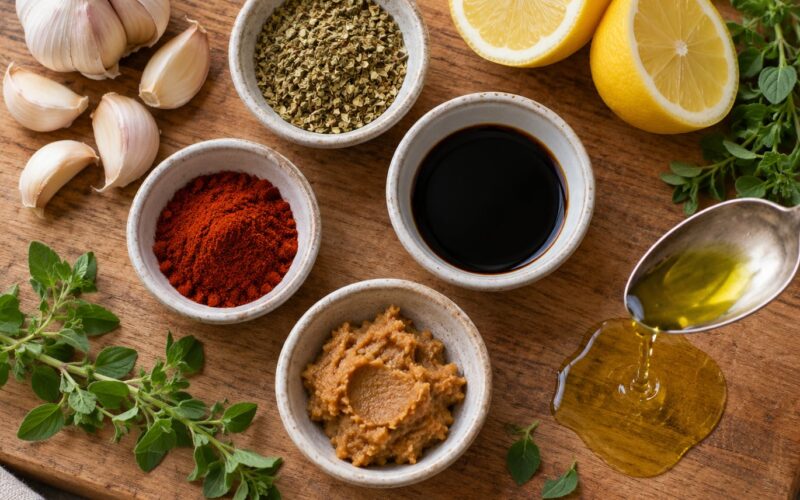
Then add fat and savouriness. Olive oil, butter, sesame oil, grated parmesan, toasted nuts, a spoon of soy sauce or coconut aminos, garlic cooked until it smells sweet, smoked paprika, cumin, a spoonful of peanut butter in a sauce. A vegetable roasted until brown, salted, then dressed with something sharp and fatty usually lands as a meal rather than an obligation.
Sweet works too, which surprises people who assume they only tolerate vegetables as savoury. A little honey or a glaze of balsamic and maple turns roasted carrots and butternut squash into something most people ask for twice.
How you know it worked: you reach for seconds on something you would previously have left.
5. Make Vegetable Portions Easy to Repeat
Roast a full tray on Sunday, keep half in the fridge and freeze the rest in single portions. Wash and chop a week’s worth, store it dry in a sealed box, and stir it into pasta or eggs at the end of the week. Stock the freezer with plain frozen vegetables rather than sauced ones.
Buying is the part most people get wrong. Do not buy the aspirational bunch of kale because it looked good on the shelf. Buy two vegetables you will definitely cook, plus one frozen bag. Produce that you dislike and will not cook is just money in the bin, and that experience is why so many people stop buying vegetables altogether.
How you know it worked: adding vegetables stops costing you time on a night when you are tired.
6. Build a Vegetable Routine Instead of a Perfect Diet
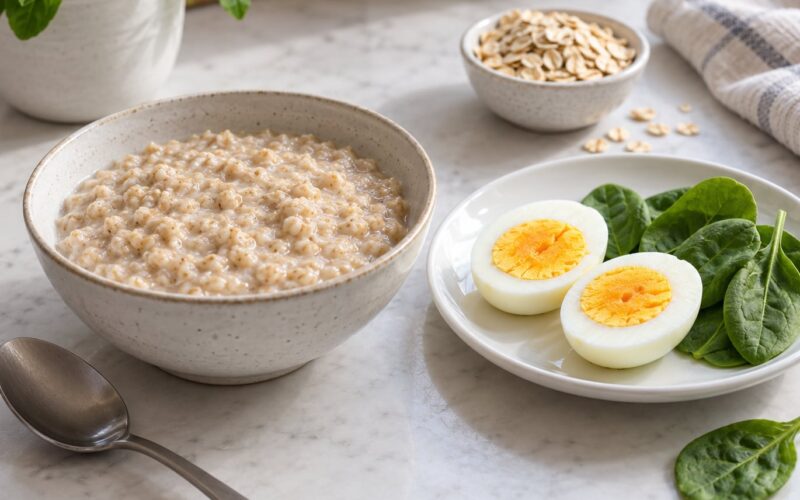
Pick two or three fixed slots rather than trying to fix every meal. A handful of spinach in the morning eggs or porridge, roasted vegetables alongside whatever you already cook for dinner, and a side of the frozen bag you actually like.
Attaching vegetables to something you already do is more reliable than adding a new habit. Most people manage the first week easily and then drop vegetables entirely because they were trying to restructure breakfast, lunch and dinner at once.
How you know it worked: you eat a vegetable on most days without having decided to that day.
7. Keep Trying Without Turning Vegetables Into a Punishment
Taste is set by exposure as well as genetics. Children are commonly told to try a new food around ten to fifteen times before it counts as familiar, and the same slow repetition works for adults: a small portion, no pressure, repeated while you are eating something you like.
Rotate rather than force. Have one vegetable on purpose this week, a different one next week, and put the ones you truly dislike back in the freezer rather than keeping them in the fridge as a daily test. Something you feel physically unable to swallow is not a training opportunity, and treating it as one turns eating into a fight.
Keep your standards honest. Tolerate is a good target. Love is not, and expecting it is why most people quit.
What If You Only Tolerate a Few Vegetables?
You are not falling apart. Vegetable-free eating is not instantly dangerous, but you will likely come up short on fibre, folate, vitamin K and potassium over time, which matters more for heart health and gut health than people assume.
The gap is smaller than it looks. Fruit covers potassium, vitamin C and a decent share of fibre, and legumes, whole grains, nuts and seeds pick up the rest. Roughly two to four well-chosen servings a day is a genuine improvement over zero, and a frozen mixed bag plus fruit is an honest floor.
Do not let supplements replace food, but if a very restrictive diet is worrying you, a registered dietitian can help you build an adequate plan. That conversation is much easier now than after a problem shows up.
Common Mistakes
Forcing a full plate of salad or boiled veg. The correction is smaller portions cooked dry and hot. Ten well-seasoned roasted pieces you enjoy beat a serving you dread and push to the edge of the plate.
Hiding vegetables in an unhealthy recipe to get the nutrients in. A vegetable blended into a cake full of butter and sugar changes the dish more than the nutrition. Purée into something you already like and would eat anyway: a tomato sauce, a soup, chilli, mac and cheese sauce, or an omelette.
Buying the same five vegetables forever. Variety can wait. Once three or four are comfortable, add one more per week, and buy small amounts so nothing rots.
Treating vegetables as a moral issue. The people who eat the most vegetables are not the ones who feel superior about it. If food rules come with guilt, the routine collapses within a month.
Expecting to like everything. Plenty of adults simply dislike Brussels sprouts and cauliflower, permanently. Aim for a set of vegetables you eat happily rather than a perfect plate.
Reading supplements as a shortcut. A multivitamin does not replace the fibre and phytonutrients that come with actual food, and more is not better.
Frequently Asked Questions
How can I eat more vegetables when I really dislike them?
You do not have to like them to eat more of them. Change the cooking method first, since roasting and air frying fix the mushy texture that causes most refusals. Start from one vegetable you already tolerate, then add a small amount to food you already eat, such as pasta sauce, curry or eggs. Repeat it for two or three weeks before adding anything new.
What vegetables are easiest to eat for people who hate vegetables?
The mildest options are sweet corn, carrots, sweet potato, butternut squash, peas, courgette and cucumber. Roast them rather than steaming or boiling, because dry heat concentrates their sweetness and gives them browned edges. If you only want one place to start, corn charred on a hot pan is the single most commonly accepted vegetable among people who claim to hate them.
Are frozen and canned vegetables good alternatives to fresh vegetables?
Yes. Frozen vegetables are picked and frozen near peak ripeness, so their nutrient content is comparable to fresh, and they save both money and the frustration of produce rotting in the fridge. Choose plain frozen rather than sauced mixes. Canned vegetables also retain their nutrients, but rinse them and check the label for sodium, especially if you eat them often.
How can I hide vegetables in meals without making them unhealthy?
Purée them into food you already like and would eat anyway: a tomato-based pasta sauce, a soup, chilli, curry, mac and cheese sauce, an omelette or meatloaf. Grate courgette or carrot into batters and meatballs. Chop finely so each forkful tastes of the dish around it. The rule is that the base recipe has to be worth eating on its own.
How many vegetables should I eat each day?
Dietary guidance generally suggests around 2.5 to 3 cups a day, roughly five servings. If you currently eat none, that number is not the target. Aim for two or three servings you genuinely eat each day, then build slowly. Partial intake that lasts is far better than a perfect plate you abandon after two weeks.
Can increasing vegetables help with weight loss?
It can contribute, but not on its own. Vegetables add fibre and water with very few calories, so they fill more space than they cost, and they tend to take the place of higher-calorie foods in a meal. People who add them gradually rather than all at once also tend to stick with the change, which matters more than any single meal.
Conclusion
Start tonight with one thing: pick the vegetable you dislike least, cut it into even pieces, oil and salt it, and roast it at 200C / 400F until the edges go dark. Eat it with something sharp on the side. That single tray is the whole method in miniature.
Repeat it for two weeks before you change anything, because consistency matters far more than variety here. Most people who say they hate vegetables are not short on willpower, they are short on a method that works with the texture problem they already have.
How to eat more vegetables if you hate vegetables is mostly a preparation problem, not a character one. Change the cooking method, start from the one you tolerate, and keep the portions small enough that you actually repeat them.
If your avoidance is causing real concern, or you have a medical condition that affects what you can eat, a doctor or registered dietitian can help you work out an adequate plan for your situation.