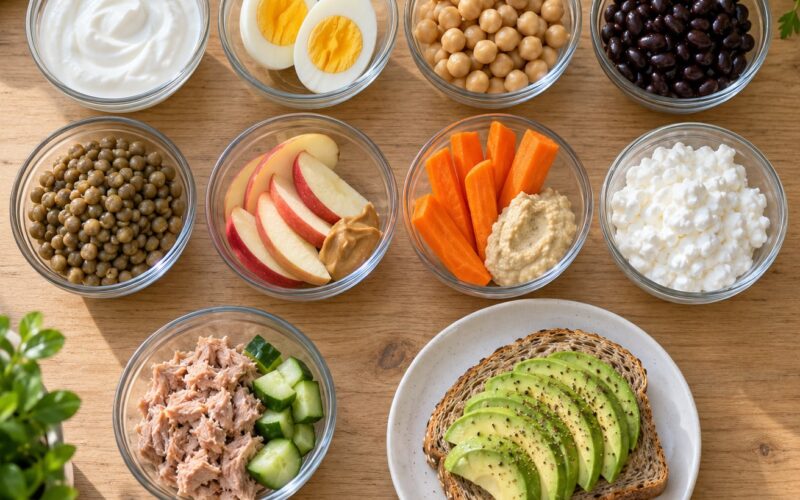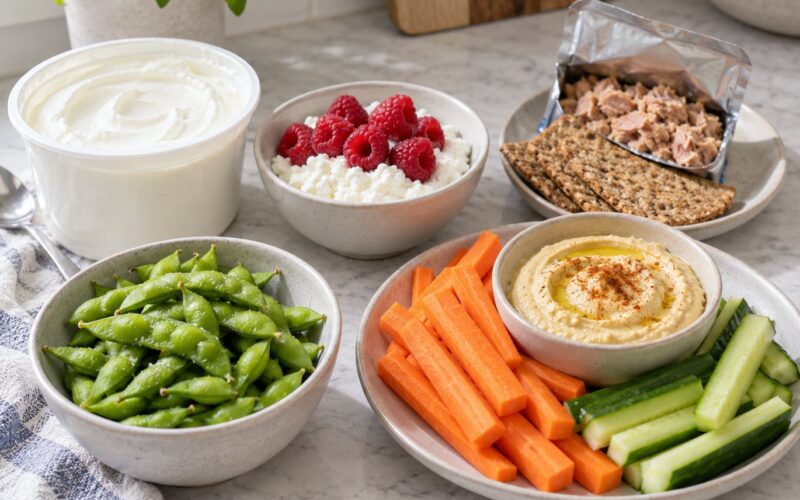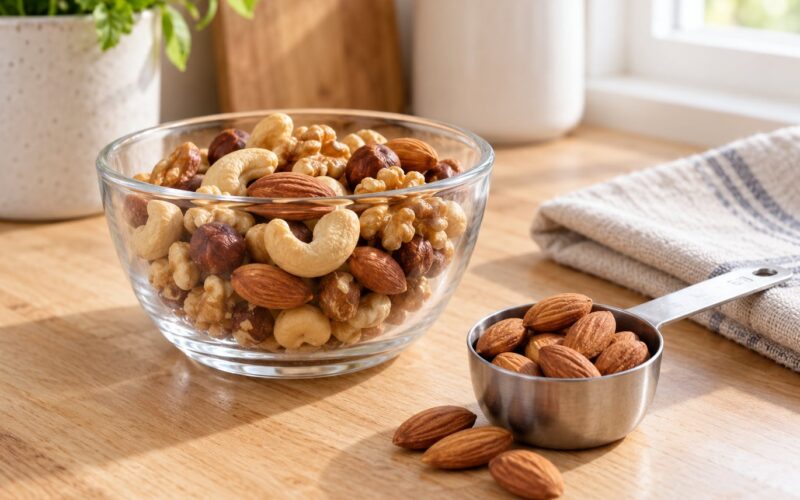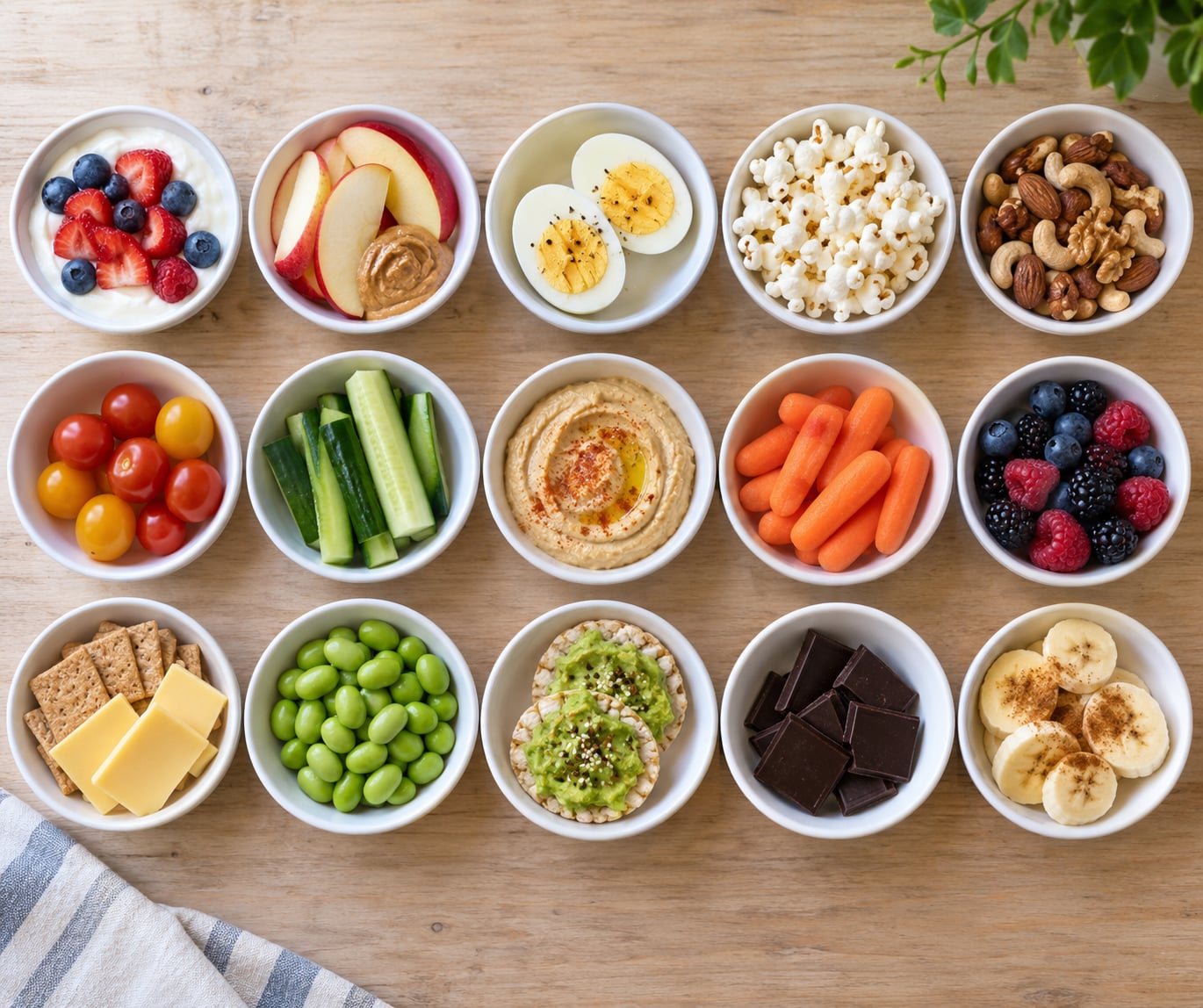
A good snack under 200 calories does one job: it takes the edge off hunger between meals without eating into the calorie budget you set for the day. The snacks that work best pair protein, fiber, or healthy fat with something crunchy or sweet, so the 200 calories still stretch until dinner. That is the whole idea behind every pick below, and the reason these 15 come up again and again in 2026 nutrition conversations.
Every figure here is tied to a real portion. One medium apple, one tablespoon of nut butter, half a cup of shelled edamame. Nothing is listed as a “handful,” because a handful of nuts can quietly run past 200 calories on its own.
Table of Contents
- Healthy Snacks Under 200 Calories at a Glance
- How to read these numbers
- 1. Greek Yogurt with Berries
- 2. Apple Slices with Peanut Butter
- 3. Cottage Cheese with Pineapple
- 4. Hummus with Baby Carrots
- 5. Boiled Eggs with Salt and Pepper
- 6. Air-Popped Popcorn
- 7. Whole-Grain Crackers with Cheese
- 8. Banana with Peanut Butter
- 9. Cherry Tomatoes with Mozzarella
- 10. Tuna Lettuce Cups
- 11. Pear with Cinnamon and Walnuts
- 12. Edamame with Sea Salt
- 13. Rice Cakes with Avocado
- 14. Overnight Oats with Berries
- 15. Dark Chocolate with Walnuts
- Frequently Asked Questions
- Is 200 calories a good limit for a snack?
- What snacks fill you up but are low in calories?
- How can I get 20 grams of protein in a snack under 200 calories?
- Which snack on this list is the lowest in calories?
- What can I eat when I’m hungry at 3am without wrecking my calories?
- How do I count snack calories without tracking everything?
- Conclusion
Healthy Snacks Under 200 Calories at a Glance
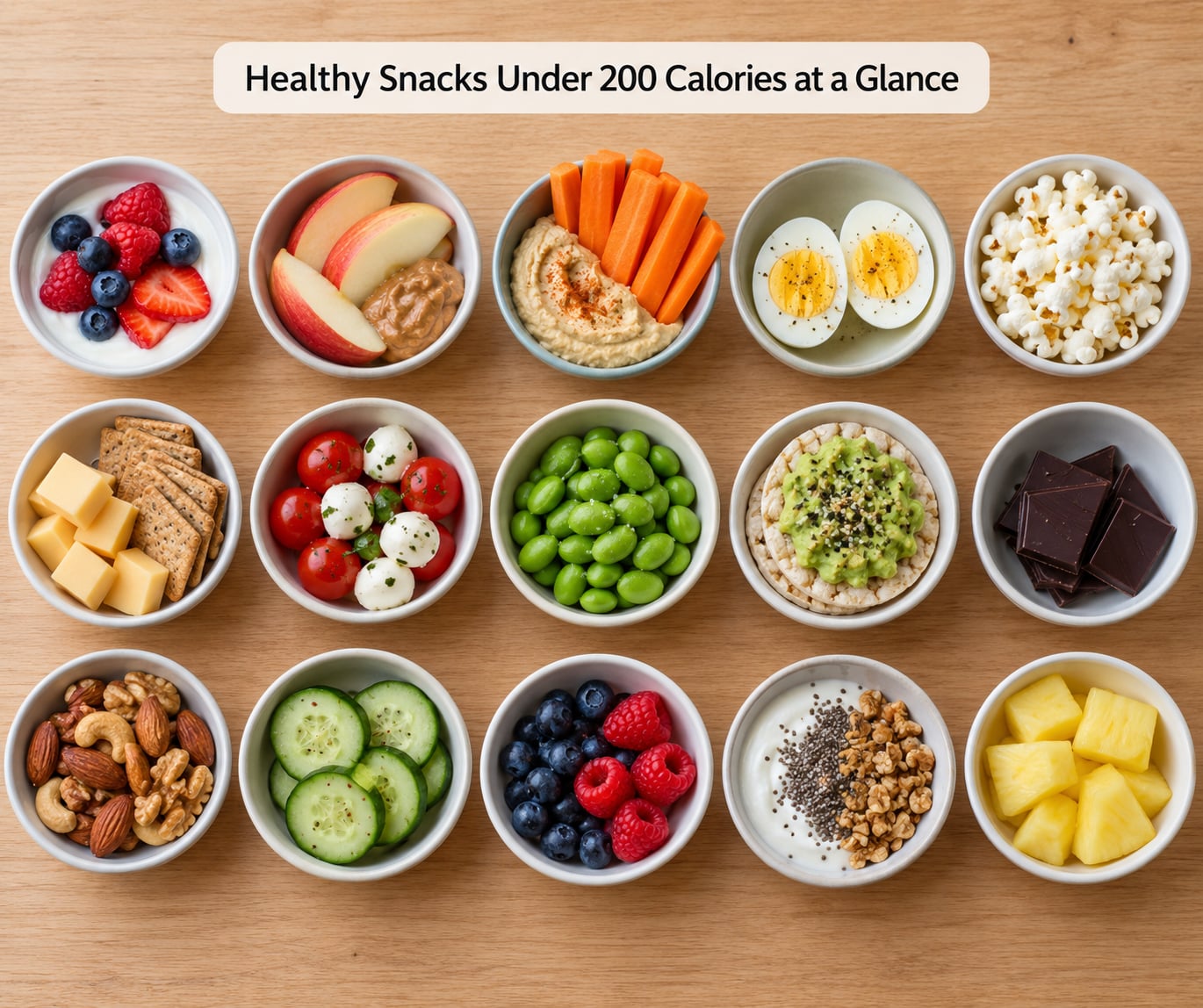
The table gives you the fast version. Calories are for the exact portion described, and they sit in a realistic range because produce size and brands vary. Protein is the number to watch if your main complaint is hunger returning twenty minutes later.
| Snack | Approx. calories | Protein | Fiber | Best use | Prep |
|---|---|---|---|---|---|
| Greek yogurt with berries | 130-160 kcal | 15-18 g | 2-3 g | Afternoon slump | 1 minute |
| Apple slices with peanut butter | 185-195 kcal | 4 g | 5 g | Pre-meal, on the go | 2 minutes |
| Cottage cheese with pineapple | 120-140 kcal | 14-16 g | 1-2 g | Light sweet fix | 2 minutes |
| Hummus with baby carrots | 95-130 kcal | 3-4 g | 3-4 g | Desk snack | No cooking |
| Boiled eggs with salt and pepper | 140-160 kcal | 12-13 g | 0 g | Mid-morning | Cook ahead |
| Air-popped popcorn | 90-120 kcal | 3 g | 4 g | Cinematic volume | 3 minutes |
| Whole-grain crackers with cheese | 160-190 kcal | 8-10 g | 2-3 g | Portable savory | No cooking |
| Banana with peanut butter | 135-150 kcal | 4 g | 3 g | Pre-workout | 1 minute |
| Cherry tomatoes with mozzarella | 100-125 kcal | 7 g | 1-2 g | Late afternoon | 2 minutes |
| Tuna lettuce cups | 70-110 kcal | 15-17 g | 1 g | High-protein, low carb | 4 minutes |
| Pear with cinnamon and walnuts | 140-160 kcal | 3-4 g | 4-5 g | Evening sweet | 3 minutes |
| Edamame with sea salt | 100-120 kcal | 9-11 g | 5 g | Plant-based protein | Boil or microwave |
| Rice cakes with avocado | 120-150 kcal | 3 g | 4 g | Crunchy, savory | 4 minutes |
| Overnight oats with berries | 160-190 kcal | 6-8 g | 5-6 g | Morning or evening | Make ahead |
| Dark chocolate with walnuts | 160-185 kcal | 4 g | 2 g | Dessert that fits | No cooking |
How to read these numbers
Calorie counts move with the brand and the size of the produce you buy, so treat every figure here as a range rather than a promise. The label on the tub in your fridge is the only source that can give you an exact number.
The protein column is the more useful one for staying full. People managing their weight, or using GLP-1 medications and chasing protein density over volume, tend to gravitate toward anything at 12 grams or more: cottage cheese, eggs, tuna, edamame.
1. Greek Yogurt with Berries
This is the snack that comes up most often when people describe a 200-calorie snack that still feels like dessert. Half a cup of plain nonfat Greek yogurt runs about 100 calories and roughly 15 grams of protein, and a half cup of mixed berries adds about 40 calories and 2 grams of fiber.
Assemble it in one minute: yogurt in a bowl, berries on top, a spoonful of cinnamon if you like. The single rule is plain yogurt. Flavored varieties often carry 10 to 20 extra calories per serving from sugar, which is a lot to pay for a snack that was supposed to be under 200.
If dairy is not for you, unsweetened soy yogurt with the same portion of berries lands in the same range and holds similar protein.
2. Apple Slices with Peanut Butter
One medium apple is about 95 calories with 5 grams of fiber. One tablespoon of peanut butter adds roughly 95 calories and 4 grams of protein, bringing the total to about 190. That pairing is the most-repeated combination in weight-loss snacking forums, mostly because it travels and needs no preparation beyond slicing.
The apple gives volume and slow-release carbohydrate, the nut butter supplies protein and fat, and together they hold better than either one alone. For a desk, toss the slices and a small pot of butter into a container and add lemon juice to slow browning.
Two or three almonds crushed over the apple give you a similar fat and protein hit without the stick.
3. Cottage Cheese with Pineapple
Half a cup of low-fat cottage cheese sits near 90 calories with 14 to 16 grams of protein. Half a cup of diced pineapple adds about 40 calories, and the pairing lands between 120 and 140 calories. The case for it is simple: it is the highest protein-to-calorie ratio on this entire list.
Use it when yogurt feels too heavy or too sweet. Drained canned pineapple works fine, and so does melon, mango, or a spoonful of unsweetened applesauce if you are out of fresh fruit.
Full-fat versions are also fine within the limit; they just move the total up by around 40 calories, so halve the fruit portion if you want the number to stay at the bottom of the range.
4. Hummus with Baby Carrots
Two tablespoons of hummus is about 70 calories and 2 grams of fiber. A half cup of baby carrots is roughly 25 calories and 2 grams of fiber, for a combined total near 100 calories before you add anything else.
Hummus brings olive oil and protein, the carrots bring water and crunch, and that contrast is why this is the default snack-box filler. Add cucumber rounds or pepper strips if you want to stretch it to about 130 calories and make the volume feel bigger.
The mistake is dipping straight from the container. Spoon the hummus into a small dish so the visible amount equals the amount you eat, and the portion creep stops there.
5. Boiled Eggs with Salt and Pepper
Two large hard-boiled eggs come to about 140 to 160 calories with 12 to 13 grams of protein and nothing else to speak of. It is the most portable protein on the list, which is why mid-morning egg routines keep showing up in calorie-counting communities.
Boil a batch on Sunday, keep them in the fridge, and peel two each morning. For food safety, refrigerate boiled eggs in their shell and use them within about a week.
One egg plus a small handful of raw carrot sticks is roughly 100 calories if you want a lighter version that still carries protein.
6. Air-Popped Popcorn
Three cups of air-popped popcorn with a light coating of olive oil come to about 95 calories, with 4 grams of fiber. It is the highest-volume snack on this list by a wide margin, and volume is the reason it works so well for people who claim other snacks leave them hungry.
Contrast it with kettle corn or anything covered in butter and caramel. Those coatings are where the calories hide; a cup of heavily buttered popcorn can pass 200 calories on its own before anything else is added.
For seasoning, melted coconut oil and a little nutritional yeast or smoked paprika give you a cheese-adjacent flavor without the sodium load of heavy butter.
7. Whole-Grain Crackers with Cheese
Six whole-grain crackers run about 70 calories with 2 grams of fiber, and one slice of cheese adds roughly 70 to 110 calories and 7 grams of protein. Together they land between 160 and 190 calories, which makes portion control the whole game here.
The carbohydrate from the crackers plus the protein and fat from the cheese is a balanced combination, and it is the version that travels best in a bag. Portion by counting crackers, not by estimating from the package.
Cheese strings cut from block cheese are an easy swap if you want to see the portion clearly. Hummus and a few raw peas work instead if dairy is out.
8. Banana with Peanut Butter
A medium banana is about 105 calories with 3 grams of fiber. One teaspoon of peanut butter, which is roughly a third of a tablespoon, adds about 33 calories and about 1.5 grams of protein, for a total near 140.
This is the best pre-workout option here because the carbohydrate is easy to use quickly, and the fat slows digestion just enough to keep the ride comfortable. It is also the snack most likely to disappear in ten minutes, which is fine if you are training but worth noticing if you are not.
For nut allergies or a preference change, sunflower seed butter works in the same teaspoon amount and stays close in calories. Soy butter is another option with slightly more protein.
9. Cherry Tomatoes with Mozzarella
One cup of cherry tomatoes is about 30 calories, and one ounce of mozzarella pearls adds roughly 80 calories and 6 to 7 grams of protein. That puts the plate around 110 calories with a fair bit of water and volume.
It reads like a party snack, which makes it useful when you want something that looks and feels indulgent but sits far under the line. Halve a mozzarella ball, add a few basil leaves, and drizzle a little olive oil and balsamic for a Caprese-style plate at about 145 calories.
Any firm cheese works here, and a low-sodium mozzarella keeps the sodium count down if you are watching it.
10. Tuna Lettuce Cups
Half a can of water-packed tuna, drained, is about 60 calories and 15 grams of protein. Two or three leaves of lettuce, a squeeze of lemon, and a small spoonful of plain Greek yogurt push the total to roughly 70 to 110 calories.
Swapping the crackers for lettuce is the point: it removes the starch and adds water, and this becomes one of the lowest carbohydrate options on the list. Use it when you want protein without bread or crackers in the mix.
Safety note worth repeating: for fin fish, cook to an internal temperature of 145 degrees Fahrenheit, or use no-added-sodium canned tuna that is already cooked and ready to eat.
11. Pear with Cinnamon and Walnuts
A medium pear is about 100 calories with 4 to 5 grams of fiber. Cinnamon adds nothing, and a tablespoon of chopped walnuts adds roughly 45 calories and 2 grams of protein, landing the bowl near 145 calories.
Pears are sweeter than apples and hold their texture, which makes this a decent evening swap when the apple-and-peanut-butter routine starts to feel routine. Slice the pear just before eating so it stays crisp.
Walnut halves are an easy unit to count: six halves is about 45 calories. Pumpkin seeds are a nut-free alternative with a similar amount of crunch, though they are higher in carbs.
12. Edamame with Sea Salt
Half a cup of shelled edamame is about 110 calories, with 9 to 10 grams of protein and 5 grams of fiber. That combination of plant protein and fiber is why it keeps appearing in plant-based snack roundups.
Boil the pods for four or five minutes and drain, or microwave frozen shelled edamame for about 90 seconds. Sea salt and a squeeze of lemon are the standard finish; a light drizzle of tamari adds sodium, so keep it modest.
You can also season it while warm with smoked paprika and a small amount of chili crisp. It is unusual enough that it never becomes a mindless snack, which is part of its appeal.
13. Rice Cakes with Avocado
Two plain rice cakes are about 70 calories with roughly 2 grams of fiber. A quarter of a medium avocado, mashed and spread thin, adds about 60 calories and 3 grams of fiber, for a total around 130.
That combination covers the three things a snack needs: carbohydrate for quick energy, fat for satiety, and fiber from the avocado for staying power. It is a good option for anyone avoiding dairy or eggs.
Season with lime, salt, and chili flakes for a version that tastes deliberate. Skip flavored rice cakes, which can carry 20 to 30 calories each in sugar and sodium before you add anything on top.
14. Overnight Oats with Berries
One third cup of dry rolled oats is about 100 calories, half a cup of unsweetened milk adds about 30 to 40, and half a cup of berries adds 40. Mixed the night before, that comes to roughly 170 calories with 5 grams of fiber and about 7 grams of protein.
The fiber from oats is the part that matters for staying power, and it is why this outlasts a bowl of cereal. Make a jar on Sunday and you have three to four portions ready without any morning work, which solves the reason most people skip breakfast-adjacent snacks.
Keep the portion to one third cup of dry oats even if the recipe suggests more. Going to half a cup adds 50 calories and can push the snack past the line.
15. Dark Chocolate with Walnuts
Two squares of dark chocolate, about 20 grams, run roughly 110 calories. Six walnut halves add about 45, bringing the total to around 155 and leaving room for a little breathing room in the serving.
Chocolate works as a snack when it is counted and eaten slowly, not nibbled while the rest of the cooking happens. Buy a bar, measure two squares onto a small plate, and put the bar back in the cupboard.
To vary it without going over: swap walnuts for pepitas or pumpkin seeds, add a few frozen raspberries that you eat one at a time, or use cocoa-dusted chickpeas in place of the chocolate entirely.
Frequently Asked Questions
Is 200 calories a good limit for a snack?
For most adults, 200 calories is a useful ceiling because it leaves room inside a typical daily intake without pushing you over it. The number is a guideline, not a rule. If you are genuinely hungry after eating it, scale to 250 or 300 calories rather than nibbling something else ten minutes later. A registered dietitian can help you set a limit that fits your own needs.
What snacks fill you up but are low in calories?
Volume and macronutrients do the work. Popcorn, cucumber, cherry tomatoes, and carrots add water and volume, while protein from yogurt, cottage cheese, eggs, tuna, or edamame slows digestion. Combining all three, as in hummus with carrots, is the most reliable pattern. A 200-calorie snack built from refined carbs alone, like plain crackers, usually stops filling you within half an hour.
How can I get 20 grams of protein in a snack under 200 calories?
It is possible but tight, and it usually takes combining two protein sources. Cottage cheese with a boiled egg, or half a cup of Greek yogurt with two egg whites, gets close to 20 grams for about 180 calories. Options like edamame and canned tuna sit near 15 grams on their own. Check the label, since protein content varies a lot between brands of the same product.
Which snack on this list is the lowest in calories?
Cherry tomatoes and cucumber-based snacks come in lowest, at 20 to 40 calories for the vegetable portion alone. Among the complete snack combinations, tuna lettuce cups with yogurt-based dressing run lowest at around 70 calories, followed by hummus with carrots near 100. Very low calories are not automatically better; volume and protein usually keep you satisfied longer.
What can I eat when I’m hungry at 3am without wrecking my calories?
Options that work late at night are those with protein and volume rather than refined carbohydrate: cottage cheese with pineapple, boiled eggs, or a few cherry tomatoes with mozzarella all sit under 150 calories. A small cup of plain Greek yogurt is another reliable choice. Eating slowly matters more than the specific food, since late-night eating is often driven by habit rather than hunger.
How do I count snack calories without tracking everything?
Pick three snacks you will actually eat and learn those three numbers by heart. Measure the portion once with a kitchen scale or a standard measuring cup so you know what a tablespoon of nut butter or a half cup of edamame looks like in volume terms. Use package serving sizes as your reference, and adjust for what you realistically eat rather than what the label assumes.
Conclusion
Start by choosing one or two snacks from this list that you can realistically prepare on a normal weeknight, and learn those portions well enough to eyeball them. Check the label on what you buy, since brands differ by 20 calories or more across the same product.
Then aim for the pattern rather than the number: pair protein or fiber with a source of carbohydrate, and most of these 200-calorie snacks will hold until your next meal. If one snack never satisfies you, that is information, not failure. Scale it to 250 or 300 calories, or talk with a registered dietitian about what fits your situation.