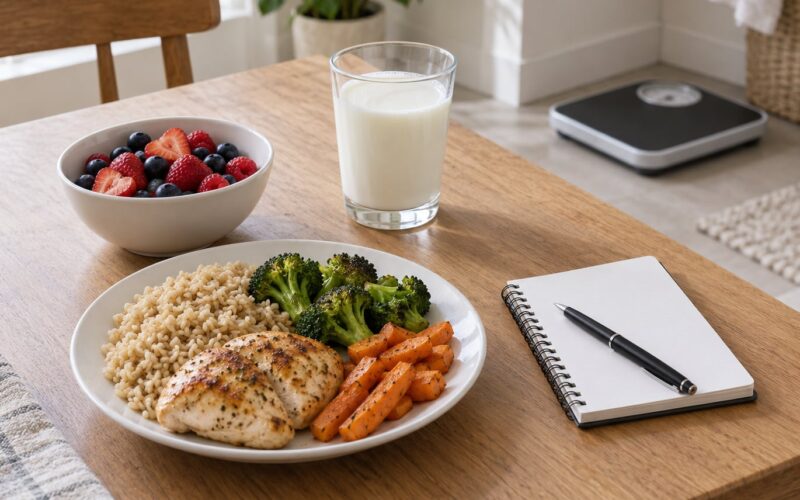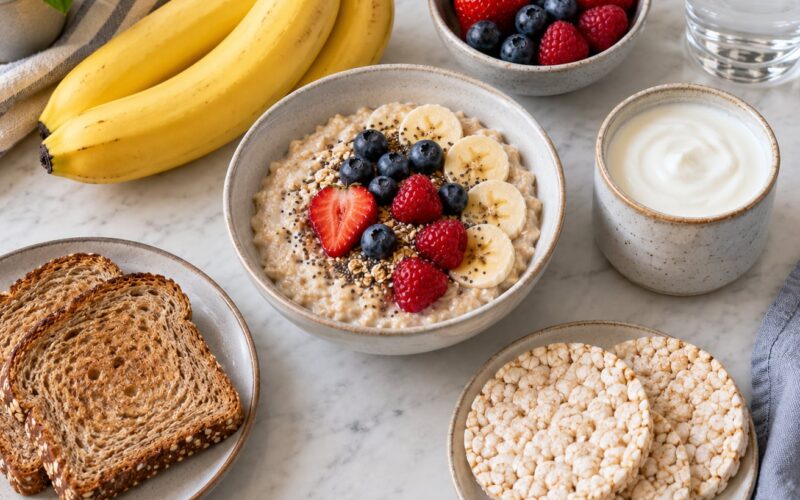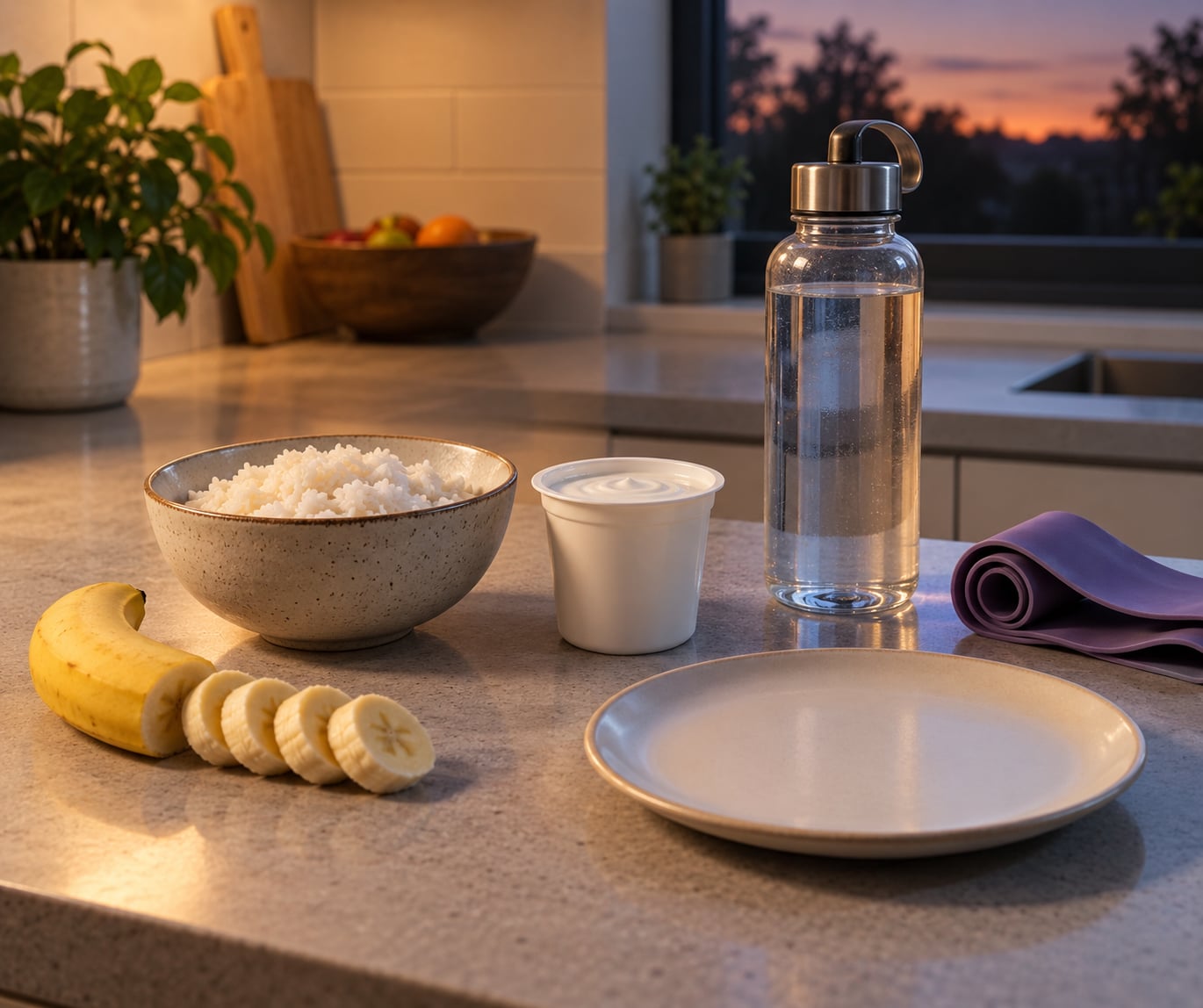
If you train in the evening, fuel the session the same way you would fuel a morning one, then adjust portion size for bedtime. A balanced meal 2 to 3 hours before, a small carb snack 30 to 60 minutes before, and 10 to 30 g protein with 30 to 60 g carbs within an hour after. That is how to fuel a workout if you train at night without wrecking your sleep or your digestion.
The night version needs one extra decision that morning trainees never make: dinner goes before the session or after it, and the answer depends on how many hours you have. Get that wrong and you either train half empty or lie down at midnight with a heavy stomach.
| Timing | What to have | Target | Examples |
|---|---|---|---|
| 3 hours before | A normal balanced meal, low in fat and fibre | A full plate of carbohydrate plus 20 to 30 g protein | Rice with chicken and vegetables, pasta with lentil sauce, a grain bowl with tofu |
| 2 hours before | Top up if energy is fading | 30 to 40 g carbohydrate | Toast with honey, a small bowl of cereal, a handful of dried fruit |
| 30 to 60 minutes before | A light, fast snack, or nothing | 30 to 60 g fast carbohydrate, 10 g protein if you are hungry | Banana, rice cakes with jam, a sports drink, Greek yogurt with honey |
| 15 minutes before | Water, and that is it | A few mouthfuls | Chilled water, no gulp-and-go |
| During sessions over 60 minutes | Carbohydrate and fluid, in small repeated sips | 30 to 60 g carbohydrate per hour, sodium and water | Sports drink, water with electrolyte tablets, a gel every 30 to 45 minutes |
| Within 30 minutes after | Protein plus fast carbohydrate, smaller than a normal dinner | 10 to 30 g protein, 30 to 60 g carbohydrate | Whey shake with a banana, chocolate milk, cottage cheese with berries |
| 1 to 2 hours after, or at dinner | The rest of your evening meal | Another 20 to 30 g protein and a normal portion of carbohydrate | Salmon with rice, eggs on toast, tofu stir-fry with noodles |
| 60 to 90 minutes before bed | Optional slow protein or a small bowl of carbs, only if hungry | 20 to 30 g slow-release protein | Cottage cheese, a small bowl of yogurt with oats, toast with peanut butter |
Table of Contents
- What You Need
- Step-by-Step
- Step 1: Check When You Last Ate
- Step 2: Build a Balanced Pre-Workout Meal
- Step 3: Add a Small Snack When Needed
- Step 4: Hydrate Before and During Training
- Step 5: Refuel After Training
- Common Mistakes
- Frequently Asked Questions
- What should I eat before an evening workout?
- Should I eat dinner before or after my evening workout?
- Is 7pm too late for a pre-workout snack?
- Why can’t I sleep after a late workout?
- Is it bad to eat a late meal after working out at night?
- Is 10pm too late for a protein shake after training?
- Conclusion
What You Need

You do not need supplements or a special diet. You need a carbohydrate source, a protein source and water lined up before you leave work, because a 7pm session means you have to make the decisions while still sitting in an office.
That means a grain or starch you actually like eating, a protein you will tolerate quickly (chicken, eggs, yogurt, tofu, fish), fruit for fast carbohydrate, and something for after. Most evening trainees already have all of it.
It also means a bottle you can refill and a bag with a snack in it. The single most common failure is not eating the wrong thing, it is arriving at the gym at 7:15 having eaten nothing since a sandwich at noon and calling it a discipline problem.
Step-by-Step
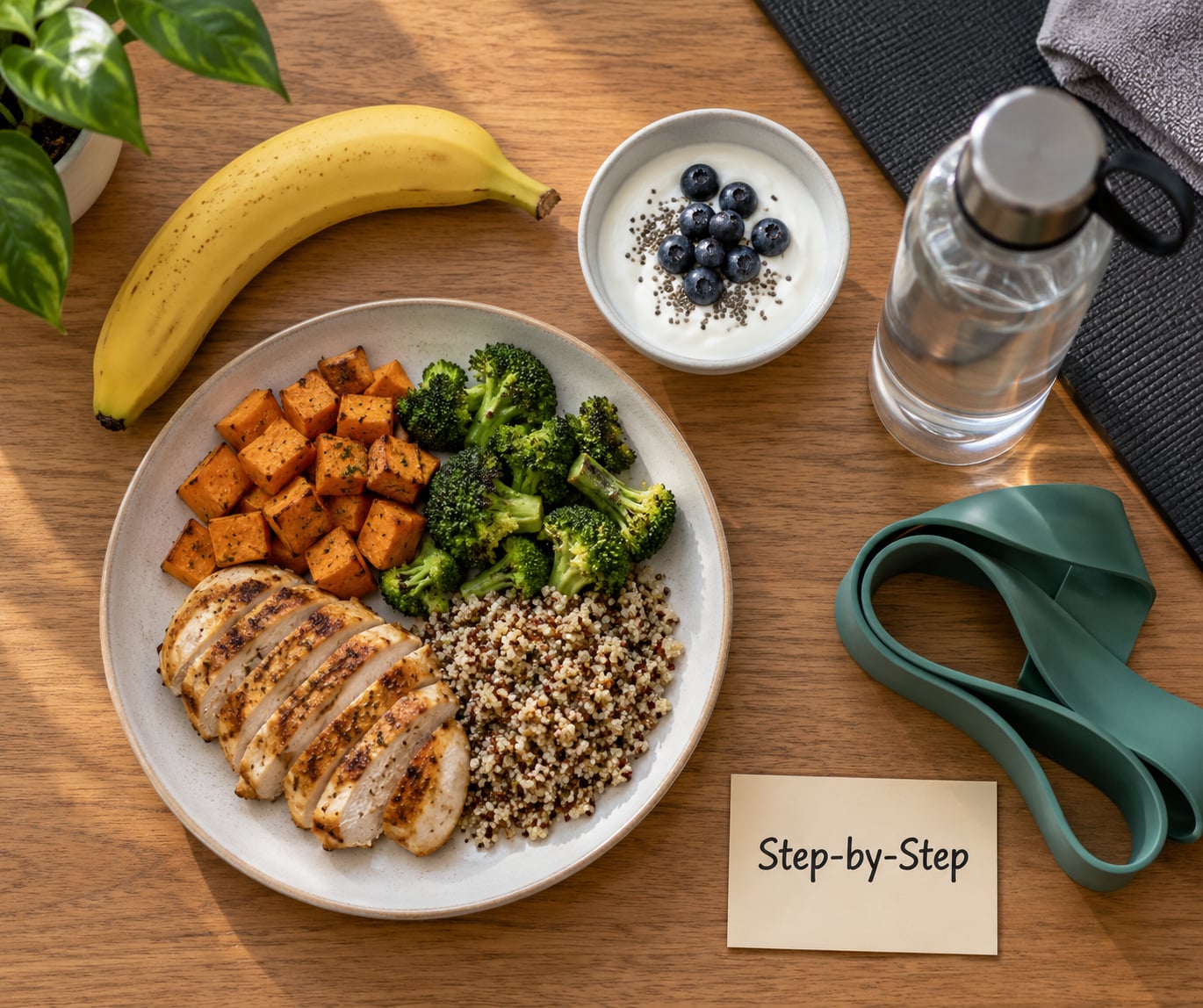
Step 1: Check When You Last Ate
This one question decides the whole evening. Look at the clock and work backwards from your session start.
- Ate nothing since lunchtime: you need a real meal 2 to 3 hours out, not a snack.
- Ate a full meal about 2 hours out: a light snack 30 minutes before is optional.
- Ate dinner less than 90 minutes ago: skip the pre-workout food, train, and eat after.
- Training at 10pm or later: treat dinner as a normal meal at 6 or 7, and keep the post-session portion small.
The dinner-before-versus-after question comes up more than anything else in discussions about evening training, and the honest answer is that there is no rule, only a trade-off. Eat before when you need the energy for hard work or a long session. Eat after when dinner would be a heavy, fatty, high-fibre meal that sits badly during intervals.
Members on r/naturalbodybuilding tend to plan an early dinner for exactly that reason: time for the stomach to settle, then train. Plenty of people on r/xxfitness eat at 11pm after night sessions and describe no problems at all. Both work. What does not work is being rigid about it and then training badly on purpose.
Step 2: Build a Balanced Pre-Workout Meal
Two to three hours out, build a normal plate: carbohydrate for glycogen, protein for repair, vegetables for micronutrients, and keep the fat moderate. Muscle glycogen is what actually powers a session, so carbohydrate is the part people under-eat in the evening.
There is a real disagreement in the popular advice here. One camp says eat slow-burning complex carbohydrates before training, the other says go with fast simple carbs. Both are right at different intensities, which is why the advice conflicts.
For an easy or moderate session, slow carbs from a full meal are fine and give steadier energy. For hard intervals, HIIT, or heavy lifting, go with faster, lower-fibre carbohydrate from 90 minutes out, because it clears the stomach sooner and lands in the blood faster. Low fat and low fibre in the two hours before training is the one rule that holds across both camps.
Step 3: Add a Small Snack When Needed
If you are genuinely hungry 30 to 60 minutes out, eat 30 to 60 g of fast carbohydrate with a little protein. A banana, a couple of rice cakes with jam, Greek yogurt with honey, or a sports drink all do the job without sitting heavily.
Skip it if you are not hungry. Hunger and a hollow stomach are different things, and forcing a snack because a timeline said to can leave you feeling worse than training slightly under-fuelled.
The foods to avoid close to training are the fatty and the bulky: fried food, large meals with a lot of oil, big salad bowls, beans, and raw vegetables for some people. Protein shakes can bother people too, especially mixed with ice or eaten fast. Nausea during high-rep work or hot sessions is almost always stomach volume or meal timing, not effort itself.
Step 4: Hydrate Before and During Training
Most people arrive at an evening session already behind, because they drank water in the morning and then coffee all afternoon. Spread fluid across the afternoon and evening instead, with pale-yellow urine as a rough check, and increase fluid for sessions that are hot or long.
Past 60 minutes of hard work, take in carbohydrate and sodium along with water: a sports drink, water plus electrolyte tablets, or a gel every 30 to 45 minutes. What you do not want is a large bolus of fluid right before training, because that sloshing stomach tends to end the session early.
Then keep sipping through the first hour afterwards. A lot of people finish a sweaty evening session and drink nothing until they lie down, and wake up in the night thirsty.
Step 5: Refuel After Training
Within about an hour of finishing, take 10 to 30 g of protein with 30 to 60 g of fast carbohydrate. This is the post-workout meal at night and the portion is the part that needs judgement: at 11pm it should be a snack-sized shake and a banana, not a three-course recovery feast.
Then eat a proper evening meal one to two hours later if you have not already eaten a full dinner, and make that your last substantial food of the day.
If you are training while in a calorie deficit, you can still do this. A shake with 20 to 25 g protein and a banana is roughly 250 kcal, and it is what keeps you from losing muscle or running out of steam in the session. Skipping recovery food is not a deficit strategy, it is just undereating.
To protect sleep, add a caffeine cutoff: stop caffeine 8 to 10 hours before bed, which for a 9pm training day means nothing caffeinated from about midday. Then cool down properly, because hard evening sessions leave heart rate and core temperature elevated, and that is the physical reason people lie awake after a 10pm session. Cool water, gentle movement, and dim light for the last stretch of the evening help more than most people expect.
If you wake up hungry around 3am after night training, a small slow-release protein before bed is the fix. Casein, cottage cheese, or yogurt with oats digest slowly and take the edge off without loading you up right before lying down.
Common Mistakes
- Eating a heavy, high-fat meal 30 minutes before. You will feel it during the first set. Fix: move that meal to 2 to 3 hours out, or switch dinner and the post-workout meal around.
- Skipping carbohydrate because it is evening. You will burn out halfway through and associate night training with feeling bad. Fix: keep a fast carb in before every session over 45 minutes.
- Drinking almost nothing from noon until you finish training. Fix: aim for steady fluid through the afternoon, and more if it is hot or you are sweating heavily.
- Leaning on sugary drinks and late caffeine to get through the session. Fix: carbohydrate from fruit, toast or a sports drink earlier, caffeine before midday, and a small shake afterwards to come down.
- Fear of eating late so you skip the post-workout meal. Fix: eat it earlier rather than not at all, or split it into two smaller portions.
Frequently Asked Questions
What should I eat before an evening workout?
A balanced meal 2 to 3 hours before training, made up mainly of carbohydrate with 20 to 30 g protein, fruit or vegetables, and not much fat or fibre. If you are still hungry 30 to 60 minutes out, add a small fast snack such as a banana, rice cakes with jam, or Greek yogurt with honey. Skip the snack if you are not hungry.
Should I eat dinner before or after my evening workout?
Both work, and it depends on your session. Eat dinner before when you need fuel for hard lifting, intervals, or a session over an hour. Eat it after when dinner would be heavy, oily or high in fibre and would sit badly during training. If dinner is at 5:30 and you train at 7:30, you can simply go either way.
Is 7pm too late for a pre-workout snack?
No. What matters is how long before you train, not the hour on the clock. A 7pm session can be fuelled exactly like a 6am one: a meal at 4:30 and a snack around 6:15 if you are hungry. The real late cut-off is much closer to bed, and it is about digestion rather than timing.
Why can’t I sleep after a late workout?
Hard evening sessions leave heart rate and core body temperature elevated, and stress hormones stay raised for a while afterwards, so the body has not fully downshifted. Cooldown with cool water and gentle movement, avoid caffeine after midday, dim the lights for the last hour, and finish training at least 90 minutes before bed when you can.
Is it bad to eat a late meal after working out at night?
Eating late does not by itself cause weight gain. Total intake across the day matters far more than the clock, and night owls who eat properly after evening sessions do fine. The only real caution is portion size and digestibility close to bed: a small shake and banana at 11pm is very different from a heavy dinner, which may disrupt sleep.
Is 10pm too late for a protein shake after training?
It is later than ideal but still useful. A shake with 20 to 25 g protein and some carbohydrate after a 10pm session supports recovery, and casein is the better choice late because it digests slowly while you sleep. Keep it small, drink it slowly, and finish it at least an hour before lying down to protect digestion.
Conclusion
Start with one thing: plan an easy-to-digest meal two to three hours before your session while you are still at work, and keep a snack in the bag in case you are hungry later. Match your fluids to the session rather than to the clock, then refuel with a small protein and carb portion afterwards, keeping the last big meal at least an hour before bed.
That is the whole method. Evening training is not a special case that needs special rules, it is a normal session that needs one extra bit of planning so it works with your day rather than against it.