To slow down while eating, give each meal a minimum of 20 minutes, cut your food into smaller pieces, chew until each bite is soft, and put your fork down between bites. That is the whole method. Your stomach tells your brain it is full on a delay, roughly 20 minutes after you start, so a meal you finish in eight minutes ends before the signal arrives. If you are searching for this guide while your dog gulps dinner, note that everything below is written for people.
Fast eating is rarely a decision. It is what happens when a lunch break is twenty minutes long, the phone is propped against the salt shaker, and nobody asked you to stop. That is good news in one way and a bad one in another: because the pace is a habit rather than a choice, you can change it, but not by trying harder at the same speed you have always used.
What follows is a seven-step progression you can work through in order. Do not start at step seven. Most people who fail at mindful eating fail because they attempt all seven changes at once, lose to a bad Tuesday, and go back to eating at the speed of a hungry toddler.
Table of Contents
- What You Need
- Step-by-Step: How to Slow Down While Eating
- 1. Set Up a Calm Eating Environment
- 2. Use a Smaller Plate or Divide Food
- 3. Take a Bite-Sized First Bite
- 4. Chew Thoroughly and Pause Between Bites
- 5. Put Down the Utensils Between Courses
- 6. Check In With Hunger and Fullness
- 7. Finish When Comfortably Satisfied
- Common Mistakes When Learning How to Slow Down While Eating
- Frequently Asked Questions
- How long does it take to slow down while eating?
- What can I do if I eat too fast because I am hungry?
- Does eating more slowly help digestion?
- How do I slow down when eating at restaurants or on the go?
- Do I need to count chews to eat more slowly?
- Can mindful eating help with weight loss?
- Start With One Mindful Change
What You Need
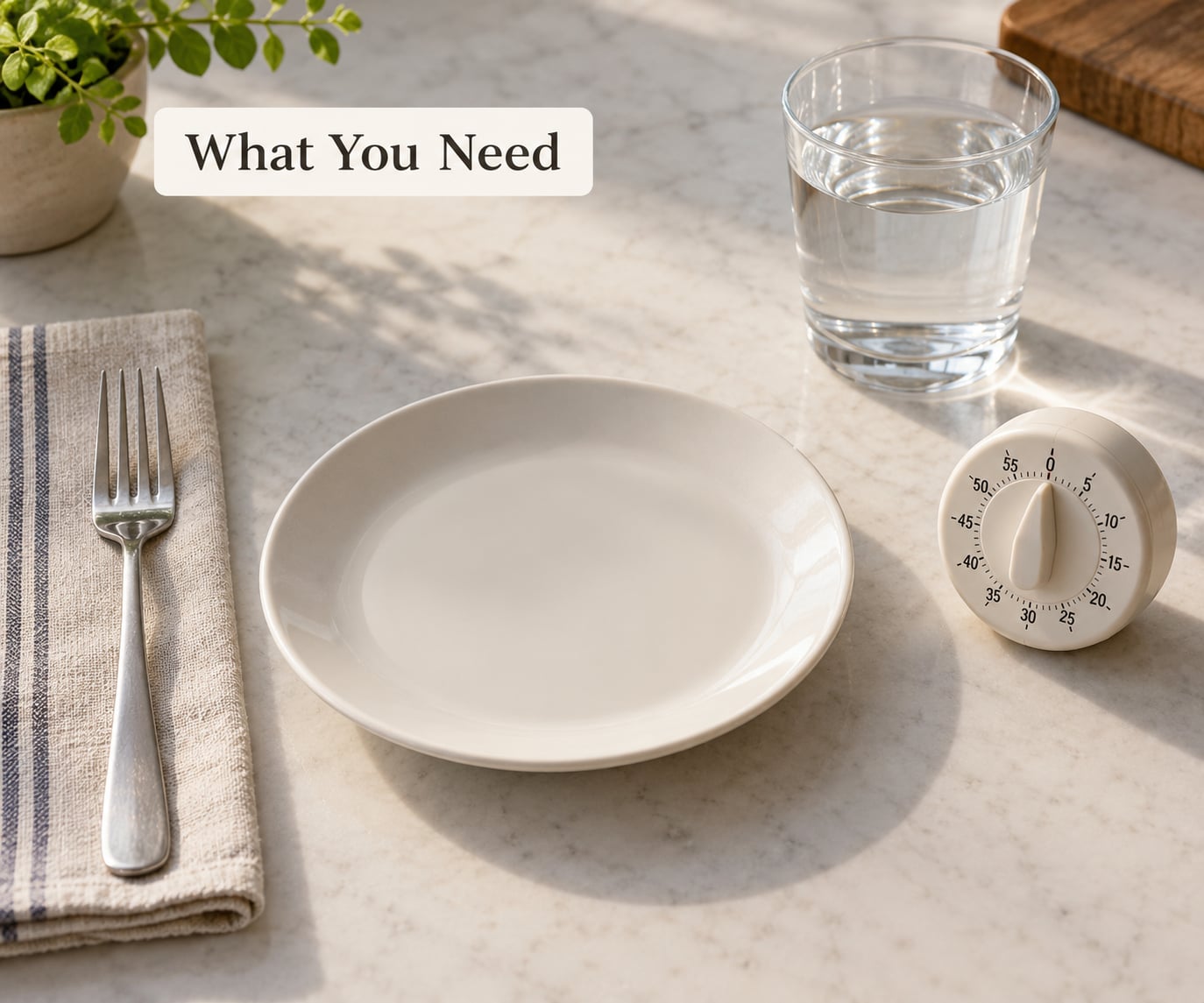
Nothing. That is the honest answer, and it matters, because slow eating fails most often when the plan needs a drawer full of gadgets.
The one real prerequisite is that you are reasonably seated and free of your biggest distractions for part of the meal. Not the whole meal. Fifteen protected minutes is enough to start.
Optional tools, in rough order of usefulness:
- A glass of water to drink before the meal and between bites. Cheap friction you have to pause for.
- A dessert fork or chopsticks for anything served in chunks. Physically awkward to shovel rice with, which is exactly the point.
- A smaller plate, a salad plate or a saucer for a portion that would normally fill a dinner plate.
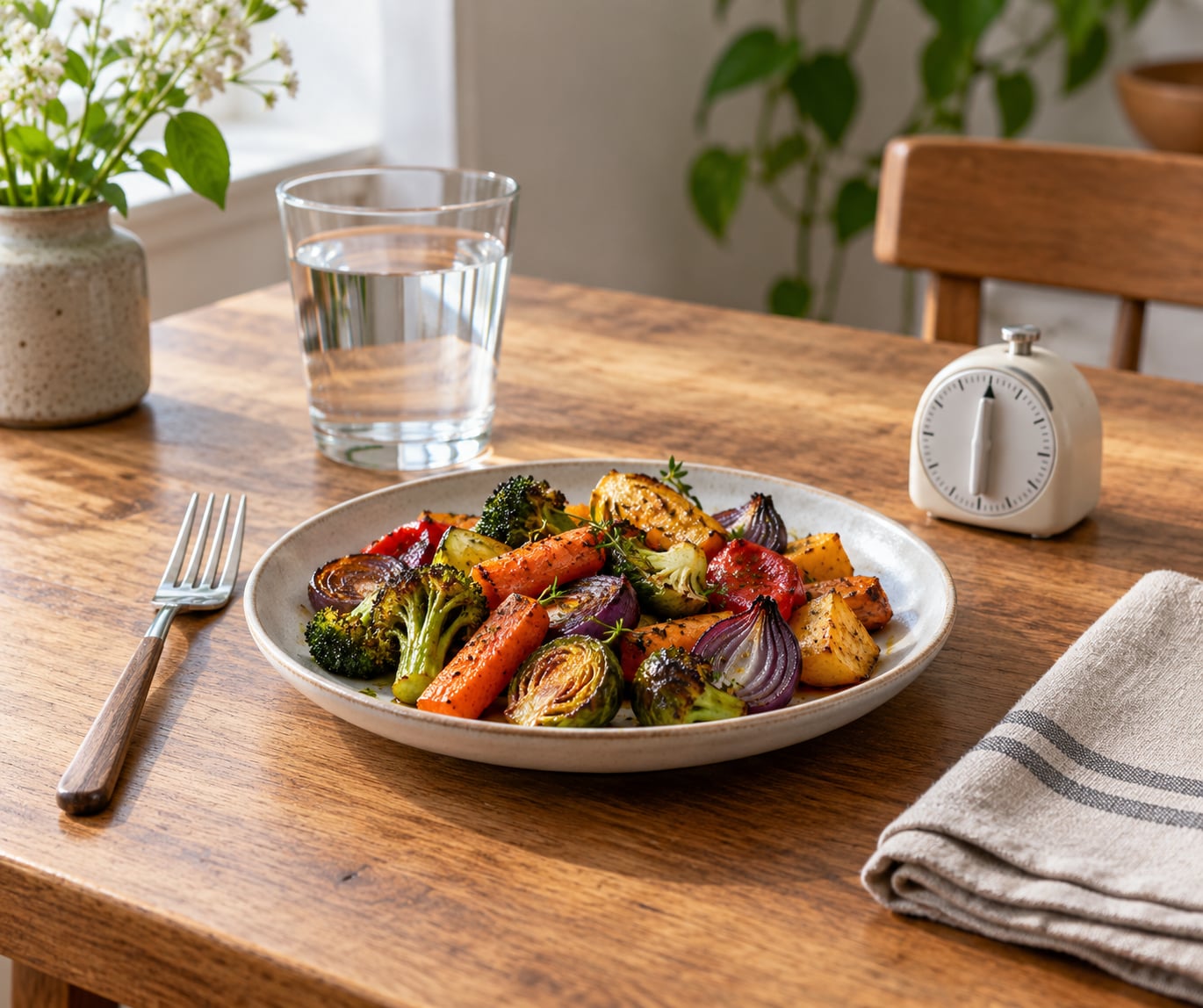
- A kitchen timer, used as a floor rather than a race.
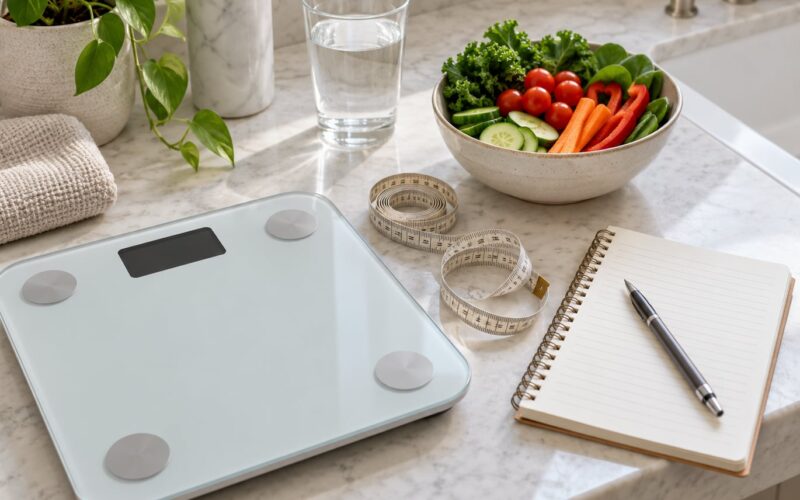
- A note in your phone to log how long each meal actually took. Without a number, progress feels invisible, and that is the point people give up.
Step-by-Step: How to Slow Down While Eating
1. Set Up a Calm Eating Environment
Sit down, turn the television off, and put the phone somewhere that is not in your hand. Three slow breaths before the first bite is enough ceremony for most people.
You are doing this to remove visual and digital noise, not to perform a ritual. Once the phone is gone, texture and temperature stop being background and start being information, which makes the food more interesting to eat. You will notice this works because you catch yourself noticing the food.
2. Use a Smaller Plate or Divide Food
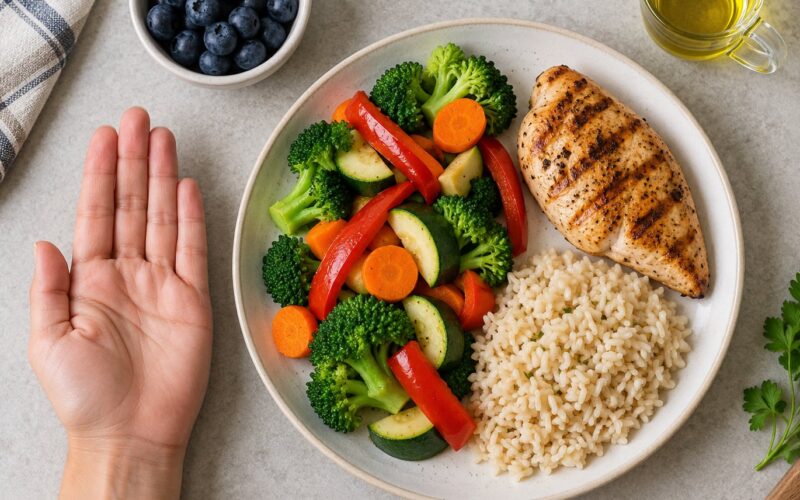
Serve a moderate portion on a smaller plate and leave the rest in the kitchen or in the pan. This is not portion discipline or calorie arithmetic. It is simply that the same amount of food on a smaller dish takes longer to clear, which is more time to eat.
Leftovers that stay in the kitchen are also the first honest answer to the clean-plate instinct. You will know it worked if you finish the plate and still have some left over without feeling like you deprived yourself.
3. Take a Bite-Sized First Bite
Before the first mouthful, use your knife or fork to cut the food into pieces roughly the size of a pea. Then take a bite about half the size you normally would. Just the first one matters; the rest of the meal tends to follow it.
This creates pauses without asking you to follow a diet, a calorie target, or a rigid portion rule. You will know it landed if the meal takes noticeably longer even though you took no deliberate breaks.
4. Chew Thoroughly and Pause Between Bites
Chew each bite until it feels soft and easy to swallow rather than until a number is reached. If you want a number, count to about 20 or 30, or use the 3-3-3 rule that circulates online: about three chews per bite, three seconds per bite, three minutes per course. Treat it as a training aid, not a law.
Most people who say they cannot chew slower are describing a swallowed reflex, and the fix is mechanical rather than moral. Lower the fork to the plate, take one breath, then pick it up again. You will know it is working when you catch yourself chewing with your mouth closed, which only happens when you are actually chewing.
5. Put Down the Utensils Between Courses
Between bites and between courses, rest the fork, taste the food, and take a sip of water. If you use a timer, set it for 20 minutes and treat it as a minimum, not a target to beat.
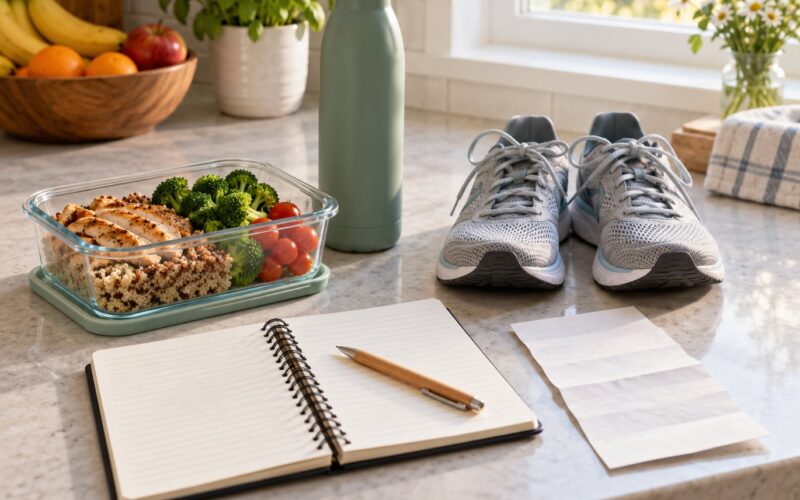
On a busy week, pick one meal and make that your slow meal. Trying to make all three slower usually means making none of them slower.
6. Check In With Hunger and Fullness
Halfway through, pause and ask a simple question: am I still physically hungry, comfortably satisfied, or just finished with the meal and not quite ready to stop? These are different states and most of us confuse the second and third.
Fullness reads differently across people and across the day, so learn your own signals rather than chasing someone else’s. You will know it is working when stopping mid-meal no longer feels like a loss.
7. Finish When Comfortably Satisfied
Stop at comfortable, box the leftovers, and leave the table for a short walk if that suits you. Read a few pages, take the plates to the sink, step outside for a minute.
The goal is better awareness and a calmer relationship with food, not eating a fixed amount. You will know the habit has landed when finishing early feels ordinary instead of wasteful.
Common Mistakes When Learning How to Slow Down While Eating
Trying to change every meal at once. That is how the habit dies. Pick the first bite-size change for week one and leave the rest alone.
Treating the timer as a race. A 20-minute timer is a floor. The moment it becomes a challenge to beat, you have rebuilt the same speed you were trying to leave.
Eating while driving, walking or standing over the sink. Some meals cannot be slowed. That is fine. Do not stack those meals on top of a rushed lunch and call the week a failure.
Eating faster because someone at the table eats faster. This is the most common real-world obstacle and it has almost nothing to do with willpower. Match the slowest person at the table rather than the fastest, ask someone to pass a dish, and take your first course before it does.
Feeling guilty about leftovers. Most families train children to clear the plate, and a half-finished serving then reads as waste. It is not. Rewarding yourself with a second helping because you did not finish is the trade you are rejecting.
Counting on the slow pace to fix everything. Slow eating is a component of eating well, not a plan by itself. If you want to know whether it has become a habit, time one meal a week for a month instead of trying to notice in the moment.
Frequently Asked Questions
How long does it take to slow down while eating?
Most people notice a difference within a week of practising one change consistently, but the pace usually takes three to six weeks to start feeling automatic. Fast eating is a learned habit, so the effort fades as the cue repeats. Judge progress by timing one meal a week rather than by how the meal felt.
What can I do if I eat too fast because I am hungry?
Do not fight hunger with willpower at the start of a meal. Drink a glass of water first, then sit down and take three breaths before the first bite, then serve a smaller portion with the rest kept out of reach. Very low blood sugar and some medications need medical advice rather than a dining habit, so ask your doctor if fast eating comes with shakiness or dizziness.
Does eating more slowly help digestion?
Slower meals give your stomach more time to empty and usually mean less swallowed air, which many people notice as less bloating. Harvard Health also points out that slow eating does not work equally well for everyone. Persistent bloating, reflux or pain after meals is a medical question, not a pacing one, and deserves a doctor or registered dietitian.
How do I slow down when eating at restaurants or on the go?
Order one course at a time and let the kitchen pace the meal, ask for a side plate so you control what lands in front of you, and set the phone face down in your bag. At work, protect ten minutes at a car-free table before anything else. On days with no quiet moment at all, pick one sit-down meal and let the others go.
Do I need to count chews to eat more slowly?
No. Counting to 20 or 30 is a useful training cue, and the 3-3-3 rule adds a few seconds per bite, but the number is not the point. Chew until the bite is soft and easy to swallow, and use the count only if chewing that long still feels like a chore.
Can mindful eating help with weight loss?
It can support weight management by making portions and fullness easier to notice, but it is not a weight-loss plan on its own. Eating slowly slows the blood sugar rise after a meal and helps some people eat less without counting anything, and a 2018 study in the International Journal of Obesity linked slower eating with lower obesity rates. For individual guidance, talk to a registered dietitian.
Start With One Mindful Change
Start with this: the next meal you sit down for, eat your first five bites with no screen and no working lunch, then pause with the fork on the plate before you take another. That is the whole first step, and it is enough for a week.
Practice it until it stops needing thought, then add the next change. Slow eating is a practice with cues, not a test you pass or fail, and a slower meal on Thursday matters more than a perfect Monday. This is general information rather than personal nutrition advice, so if you are managing diabetes, a digestive condition or an eating disorder, talk to your doctor or a registered dietitian before changing how you eat.