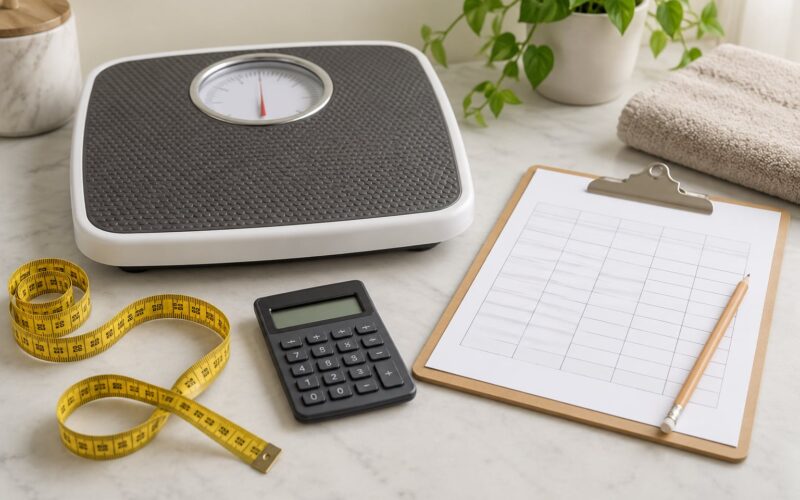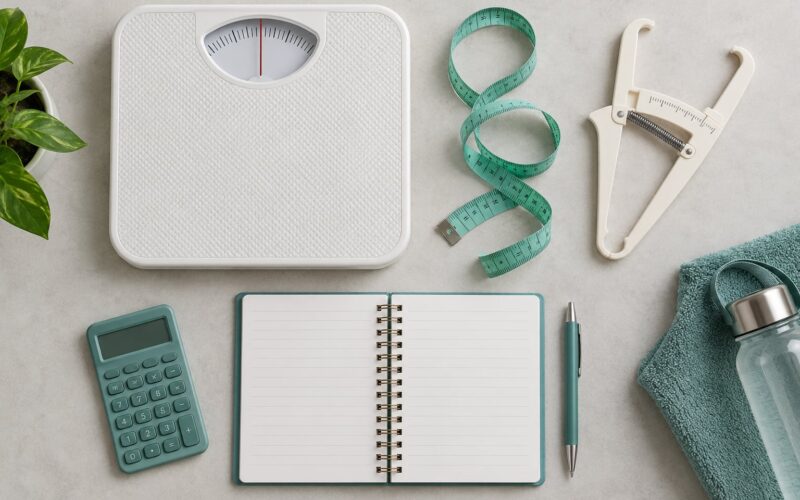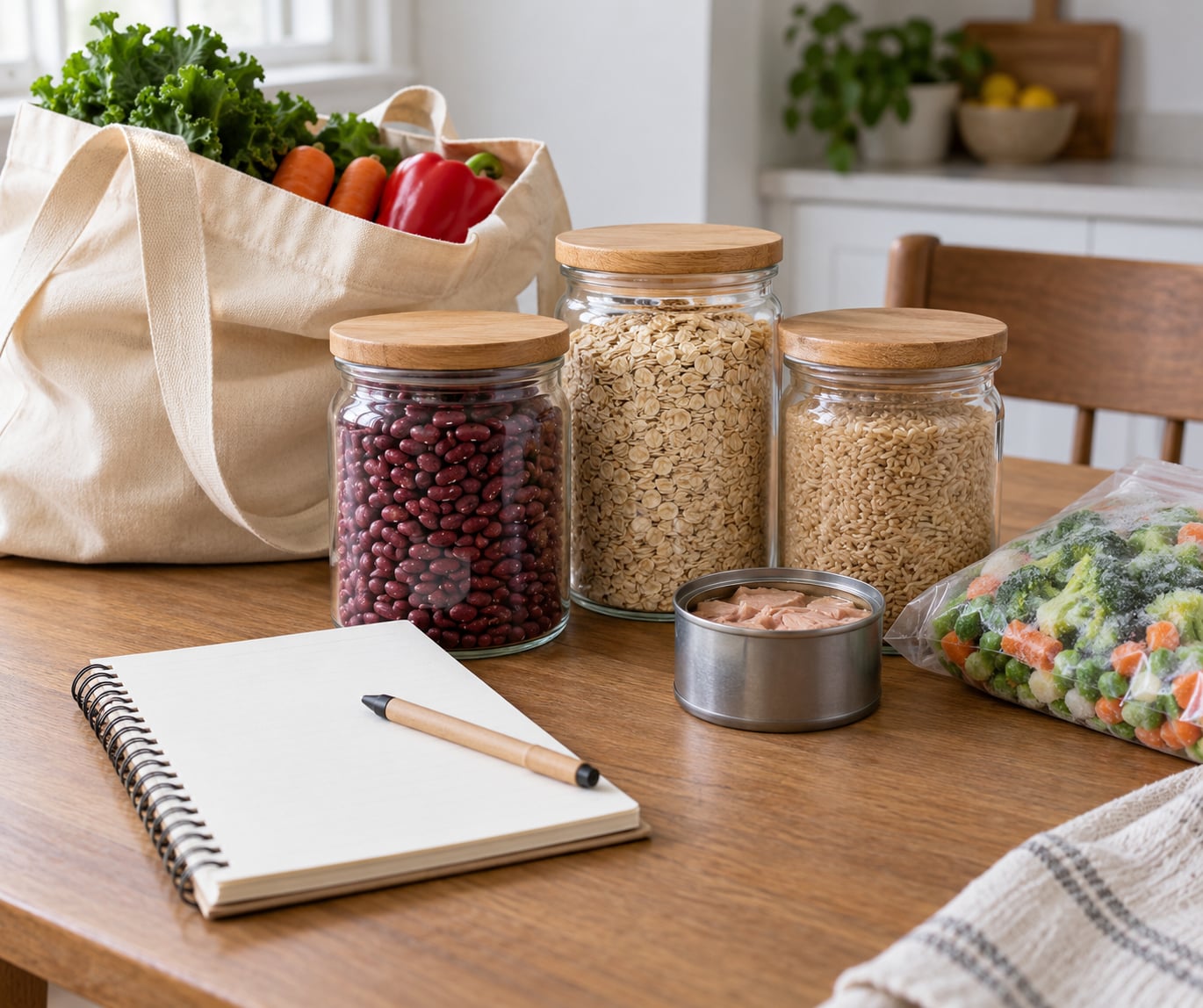
Losing weight when money is tight comes down to this: build a modest calorie deficit from the cheapest foods you already know how to cook, and move your body in ways that cost nothing. Weight change is driven by eating less than you burn, not by buying expensive produce or joining a gym. The money is the constraint, so solve the money problem first.
Six steps cover the whole job, and none of them require a single new purchase. This is general information, not personal medical advice — if you have diabetes, kidney disease, gout, PCOS, take regular medication, or were pregnant recently, talk to your doctor or a registered dietitian before changing how you eat.
Last updated: October 2026
Table of Contents
- What You Need
- Step-by-Step: How to Lose Weight When Money Is Tight
- How to Lose Weight When Money Is Tight Without Special Foods
- 1. Set a Food Budget and Shopping Priorities
- 2. Find Free or Lower-Cost Support
- 3. Build an Affordable Pantry and Shopping List
- 4. Make Filling Meals Without Buying Processed Diets
- 5. Add Movement That Does Not Cost Money
- 6. Review Progress Weekly Instead of Weighing Every Day
- Common Mistakes
- Frequently Asked Questions
- What is the cheapest way to lose weight?
- Can I lose weight by eating less?
- What foods are filling and inexpensive?
- How can I stay active without spending money?
- Should I buy weight-loss products or meal plans?
- When should I ask a doctor about my weight and health?
- Conclusion
What You Need
Nothing here needs to be bought. If you can boil water, cook an egg and open a can, you have everything required to start.
A written weekly food allowance comes first, because vague intentions are the fastest way to overspend. Put a number on paper and treat it like any other bill for the week.
For tracking, a cheap notebook works as well as any paid app. Three numbers a week beats an app you abandon in a fortnight.
Reusable containers, a stack of freezer bags and a piece of masking tape on the freezer shelf labelled with a date turn cooked food into next-day meals instead of bin waste.
Three kitchen tools do most of the work: a pot with a lid, a knife and cutting board, and a can opener. A kettle, a baking tray and a few measuring cups are nice extras.
Your pantry basics should be dry beans, lentils, oats, brown rice, whole-grain pasta, canned tomatoes, frozen vegetables, eggs, canned tuna and a jar of peanut butter. Nine or ten items cover a surprising number of meals.
Finally, know your low-cost sources: a discount grocer, a community food pantry or food bank, a community fridge, and a free Sunday produce table if your area has one.
Step-by-Step: How to Lose Weight When Money Is Tight
Each step below builds on the one before it. Skip around and you will find yourself back at the shop wondering why the total keeps climbing.
How to Lose Weight When Money Is Tight Without Special Foods
The baseline version costs nothing extra. Pick one modest goal for the week — swapping sugary drinks for water, or walking after dinner three times — and repeat it until it stops feeling like effort.
Eat the meals you already know how to cook, just in sensible portions. Most people lose weight by adjusting what they eat by a small amount consistently, not by learning a new cuisine.
Perfection is the trap. A week of takeout or a birthday party is a single data point, not a failed plan, and the week after it counts far more than the week of it.
1. Set a Food Budget and Shopping Priorities
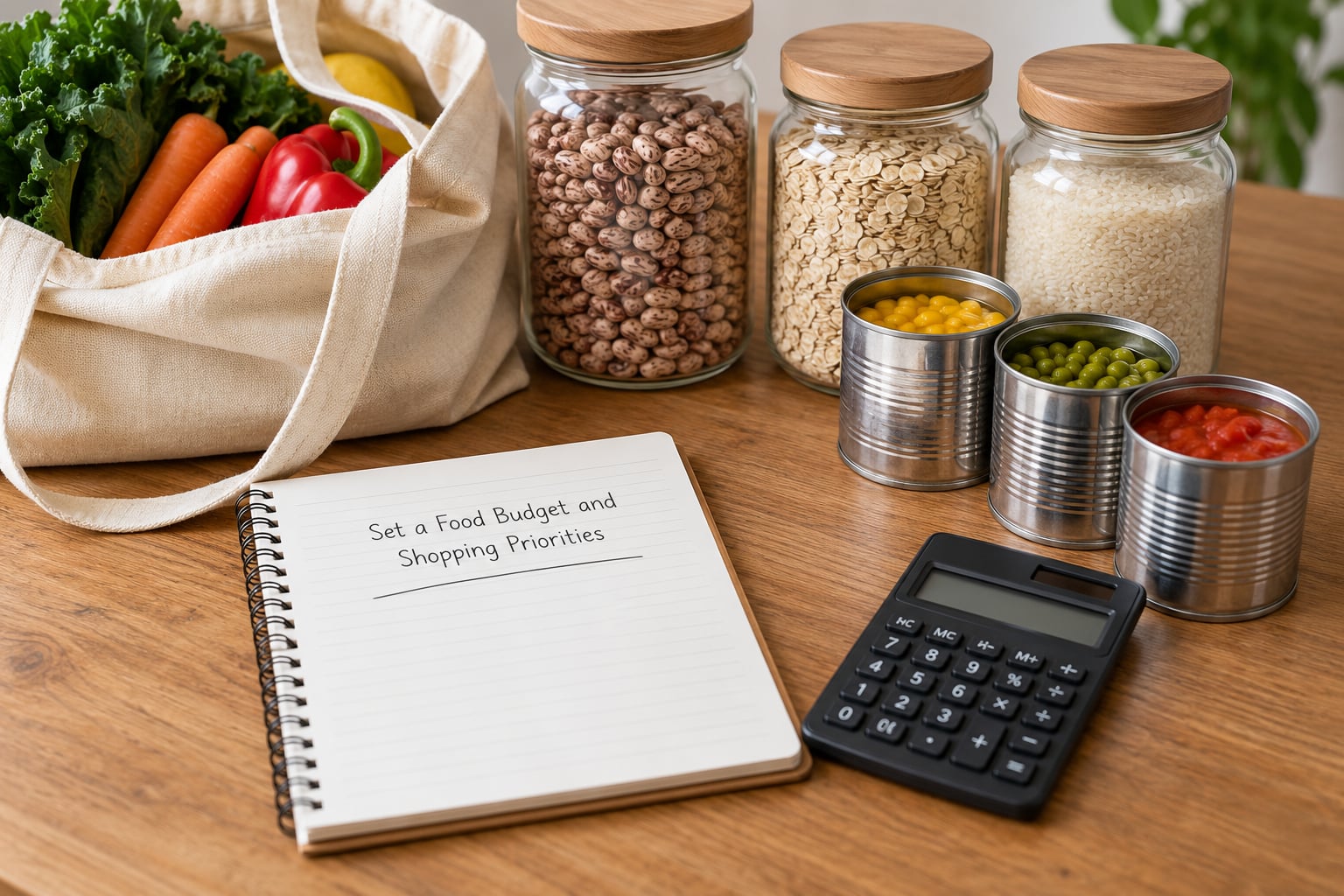
Work out what you can genuinely spend on food this week and write the number down. If you are feeding a family, divide by the number of mouths, not by the week.
Rank every purchase into three piles: the filling staples that keep meals going, the perishable extras, and the impulse items. When the total climbs, cut from the top pile first — that is what protects both the budget and your progress.
Plan the meals before you shop, not during. A list written at home takes ten minutes and prevents the two impulse buys that undo it. Never shop when you are hungry; that rule came up again and again in the budget-focused community threads I read while writing this.
Leave room for the staples that fill you up. A bag of beans and a sack of oats cost little and carry several meals, while a single impulse snack can cost the same as lunch.
2. Find Free or Lower-Cost Support
Free guidance genuinely exists, and it is underused. Public libraries lend books, run exercise sessions, host classes on cooking on a budget, and often give free access to online fitness platforms.
Local public-health departments publish plain-language material on eating well for less, and community colleges teach cooking skills at low or no cost. Ask what a community centre near you offers — walking groups and chair exercise classes are usually free.
If money is the immediate barrier, food banks, community food pantries and community fridges distribute surplus and donated food. SNAP and WIC help eligible households stretch the grocery budget, and a short call to your local office tells you what you qualify for.
Free walking is a bigger opportunity than most people realise: walking routes, parks, school fields and shopping centres all work. And when weight, blood sugar or medication matters to your plan, a registered dietitian or your doctor can steer you around choices that look cheap but work against you.
3. Build an Affordable Pantry and Shopping List
Build around cheap protein, because protein is what makes a meal filling and it is the line item that costs the most. Eggs, dried beans and lentils, canned tuna and sardines, canned chicken, frozen fish fillets and chicken thighs give you the most protein for the least money per serving.
Beans and lentils are the quiet workhorse. One pot covers several meals, they keep for months in the pantry, and they bring fibre and iron as well as protein. Canned beans are usually cheaper than dried and ready in minutes; the rinsing step also removes a chunk of the added salt.
Frozen beats fresh on price and on convenience, and the nutrient-loss myth does not hold up. Vegetables are typically frozen shortly after harvest, so they keep their vitamins well, and the small amount of vitamin C lost over storage is usually not worth the extra cost.
When you do buy canned, read the label. Look for no salt added, fruit packed in its own juice rather than heavy syrup, and BPA-free cans where they exist. Rinse beans and vegetables under water even when the can says nothing about salt.
Compare the price per pound or per serving, not the shelf price. Two identical jars can differ by half again after you divide through. Store-brand versions of oats, rice, canned goods and cleaning basics usually match the name brand closely enough for everyday eating, and they are the single swap that tight-budget households report making the biggest difference.
Shop where the food is cheaper. Discount chains, warehouse clubs in small quantities, and ethnic grocery stores for dry goods and spices are all worth a comparison trip once a month. Shop in season when you do buy fresh, and build every plan around what is already in your kitchen before you add anything new.
Many budget households switch to store brands and plan meals to a set figure, and that planning alone is what gets weight moving for a lot of people. Treat the shopping list as the plan, not as a suggestion.
4. Make Filling Meals Without Buying Processed Diets
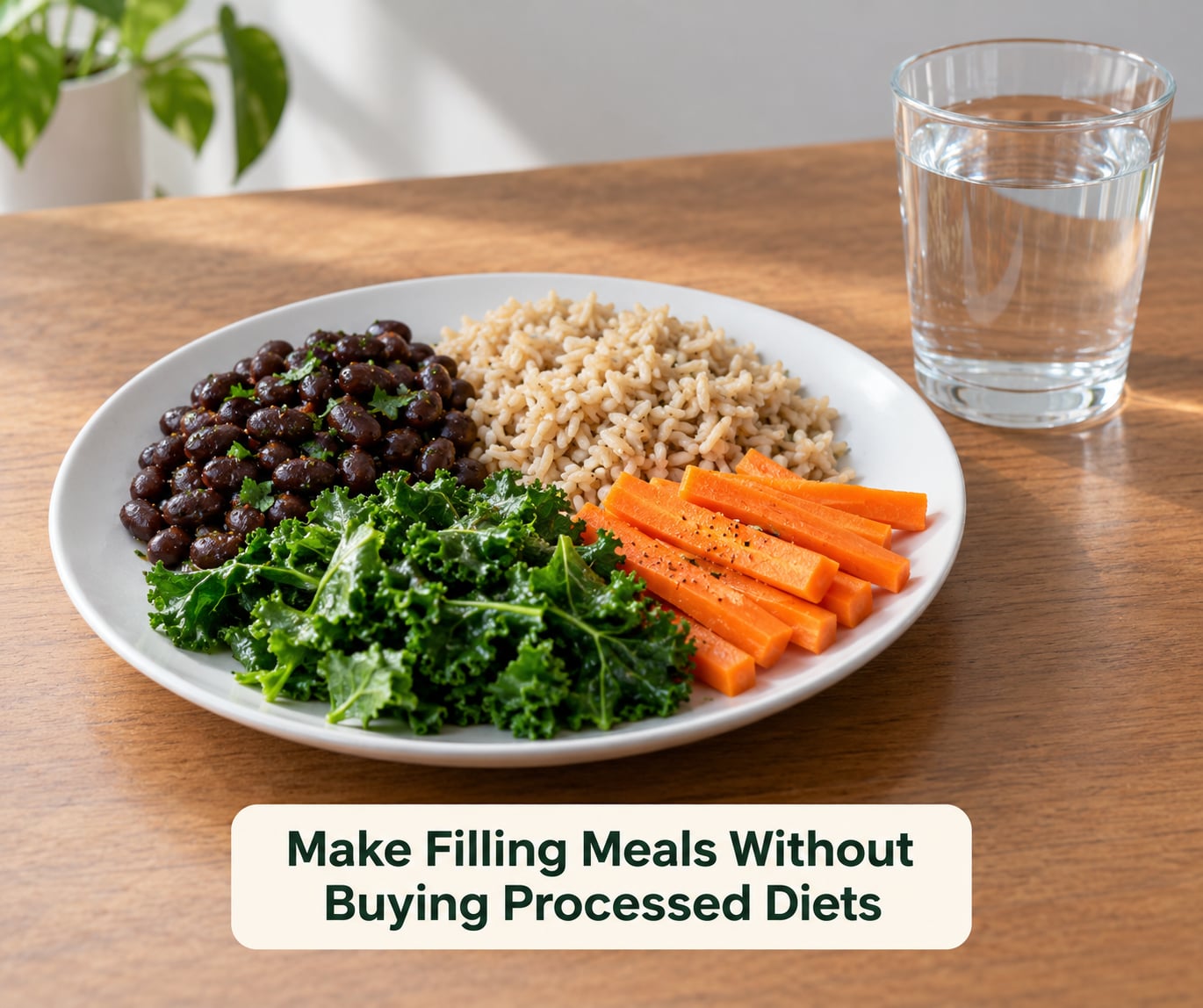
Use a plate method rather than counting calories. Fill half the plate with vegetables or fruit, a quarter with a protein source, and a quarter with a high-fibre carbohydrate such as rice, pasta, oats, potatoes or bread.
The volume does the work. Beans, lentils, oats and vegetables carry a lot of water and fibre, so a plate built that way fills you up and slows digestion, which is what most expensive diet plans are selling at a markup.
Cook once, eat three times. A pot of chilli, lentil soup or bean curry gives you dinner plus two packed lunches, and reheated food from a properly chilled container keeps well for three to four days in the fridge.
Stretch the expensive items. Canned kidney beans go into taco filling, chickpeas into curry, lentils into chilli, chopped boiled eggs into salad. A slow cooker turns cheap cuts into several dinners while you are out working, though it is an optional purchase.
Food safety basics matter more when you batch cook: poultry to 165°F (74°C), ground meat to 160°F (71°C), whole cuts and fish to 145°F (63°C). Cool food quickly, refrigerate within two hours, and freeze what you will not eat within three or four days.
5. Add Movement That Does Not Cost Money
Movement helps your health and your calorie balance, but it does not have to be bought. A gym membership is optional, and the budget conversation usually settles that point.
Start with a fifteen-minute walk after one meal and add five minutes every few days. Stairs count, and so does walking somewhere you needed to go anyway.
A no-equipment circuit covers the rest: sit-to-stands from a sturdy chair, wall push-ups, a step-up onto a low stair, a plank hold on the floor, and a march on the spot. Two or three rounds is a full session.
Measure progress with something a free app or a stopwatch can tell you: minutes walked, circuits completed, how many push-ups you managed in a minute. That is more useful than a number that moves every morning for reasons that have nothing to do with fat.
Adjust to your situation. Ten minutes of movement in two five-minute blocks still counts. Chair exercises and standing marches work if stairs are out. On low-energy days, a short walk is a completed session, not a failed one.
6. Review Progress Weekly Instead of Weighing Every Day
Check once a week, at the same time and in the same conditions. Daily weigh-ins create noise, and that noise makes people quit plans that were actually working.
Weight moves for ordinary reasons: water from salt, carbohydrates, a bowel movement, a long walk, a late meal. A change of a pound overnight says almost nothing. Look at the trend over a month, and pair it with how your waistband feels, because that often moves before the scale does.
If progress has stalled for several weeks, adjust one thing rather than everything. Cut the portion of the carbohydrate, drop the sugary drinks again, or add one more walk, then give it a further three weeks before changing anything else.
Progress on a budget is not a straight line, and that is the part most people find hardest to accept. When weight loss matters alongside a medical condition, a pregnancy history or regular medication, individualised advice from a doctor or registered dietitian is worth far more than any general plan.
Common Mistakes
Crash dieting. Skipping meals and cutting to very little causes rebound eating later and costs you energy in the meantime. Fix: modest cuts, mostly in drinks and portions, with all three meals intact.
Skipping food to save money. The saving is small and the hunger is expensive. Fix: buy fewer items, not less food — a beans-and-oats meal costs a fraction of a takeaway order.
Buying weight-loss products. Fat burners, detox teas, meal-delivery subscriptions and appetite suppressants cost real money and rarely pay for themselves. Fix: spend nothing here and put the savings toward staples.
Letting food go off. Wasted food is wasted budget, and that is a genuine weekly loss for many households. Fix: freeze surplus portions, label containers with dates, and use up the oldest thing first.
Paying for drinks. Sweetened tea, soda and energy drinks are among the least filling calories you can buy. Fix: water, sparkling water or unsweetened tea, and keep the good stuff for a planned treat.
Pre-cut produce and convenience meals. They charge extra for someone else doing the chopping. Fix: whole fruit and vegetables, and a knife that does the work for free.
An unrealistic exercise plan. An hour you cannot repeat is worth less than ten minutes you do repeat. Fix: build from whatever you already do on an ordinary day.
Reacting to daily scale changes. One bad morning does not undo three good weeks. Fix: weekly checks only, and a written note of what you actually changed.
Two final budgeting habits pay off quickly. Buy meat and fish on sale and freeze it on the day you get home, and shop the edges of the store where the reduced items sit rather than the middle displays. Then write next week’s list before this week’s food runs out, while you still remember what is missing.
Frequently Asked Questions
What is the cheapest way to lose weight?
The cheapest route is the least processed food you can buy in bulk: dried beans and lentils, eggs, canned tuna, oats, brown rice, frozen vegetables and store-brand canned goods. Cutting sweetened drinks and walking daily add up at zero cost. Memberships, supplements and meal-delivery plans are where budgets usually leak, so that money is better left unspent on staples.
Can I lose weight by eating less?
Yes, a modest calorie deficit is the mechanism, though the way you cut matters. Dropping a quarter of your intake tends to hold; cutting to almost nothing drives hunger, rebound eating and lost muscle. Most public health guides suggest a small daily deficit alongside regular meals, and a registered dietitian can adjust the amount for your circumstances.
What foods are filling and inexpensive?
Dried beans and lentils, eggs, oats, canned tuna and sardines, frozen vegetables, brown rice, whole-grain pasta, canned tomatoes and frozen fruit pack protein, fibre and water into the fewest calories per unit cost. Fresh chicken thighs and canned fish fill more cheaply than beef or fresh fish fillets. Frozen vegetables are also more filling than the same amount of salad leaves.
How can I stay active without spending money?
Walk fifteen minutes after a meal and add five minutes every few days, or take the stairs. At home, run two or three rounds of a circuit built from sit-to-stands, wall push-ups, low step-ups, a plank hold and marching on the spot. Parks, walking routes and community centres usually host free groups, and libraries often lend free access to fitness platforms.
Should I buy weight-loss products or meal plans?
Generally no, especially on a tight budget. Fat burners, detox teas, appetite suppressants and meal-delivery subscriptions cost money, add calories rather than remove them, or both, and the money comes out of your food budget. If a registered dietitian offers a sliding-scale or community clinic service, that money is far better spent on advice than on products.
When should I ask a doctor about my weight and health?
Ask a doctor if you have diabetes, kidney disease, gout, PCOS, a history of disordered eating, or take regular medication, because these change what a safe plan looks like. Also seek advice before pregnancy, and if you feel faint, dizzy or unusually tired while eating less. A registered dietitian can set realistic targets and a referral route.
Conclusion
Three things to do this week. Write your real weekly food allowance on paper and rank your shopping by filling value, not by price tag alone.
Plan every meal around beans, lentils, eggs, oats, rice and frozen vegetables, then batch cook once so the plan covers three days at a time.
Choose one free movement habit to repeat — fifteen minutes of walking after dinner is plenty to start — and check progress once a week rather than every morning.