Probiotics are live microorganisms, usually bacteria or yeasts, that you eat to add organisms to your gut. Prebiotics are types of fiber your body cannot digest, and they travel to the colon to feed the bacteria already living there. In short, probiotics add organisms and prebiotics feed organisms. That single sentence answers most of the confusion people have about the two, though the practical differences — what to eat, when to take them, and how to read a supplement label — take a bit more unpacking.
Most of the confusion I run into comes from two words carrying opposite jobs while being sold side by side in the same aisle. One is an organism. The other is a fuel. Once you hold onto that, the rest is detail, and this guide covers the detail: definitions, food sources, timing, label literacy, safety and a plain recommendation for each common goal.
Table of Contents
- Probiotics vs Prebiotics What Is the Difference at a Glance
- What Are Probiotics?
- Is this a probiotic or a prebiotic food?
- What Are Prebiotics?
- How Do Probiotics and Prebiotics Work?
- Myth: stomach acid kills every probiotic you swallow
- Myth: a bigger CFU number means a better product
- Myth: prebiotics and probiotics are the same thing sold twice
- Probiotics vs Prebiotics: What Is the Difference in Timing?
- Can You Take Probiotics and Prebiotics Together?
- What Are the Possible Benefits and Limitations?
- Better supported
- More tentative
- The limitation that matters most
- Five ways to add more of both without a supplement
- Are Probiotics or Prebiotics Safe?
- Which Should You Choose?
- Frequently Asked Questions
- Should I take probiotics and prebiotics together?
- What is a synbiotic, and is it better than taking probiotics and prebiotics separately?
- Do probiotics or prebiotics help with weight loss?
- How quickly do probiotics and prebiotics start working?
- Which probiotic is best, and do I need a prebiotic supplement?
- What should you not mix with probiotics?
- Conclusion
Probiotics vs Prebiotics What Is the Difference at a Glance
| Point of difference | Probiotics | Prebiotics |
|---|---|---|
| What it is | Live bacteria or yeasts | Fibers your enzymes cannot break down |
| Live or not | Must be alive when you take it | Not living; it is plant material or a fiber ingredient |
| Main job | Adds organisms to the gut environment | Feeds specific beneficial microbes that reach it |
| Common names | Lactobacillus, Bifidobacterium, Saccharomyces boulardii, Bacillus strains | Inulin, oligofructose, resistant starch, galactooligosaccharides, chicory root fiber |
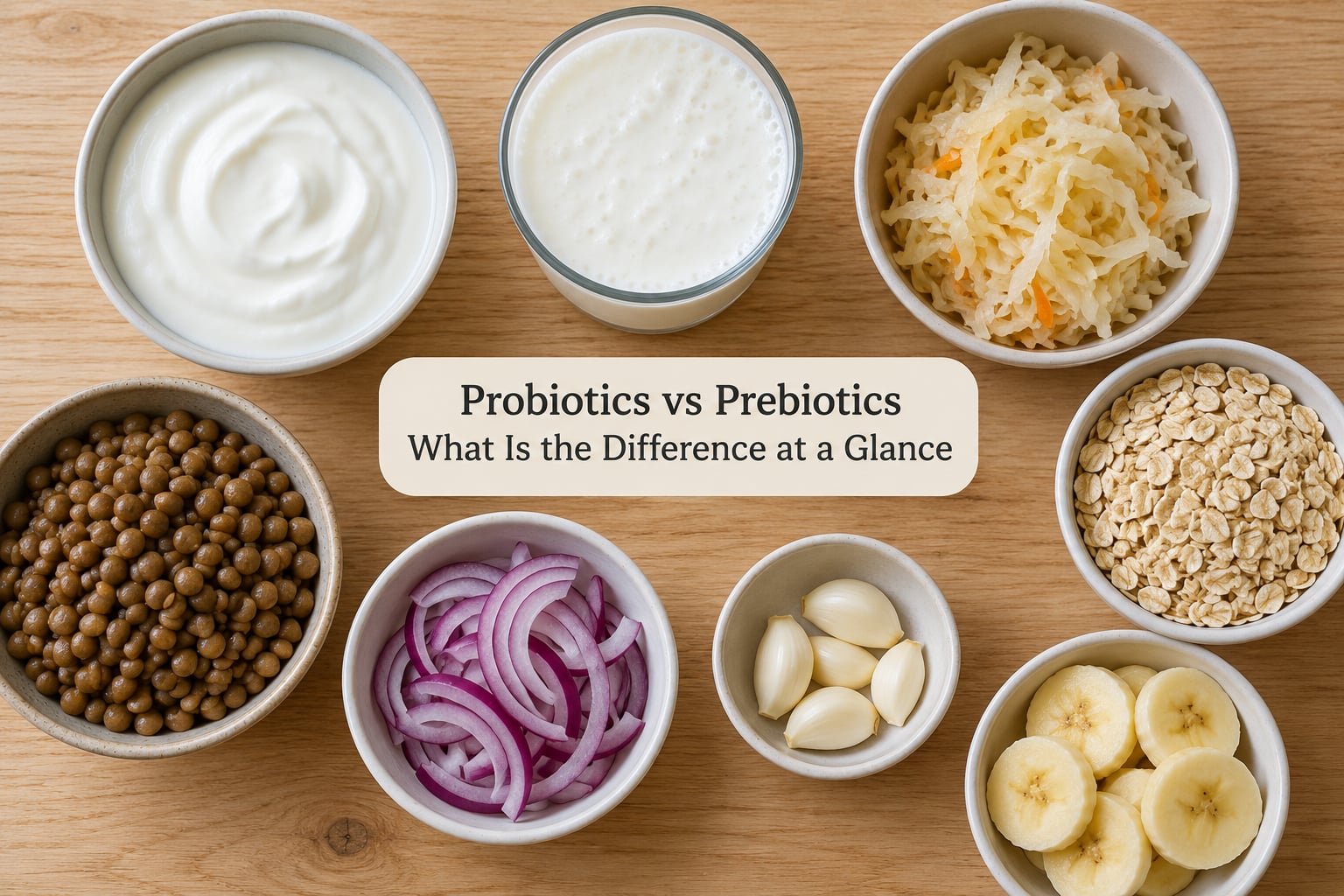
| Typical foods | Yogurt, kefir, sauerkraut, kimchi, miso, tempeh, some cheeses | Onions, garlic, leeks, asparagus, beans, lentils, oats, barley, bananas, chicory root |
| How it is measured | Colony-forming units, or CFU, listed on the label | Grams of fiber, with inulin or GOS named on the ingredient list |
| Timing | Follow the product directions; space away from antibiotics | Eaten with meals; increase slowly to limit gas |
| Common complaint | Mild bloating in the first days for some people | Gas, cramping or bloating when fiber jumps too fast |
| Best-supported use | Reducing antibiotic-associated diarrhoea; some IBS symptom relief for specific strains | Raising fiber intake and supporting bowel regularity and microbial diversity |
Two caveats about that table. There is no official serving size recommendation for either one, so gram or CFU numbers on a label are not targets you must hit. And a benefit that has good evidence for one strain does not automatically transfer to every product sold under the same word.
What Are Probiotics?
Probiotics are live microorganisms that, when eaten in adequate amounts, confer a health benefit. That definition is stricter than most packaging implies: the organisms have to be alive when you consume them, and the benefit has to be tied to a specific strain rather than to the word probiotic on its own.
The best known strains come from a few families. Lactobacillus covers a wide group of lactic acid bacteria that mostly live in the small intestine. Bifidobacterium species are a major presence in the colon, and many are named with the number that identifies them, such as B. lactis HN019.
Saccharomyces boulardii is a yeast rather than a bacterium, and it is the strain most often studied for antibiotic-associated diarrhoea. Spore-forming Bacillus strains such as Bacillus coagulans and Bacillus subtilis survive storage better than most bacteria because of their outer coating.
Everyday probiotic foods include yogurt with live and active cultures, kefir, unpasteurized sauerkraut, kimchi, miso, tempeh, natto and some aged cheeses. These foods also contain fiber, which is why they blur the categories so often. A food can do both jobs at once.
Is this a probiotic or a prebiotic food?
Plain Greek yogurt with live cultures is a probiotic food, and drinking Yakult gives you a defined probiotic bacterium in a drink. Sauerkraut and kimchi are probiotic foods when they are unpasteurized.
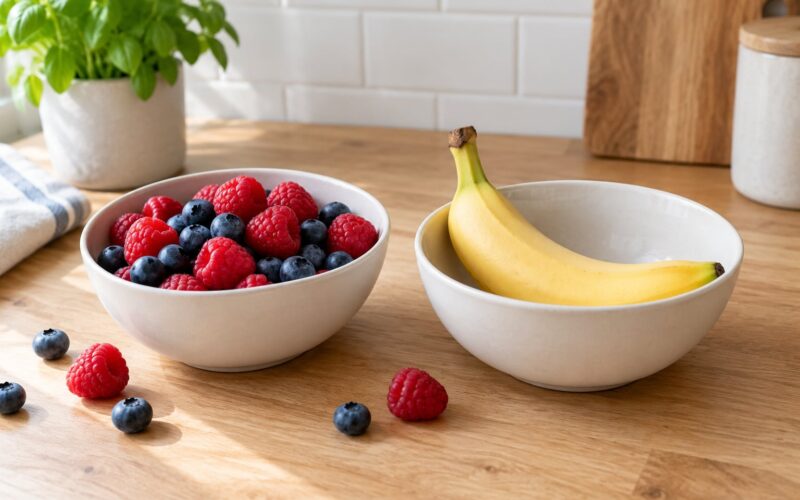
A banana is not a probiotic at all; it is a prebiotic, and the fiber changes as the fruit ripens. Oats, garlic and onions are prebiotic foods with no live cultures at all.
One detail worth knowing because it comes up constantly: pasteurization kills the live microbes in most packaged fermented foods. Heat-treated yogurt still tastes fermented and still counts as a good protein source, but it no longer delivers organisms. Reading the label for live and active cultures, or checking for an unpasteurized product, takes about five seconds.
What Are Prebiotics?
The 2017 consensus definition from the International Scientific Association for Probiotics and Prebiotics describes a prebiotic as a substrate that is selectively utilized by host microorganisms and confers a health benefit. Written for normal humans, that means an ingredient your own digestive enzymes cannot break down, so it reaches the colon intact, where particular gut microbes ferment it.
The main types you will see on labels are inulin and oligofructose, derived from chicory root, Jerusalem artichoke, onions, garlic and asparagus; resistant starch, which forms in cooked and cooled starches such as potatoes, rice, pasta and green bananas; galactooligosaccharides, found in legumes; and beta-glucans from oats and barley.
The nuance that online discussions keep circling: all prebiotics are fibers, but not all fiber is prebiotic. A fiber only qualifies if specific microbes in the colon selectively use it and that use produces a benefit.
Fiber that passes through without being fermented still helps stool bulk and regularity, which is a good reason to eat it. It is simply not a prebiotic by the technical definition.
One practical note on resistant starch. Green bananas and slightly underripe cooked starches carry more of it than fully ripe bananas and reheated dishes, because the starch has not yet been digested and absorbed in the small intestine. Cooling cooked starch increases it further.
That is why a green banana and a very brown banana do not do the same job, even though both are bananas.
How Do Probiotics and Prebiotics Work?
Prebiotics travel largely unbroken through the stomach and small intestine, then arrive in the colon where resident microbes ferment them. That fermentation produces short-chain fatty acids including butyrate, acetate and propionate, which are used as fuel by the cells lining the colon and are linked to gut barrier function and immune signaling.
This is the mechanism people usually mean when they say prebiotics feed the good bacteria.
Probiotic organisms take a different route. They pass through the stomach and small intestine and meet a shifting environment in the colon, where they compete for nutrients and attachment sites. Most do not permanently colonize; they are generally considered transient visitors.
Their effects, where they appear, tend to be strain-specific and tied to the dose and the condition being studied.
Myth: stomach acid kills every probiotic you swallow
Stomach acid does reduce the number of live organisms that make it through, and some die. It does not kill every one. Organisms that survive do so through spore-form resistance, protective coatings and acid tolerance, which is why the microbiome research community spends so much effort on delivery and coating methods.
The honest summary is that survival is partial, not zero, and that formulation matters more than most labels admit.
Myth: a bigger CFU number means a better product
Not necessarily. The CFU count printed on a probiotic label is measured at the time of manufacture, not at the moment you swallow the capsule, and it counts organisms whether or not they are still alive. Only the count guaranteed at the end of the shelf life tells you what you are getting near the end of the bottle’s life.
There is no official daily CFU recommendation, so a huge number is a marketing number more often than a useful one.
Myth: prebiotics and probiotics are the same thing sold twice
They are not interchangeable. One is a living organism, the other is undigested plant material.
They can be combined, and combination products are usually called synbiotics, but taking one does not replace the other. Someone focused on adding fiber and someone focused on a specific strain after antibiotics are solving different problems.
Probiotics vs Prebiotics: What Is the Difference in Timing?
Timing is where the two behave most differently in practice, and it is the part most product instructions gloss over.
Prebiotics are foods. Timing is a matter of digestion and comfort rather than dosing. Eating them with meals, distributed across the week, tends to be easier on the gut than a concentrated serving all at once. Splitting a jar of sauerkraut across several meals works better for most people than eating it as a single side dish.
Probiotic timing depends entirely on the product and on the medicines you take. Many labels simply say once daily with food, which is a reasonable default for a general routine. The more useful guidance concerns spacing.
Probiotics are usually advised away from antibiotics, because the antibiotic and the probiotic want the same space. Taking them at different times of day is a common practical approach.
The specific antibiotic matters, which is why anyone on a prescription should ask their pharmacist rather than a forum. Antacids and acid-reducing medicines also come up often, since they change the pH the organisms have to survive.
Oral contraceptives and some other medicines raise separate questions that are individual to the person, so the answer belongs with a pharmacist who knows your full list.
Storage matters just as much as timing for probiotics. Heat, moisture and time all reduce viability, which is why some products require refrigeration and why a capsule left in a hot car for a week is not delivering what the label promised. Prebiotics have no such problem; a bag of oats does not expire as an organism.
None of this makes one category better. It makes handling different, and handling is where real-world results get lost.
Can You Take Probiotics and Prebiotics Together?
Yes, and there is a reasonable logic to it. Prebiotics supply the fermentable substrate that keeps resident microbes active and producing their byproducts, while probiotics supply organisms. If a probiotic strain arrives in a colon that is already well fed, the conditions for it to do anything at all are better than if it arrives into a fiber-poor gut.
When a single product contains both, the industry term is synbiotic. The word is used loosely, so it is worth checking whether the fiber is actually one the included strains can use. Some fermented foods work as synbiotics in everyday terms, since a yogurt with live cultures served alongside oats or berries combines organisms and their preferred fiber in one meal.
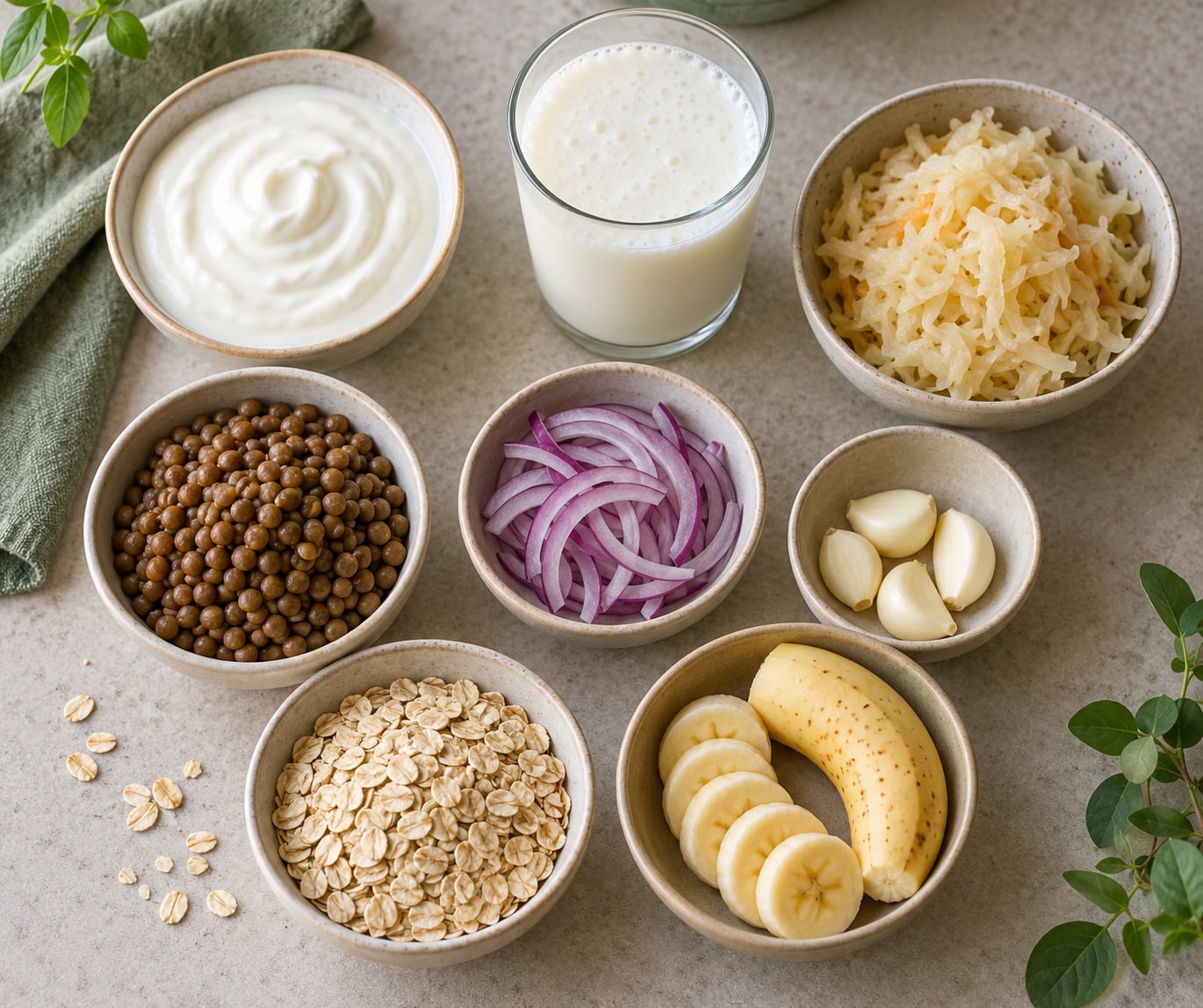
Most meals already do this naturally. A bowl of kefir with banana and oats, or sauerkraut next to beans and lentils, combines both categories without any decision on your part. My preference is to build that from food first and treat a combined supplement as an optional extra rather than the starting point.
If you do combine supplements, follow the directions on each product and increase prebiotic amounts gradually. People who jump straight to a high daily dose of inulin powder frequently regret it within a day, because the gas that follows is immediate and obvious.
What Are the Possible Benefits and Limitations?
Research on both categories is active, and the strength of the evidence varies a lot by specific strain, specific fiber and specific outcome. Saying may help or limited evidence suggests is not hedging for its own sake here; it reflects how the research actually reads.
Better supported
Reducing antibiotic-associated diarrhoea has one of the more consistent bodies of evidence, particularly for Saccharomyces boulardii and for certain Lactobacillus strains taken alongside antibiotics. Some evidence also supports easing symptoms of irritable bowel syndrome with specific multi-strain products.
Prebiotic fiber supports bowel regularity and short-chain fatty acid production. Broader diversity of gut microbes is consistently associated with better metabolic and immune markers, which is the argument for eating a wide range of plant foods rather than chasing one ingredient.
More tentative
Weight management, mood, skin and general immunity are the areas where claims outrun the data. Some trials show modest changes, results are inconsistent, and study quality varies.
Fermented foods have been associated with increased microbiome diversity and lower inflammatory markers in small trials, which is promising rather than proven. Anyone promising you a probiotic will fix a skin condition or drop ten pounds is selling, not reporting.
The limitation that matters most
A benefit shown for one strain is not a benefit shown for the product on your shelf. Microbiome effects are highly individual, and a supplement that helps one person does nothing for another.
The honest summary across the whole field is that whole foods tend to have a stronger evidence base and a lower downside than capsules.
Five ways to add more of both without a supplement
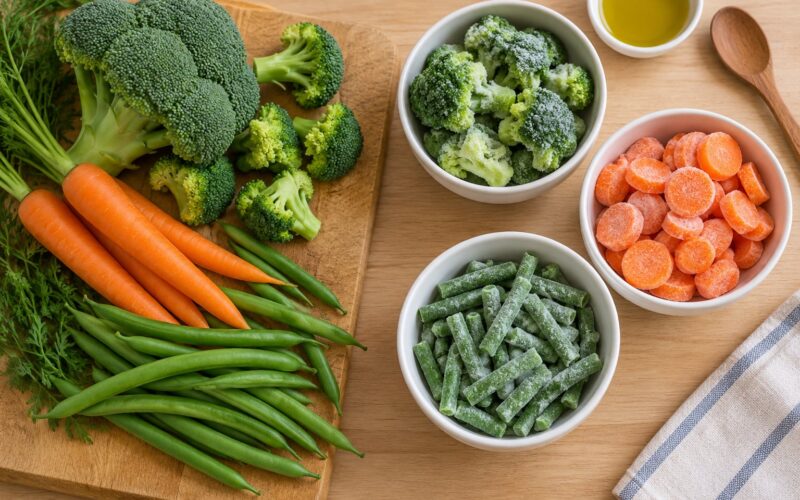
- Add one serving of beans or lentils to a meal you already eat, and start with a smaller portion if your fiber intake is currently low.
- Swap white bread and white rice for oats, barley or whole grains at one meal a day.
- Cook a serving of onion, garlic, leeks or asparagus into meals you make anyway, rather than adding them as a separate dish.
- Keep a fermented food in the fridge you actually like, such as yogurt with live cultures, kefir or unpasteurized sauerkraut, and eat it with that fiber-rich meal.
- Add one new prebiotic food each week instead of six at once, which keeps the gas and bloating manageable.
That approach costs less, carries no label claims to interpret, and gives you both categories most days. It is also the version that keeps working once the novelty wears off.
Are Probiotics or Prebiotics Safe?
For most healthy people, both are safe, and the side effects are mostly short-lived. Prebiotics can cause gas, cramping and bloating while your gut adjusts, especially if you increase fiber in big steps. That response is expected and usually settles within a week or two when you add gradually and drink enough fluid.
Probiotics commonly cause temporary bloating or changes in bowel habits in the first days. Symptoms that are severe, that involve blood in the stool, that come with fever, or that persist past a couple of weeks are not a tolerance issue to push through. They are a reason to see a clinician.
Some people need specific advice rather than a general rule. Probiotic supplements have caused serious bloodstream infections in people who are severely immunocompromised, critically ill, or have central venous catheters, which is why those groups are commonly advised against them unless a specialist recommends otherwise.
The same caution applies during pregnancy, in children with serious immune problems, and in anyone managing a chronic condition or taking regular medication.
Prebiotic fiber can also be unsuitable in conditions involving narrowing or strictures, and in cases where a rapid fiber increase causes obstruction symptoms.
Product quality is its own safety issue. Look for strain designations rather than vague species names, a count guaranteed through the end of the shelf life, and third-party certification such as USP or NSF on the label.
Tell your doctor or pharmacist about every supplement you take, because that conversation catches interactions a label never will.
Which Should You Choose?
Start from your goal, because most people do not need both and almost nobody needs to start with a supplement.
If your fiber intake is low, choose prebiotic foods. Most adults in the US fall well short of the 25 to 35 grams of daily fiber that gut bacteria work best with, so adding onions, garlic, beans, lentils, oats and bananas to ordinary meals usually matters more than any capsule.
If you are recovering from antibiotics, the case for a probiotic is more specific. Talk to your pharmacist about timing, then consider Saccharomyces boulardii or a strain with published research behind the condition you are addressing. Meanwhile, keep food sources in the mix.
If your main problem is bloating or irregularity, work on fiber and prebiotics first, added slowly and steadily. If constipation is persistent, painful, or accompanied by bleeding, see a clinician rather than adding fiber on your own.
If you want one simple habit, add a serving of fermented food to a meal that already contains fiber. That covers both categories in a single change you can keep doing.
If you are pregnant, immunocompromised, severely ill, or managing a chronic condition with regular medication, get individual advice before starting anything. That is a short conversation with a doctor, pharmacist or registered dietitian, and it is worth more than any label.
Frequently Asked Questions
Should I take probiotics and prebiotics together?
Yes. They do different jobs and complement each other. Prebiotics give resident microbes a fermentable fiber to work with, while probiotics supply organisms that may then interact with that environment. Products containing both are called synbiotics. Starting with food is easiest: kefir with banana and oats, or sauerkraut beside lentils, delivers both in one meal. If you use supplements, follow each label and raise prebiotic amounts gradually to limit gas.
What is a synbiotic, and is it better than taking probiotics and prebiotics separately?
A synbiotic is any product or food that combines a probiotic with a prebiotic, either as a single supplement or as a meal. Separate products are not inherently better or worse. The question worth asking is whether the fiber in the combination is one the included strains actually use, since the word synbiotic is used loosely on labels. Many people find one combined product simpler than managing two bottles on different schedules.
Do probiotics or prebiotics help with weight loss?
Evidence here is modest and inconsistent. Some trials show small changes in body weight or metabolic markers with certain prebiotic fibers and fermented foods, but results vary and study quality is mixed. A high-fiber diet that supports gut bacteria is worth pursuing for many reasons beyond weight, and it is easier to sustain than a capsule. Anyone promising weight loss from a probiotic product is overstating what the research shows. Talk to a dietitian if weight management is your main goal.
How quickly do probiotics and prebiotics start working?
It depends on the goal, and it is often slower than people expect. Prebiotic fiber can shift stool consistency and regularity within a few days, while gas may appear in the first week before settling. Probiotic effects in studies often run over weeks rather than days, and many people notice nothing at all. Strains that are not a good match for your condition may do nothing regardless of how long you wait. Persistent symptoms deserve a clinician rather than a longer trial.
Which probiotic is best, and do I need a prebiotic supplement?
There is no single best probiotic. Choose by strain and by the specific outcome studied, look for a count guaranteed through the end of the shelf life, and check for third-party certification. Most people do not need a prebiotic supplement: reaching 25 to 35 grams of fiber daily from ordinary foods is achievable and avoids the gas that concentrated inulin doses often cause. If your fiber intake is genuinely low and food changes are not working, a prebiotic powder is a reasonable second step.
What should you not mix with probiotics?
Probiotics are most often separated from antibiotics, because both target the same gut environment, and taking them at different times of day is a common practical approach. Acid-reducing medicines such as antacids change the conditions organisms need to survive, and questions about oral contraceptives or other regular medicines depend on your personal list. Rather than guess, ask your pharmacist, who can check the actual interaction with the doses you take.
Conclusion
Probiotics add living organisms to your gut and prebiotics feed the organisms already there, which is why one food or product is not a substitute for the other. Start with variety: a wide range of fiber-rich plants, a fermented food now and then, and changes introduced gradually enough that your gut can keep up. If you want to go further, match a specific strain to a specific goal, read the CFU line for the end-of-shelf-life guarantee, and ask a doctor or pharmacist before adding anything to a medication routine.