Yes, healthy eating is cheaper than fast food, once you compare what a drive-through price actually pays for. Most people picture the menu board and stop counting there, but that number covers staff, rent, utilities, insurance, packaging and the building the car is parked outside. A dinner built from rice, beans, eggs and frozen vegetables at home costs a fraction of the same meal bought across the counter, and it usually fills you up longer.
That is the short answer. The rest of this guide gets into how to make healthy eating cheaper than fast food in practice: what to buy, how to stretch one batch of food into several meals, how to store the leftovers safely, and what to do on the nights when cooking genuinely is not happening. Costs here are typical US ranges that shift by region and change over time, so I have given ratios and rankings rather than fixed amounts.
Table of Contents
- What You Need
- Step-by-Step: How to Make Healthy Eating Cheaper Than Fast Food
- 1. Compare the real cost of a drive-through meal with dinner you make
- 2. Plan meals before you shop
- 3. Buy flexible, low-cost staples
- 4. Cook once and turn ingredients into several meals
- 5. Use leftovers without repeating the same meal
- 6. Keep a fast-food backup plan
- Common Mistakes
- Frequently Asked Questions
- Is it cheaper to eat healthy or eat fast food?
- What is the cheapest way to buy healthy food?
- Is it cheaper to meal prep myself than buying lunch?
- Why do healthy home meals still leave me craving fast food?
- Can I eat healthy on a very small weekly food budget?
- What is the 3-3-3 rule for eating?
- Conclusion
What You Need
You need less than most people expect. Nobody on this path has to buy specialty diet products, and you do not need a large upfront grocery budget to start.
- A repeatable meal shortlist. Six to eight meals you already know how to cook, written down. Repetition is the whole trick, because it removes the decision cost that pushes people toward the nearest option.
- A shopping list you actually use. Grouped by food group so you walk the store once instead of four times.
- Storage that survives a work week. A handful of glass containers and a stack of freezer bags or a loaf pan for freezing portions. Cheap containers matter less than having enough that you never skip putting food away.
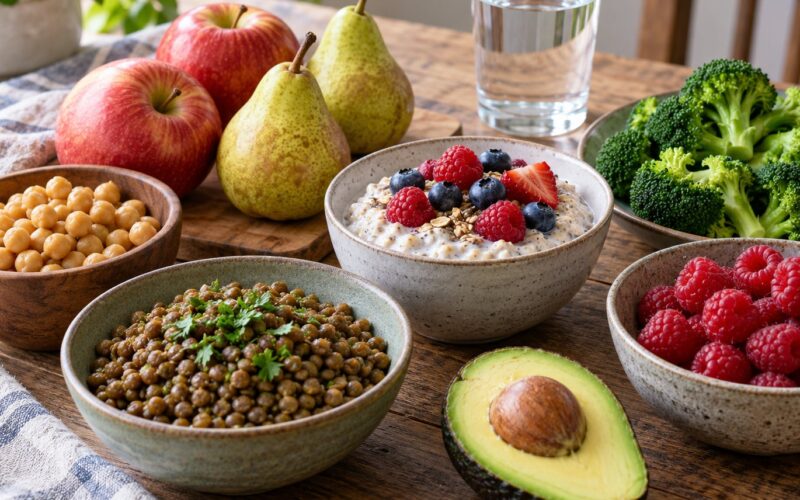
- Three or four pantry anchors. Rice, dried or canned beans and lentils, eggs, and rolled oats. These stretch further than any fresh item and they survive a forgotten shop.
- One optional piece of equipment. A pressure cooker, a rice cooker or a blender. Each pays for itself within the first few weeks of use, and each exists to remove a step rather than to make cooking a hobby.
- A freezer you are willing to use. Half-full freezers are a habit problem, not a space problem.
If you do not have a private kitchen, the plan still works. A shared or community kitchen, a dorm with a microwave, or a disability that limits standing time all change the method rather than the goal. In that case lean on no-cook meals (oats, canned beans, canned tuna, plain yogurt, fruit), one-pot meals cooked in whatever appliance is available, and portioning into containers you can eat cold. The three-ingredient rule saves more money than any shopping trick.
Step-by-Step: How to Make Healthy Eating Cheaper Than Fast Food
1. Compare the real cost of a drive-through meal with dinner you make
A combo meal on a menu board looks like one purchase. It is a whole business model: the food, the labor to cook and serve it, the rent, the utilities, the insurance, the packaging and the tip. Your grocery money covers the food and almost nothing else, which is why the same chicken and the same rice produce such a wide gap.
| What one meal actually pays for | Drive-through order | Home-cooked bowl |
|---|---|---|
| Food cost per serving | Highest of the two | Lowest of the two |
| Labor, rent, utilities, insurance | Baked into the price | Not in the price |
| Tip and packaging | Added at the window or counter | None |
| Drive time, parking, gas | Added cost, never on the receipt | None |
| Cleanup time | None | Roughly 10 to 15 minutes |
| Sodium and fibre per serving | High sodium, low fibre | Lower sodium, high fibre |
| Portion you control | Fixed by the menu | Yours to size |
The honest counter-argument is labor. Grocery shopping, prepping, cooking and cleaning all take time that nobody pays you for, and that is exactly why fast food feels cheaper in the moment. Comments on r/Frugal make the same point before anyone finishes the math: the food is cheaper, the trip is not. The way through that is batch cooking, which pays the labor cost once and then hands you three or four meals for the price of one.
Run the comparison on your own life for a week. Write down what you actually order, including drinks, upgrades and the second item you add because you are hungry. Then write the ingredients for the equivalent home meal. Most people find the gap is somewhere between three and five times before they even count gas.
A worked example, using a chicken and rice bowl against a fried-chicken combo: the home version uses cooked rice from a batch, a chicken breast or thigh roasted on a sheet pan, and frozen mixed vegetables cooked in the same pan juices. One tray, one pot, four portions, and the cost per serving lands well under a fifth of the combo. Do the same exercise with a bean and rice bowl against a burger-and-fries meal and the ratio holds, because beans and rice are among the cheapest per-pound foods in any grocery store.
2. Plan meals before you shop
Half of every grocery bill that looks like waste was bought without a plan. Plan first and the trip gets shorter and the cart gets lighter.
Start by choosing six to eight meals you already enjoy. Not aspirational ones. If you reliably cook a bean soup and a sheet-pan chicken dinner, build the week around those two plus four more, and rotate the leftovers into lunches and wraps. Check the pantry before you check the store, because a bag of rice or a half-used container of beans changes what you need to buy.
Then write the list by food group: proteins, vegetables, grains, dairy or alternatives, and the extras you actually use. Shopping once through a store organized that way stops the second and third trips, and those trips are where impulse buys live. Never shop hungry; people in r/Frugal and r/budgetfood repeat this constantly, and it is the cheapest single behavior change available.
You know the plan worked if you come home with ingredients for the week and nothing you did not intend to buy.
3. Buy flexible, low-cost staples
Budget cooking lives or dies on what sits in the cupboard. The best cheap ingredients are the ones that turn into more than one meal.
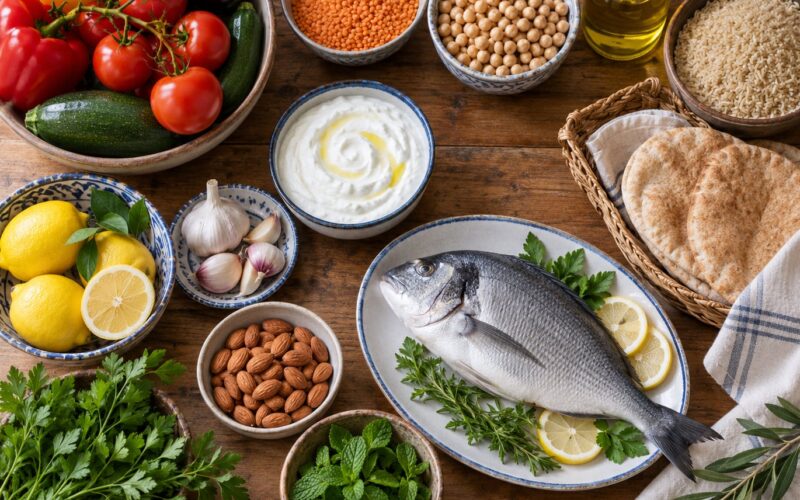
- Dried and canned beans and lentils. The cheapest meaningful protein per serving in most stores, and they thicken soups, bowls and sauces.
- Eggs. Cheap protein that cooks in minutes and works at any meal, not just breakfast.
- Rolled oats. A few cups of dry oats become a week of breakfasts for less than the price of two bakery pastries.
- Rice and whole-grain pasta. Cheap, shelf-stable bases that absorb whatever vegetables and protein you have left over.
- Frozen vegetables. Usually more nutritious than fresh because they are frozen at peak, and they never spoil into the bin. Readers across the frugal forums say the same thing, and the numbers back it up: frozen cuts per pound run well under fresh.
- Canned tuna and salmon. No cooking, long shelf life, and they turn into wraps and grain bowls in five minutes.
- Plain yogurt. Protein and calcium with no added sugar if you read the label.
- Seasonal produce. Buy what is cheap and abundant, and buy it in the form you will actually eat: whole cabbage and onions rather than a bag of pre-cut anything.
None of this requires organic, specialty or imported versions. Produce that is non-organic and eaten is better for you and for the budget than organic produce that sits in the crisper until it turns. On most staples the store brand and the national brand are nutritionally identical; the difference is the label and the price.
You know the staples are right when a single can of beans and a cup of rice can become dinner on their own.
4. Cook once and turn ingredients into several meals
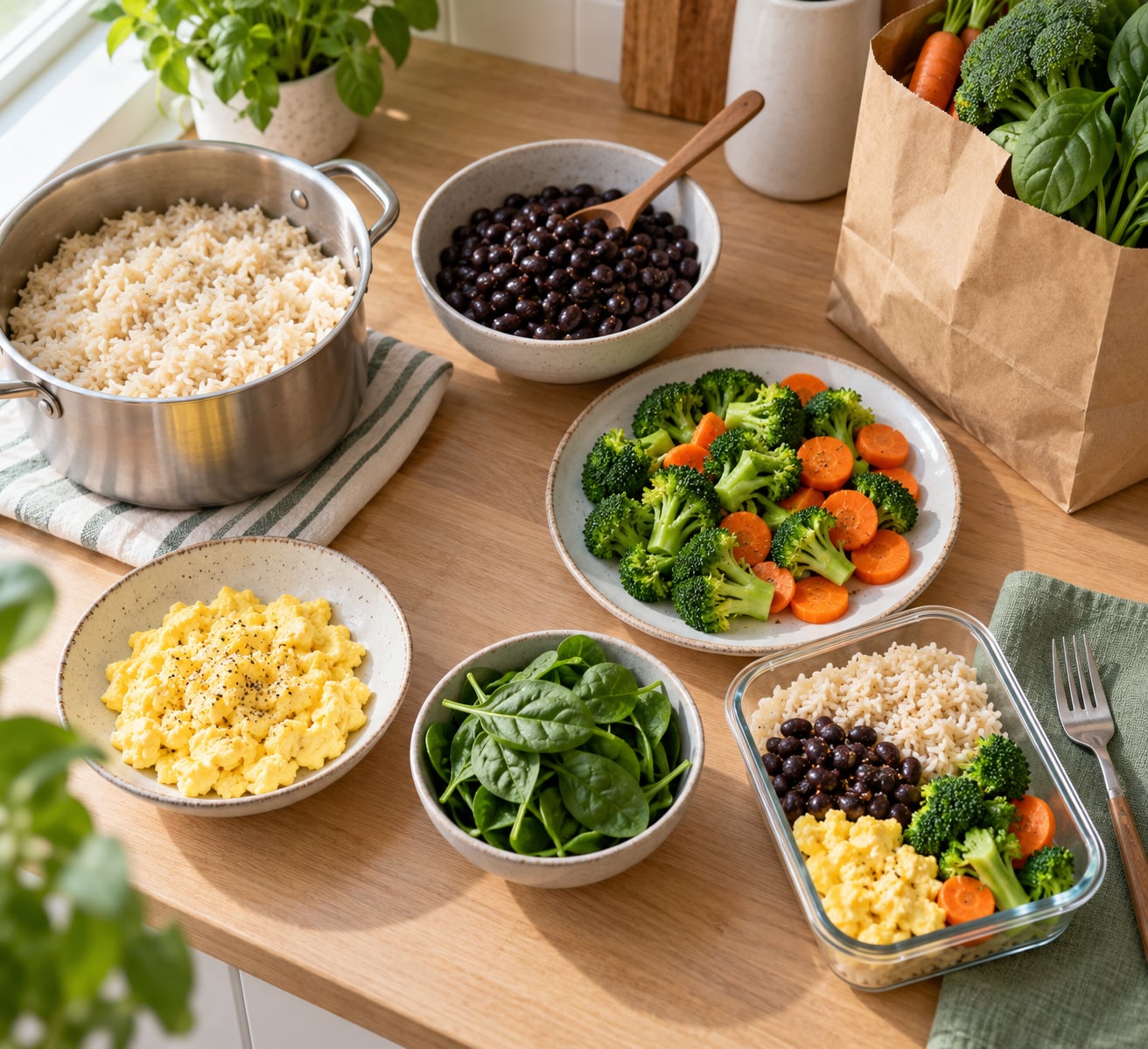
Batch cooking is the single biggest lever in how to make healthy eating cheaper than fast food, because it converts one block of labor into four meals. Cook rice, a tray of roasted vegetables and a pot of beans on a Sunday, and then change the format rather than repeating the plate.
Start with the base, then branch it. Rice becomes a grain bowl with beans and salsa, fried rice with egg and frozen vegetables, a side for a sheet-pan chicken dinner, and a wrap filling. Roasted vegetables become a warm salad with chickpeas, sheet-pan chicken alongside, a blended soup, and tomorrow’s pasta sauce. Beans become chili, soup, a taco filling, and a mashed topping on a baked potato.
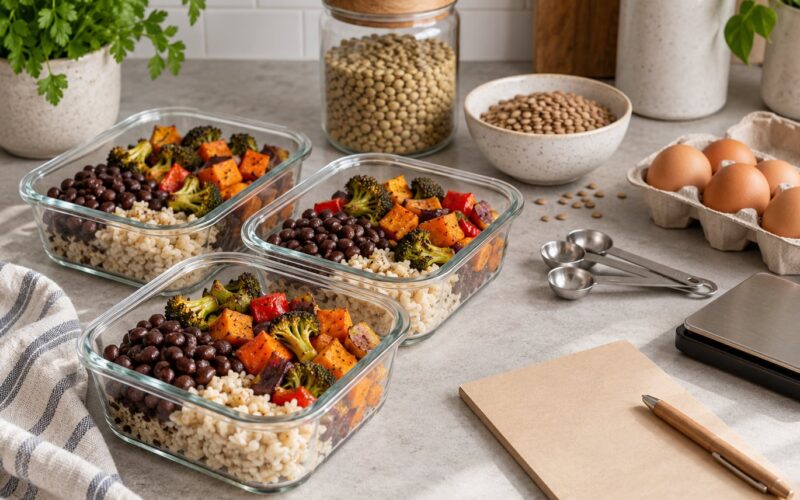
A realistic prep order takes about an hour: rice in the pot, vegetables on a sheet pan, beans on the stove. While the rice cooks, chop and season the vegetables. Let everything cool before it goes near a container, then portion it into however many containers you have. Three containers on Sunday cover most of a work week, and the fourth usually becomes lunch the next day.
You know the batch worked if the containers go into the fridge within the hour and you never reach for a delivery app at 9pm on a Wednesday.
5. Use leftovers without repeating the same meal
Leftovers are the answer to the tired-weeknight problem, but only if you build a rotation instead of eating the same container four days running. Keep cooked grains, roasted vegetables, beans and eggs in separate containers and combine two or three per meal. The grain bowl from Sunday night becomes a wrap on Tuesday and a fried-rice plate on Thursday, and none of those are the same lunch.
Store food safely and it will last long enough to be useful. Refrigerate perishable leftovers within two hours, one hour if it is above 90 degrees outside, and use them within three to four days. Freeze anything you will not eat in that window, in single portions rather than one large block, so a thaw does not become a bigger waste than the original leftover.
Cook to temperature, not to color. Poultry reaches 165°F (74°C) in the thickest part, ground meat 160°F (71°C), and whole cuts of meat and fish 145°F (63°C). A cheap instant-read thermometer is the single most useful tool in a budget kitchen, because it removes the guesswork that makes people throw food out to be safe.
Rescue soft vegetables rather than binning them. Wilted spinach and tired carrots go into soup, frittata or a smoothie. Stale bread becomes croutons or French toast. A bruised apple still makes sauce.
You know the rotation is working when you finish a container and reach for a different one instead of opening a delivery app.
6. Keep a fast-food backup plan
Quitting cold turkey rarely lasts. People in r/EatCheapAndHealthy talk about the same pattern: cook something good, then order anyway. A backup plan beats a rule you break every Friday.
When cooking is genuinely not possible, order smaller and better rather than not at all. Drop the premium items and the add-ons, choose water or an unsweetened drink instead of a soda, and skip the side or split it. Order the sandwich without the sauce packet or swap one fried side for a salad or fruit.
Then make one small improvement at home around it. Add a piece of fruit, a handful of raw vegetables with a dip, or a pot of beans and rice waiting in the fridge so the order is one part of an evening rather than the whole of it. Frugal readers who still want to eat out usually point to a bean-based bowl place as their fallback, and that habit alone moves you away from the fried-and-salted default without pretending the outing did not happen.
One planned order a month is not a failed diet. It is a maintenance cost, and it is much cheaper than the daily version you are trying to replace.
Common Mistakes
Buying only diet and specialty products. Low-calorie snack foods and branded health meals usually cost several times what plain ingredients cost. Fix: buy ordinary groceries and control portions yourself.
Planning one meal and shopping for seven. Repeating a single dish leads to boredom, and boredom leads back to the drive-through. Fix: keep a six to eight item rotation and change the format, not the foundation.
Ignoring what is already in the cupboard. Half of wasted grocery money is food you had. Fix: check the pantry and the freezer before writing the list.
Letting food spoil in the crisper. Wilted greens and soft peppers feel like a failure, but most of them are perfectly usable. Fix: plan one soup, one frittata or one blended smoothie each week to clear the drawer.
Assuming healthy food is automatically expensive. The expensive part is not nutrition, it is packaging, convenience and marketing. Fix: compare unit prices, not package prices, and let a bigger package win only if you will actually finish it.
Treating one order as a personal failure. All-or-nothing thinking ends plans faster than the plan does. Fix: set a weekly number, treat it as a budget line, and get back to the next meal.
Two shorter tips on top of that. Shop with a list and stick to it, because unplanned items are the majority of the impulse spend. And buy meat as an accent rather than the centre of the plate for most meals; half lentils in a sauce or bolognese gives you the same texture for a fraction of the cost, and no one at the table notices.
Frequently Asked Questions
Is it cheaper to eat healthy or eat fast food?
Usually yes. A drive-through price includes labor, rent, utilities, insurance and packaging on top of the food, while your grocery money covers the food itself. A chicken, rice and vegetable bowl built from a batch therefore costs a fraction of a fried combo meal, and leftovers push it lower still. The gap narrows only if you count your own unpaid cooking time.
What is the cheapest way to buy healthy food?
The cheapest approach is a short rotation built on beans and lentils, eggs, oats, rice, frozen vegetables and seasonal produce, cooked in batches and used in several formats. Plan before you shop, never shop hungry, compare unit prices instead of package prices, and buy the store version of staples where the nutrition is the same. Buying what you will actually eat beats buying the ideal thing and wasting it.
Is it cheaper to meal prep myself than buying lunch?
Almost always, once you account for portion size and leftovers. Cooked on Sunday, a batch of four meals usually costs well under a third of four lunches bought across a counter, and the prepped container also saves the wait. The honest catch is time: shopping, prepping, cooking and cleaning take about an hour most weeks, which is why batching rather than cooking fresh every night matters so much.
Why do healthy home meals still leave me craving fast food?
Cravings are usually about habit and reward rather than hunger. A home dinner often lacks the salt and fat that make fast food feel exciting, and it is eaten in a different place, at a different speed, surrounded by different cues. Add a planned order into the week rather than fighting it, keep a backup meal you genuinely enjoy in the rotation, and give the pattern a few weeks before judging it.
Can I eat healthy on a very small weekly food budget?
It is tight but possible if the plan leans on the cheapest per-pound foods: dried beans and lentils, eggs, oats, rice, frozen vegetables, canned fish and seasonal produce, with meat as an accent. Skip specialty and diet products, buy the largest size you will finish, and use frozen produce instead of letting fresh spoil. Cooking at home is essentially required at that level; eating out will not fit.
What is the 3-3-3 rule for eating?
The 3-3-3 rule is a simple habit idea rather than a diet: eat three meals a day, aim for three balanced plates, and try to finish eating about three hours before bed. Some people adapt the numbers to three servings of vegetables and three of protein. It is not a scientific formula and it does not replace a dietitian’s advice, but the regular rhythm it encourages does support steadier energy.
Conclusion
Here is the first move, and it takes about ten minutes. Write down three meals you genuinely enjoy cooking, check the pantry and freezer to see what you could already build on, and then price the ingredients for those three meals against one typical drive-through order including the drink and the add-on. Most people see the gap immediately.
Pick one of those meals, cook it in a batch this week, and put it in containers before the evening gets busy. That is how to make healthy eating cheaper than fast food in practice: not a total ban and not a perfect plan, just a repeatable batch and a shortlist you already like.