Night shift workers can keep a steady diet by fixing their eating times rather than chasing perfect food. Eat a real meal about two hours before the shift, plan two or three smaller meals or snacks through the night, and finish with something light before you sleep. This guide shows how to build that routine and adjust it when the rota changes.
The honest version first: nights make eating harder, not because you lack willpower but because your body is being asked to do two opposite things at once. You are awake and working when your body expects sleep and rest, and you are trying to sleep when it expects food and activity. A workable plan does not fight that. It gives you fixed eating windows and decent choices so you stop making decisions at 3am while tired.
Nothing here is medical advice, and no calorie targets are set. If you have diabetes, a digestive condition, or symptoms that keep coming back, talk to a doctor or registered dietitian before changing your routine, because the timing advice changes for those situations.
Table of Contents
- What You Need
- How to Handle a Diet When You Work Night Shifts, Step by Step
- 1. Map Your Shift and Meal Times
- 2. Eat a Balanced Meal Before Your Shift
- 3. Plan What You Will Eat During the Shift
- 4. Manage Hunger Without Overeating
- 5. Manage Caffeine and Evening Drinks
- 6. Finish the Shift Without Turning It Into a Feast
- 7. Review Your Routine Once a Week
- Common Mistakes
- Frequently Asked Questions
- What should I eat before a night shift?
- How many times should I eat while working nights?
- Can I lose weight while working night shifts?
- What can I eat during a night shift without getting tired?
- How do I stay full until my next meal?
- When should I stop eating or drinking caffeine before bed?
- What to Do First
What You Need
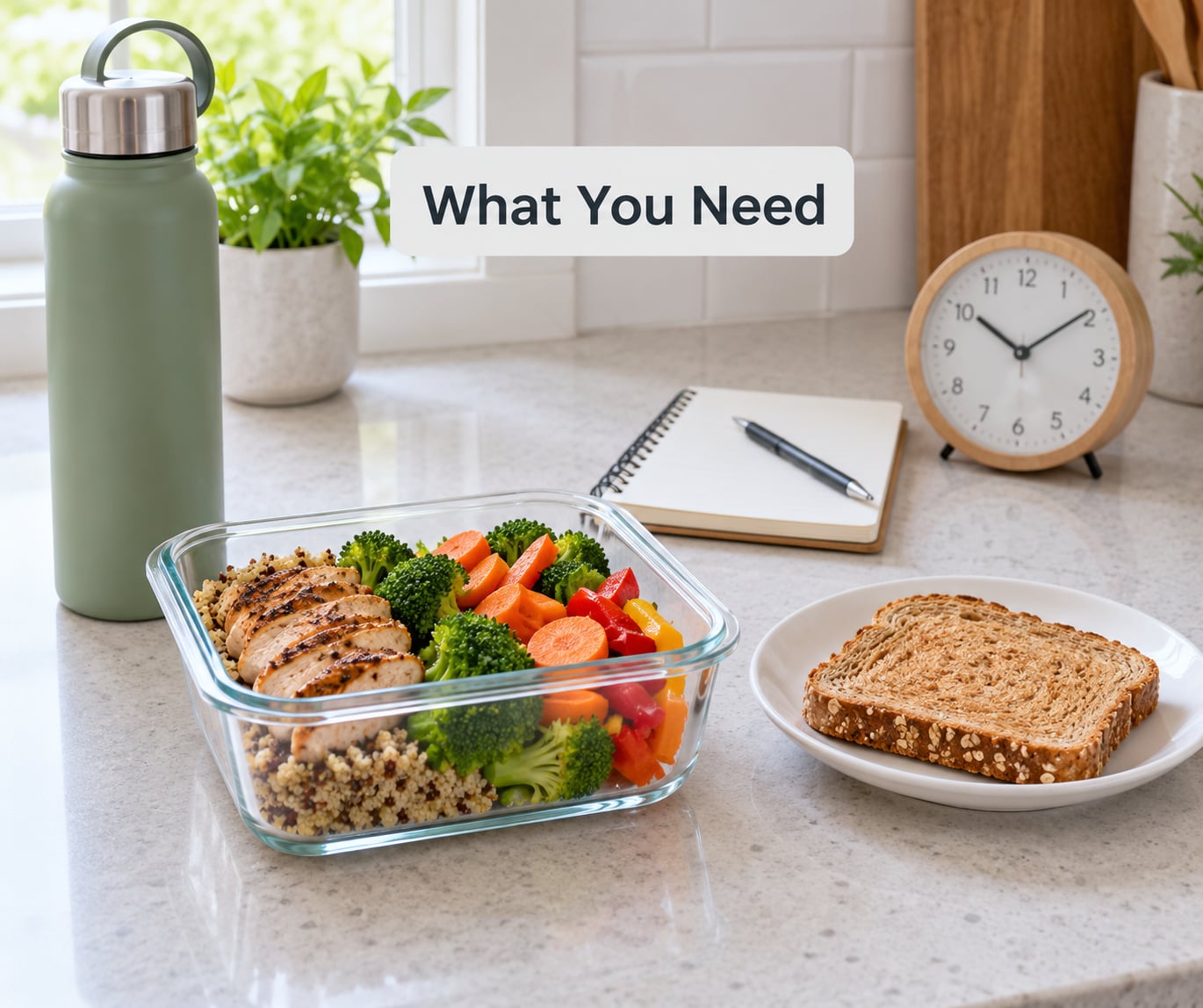
You need five things before you change anything, and none of them are a special product. Grab your actual shift schedule first, because every other decision hangs off it.
- Your real shift schedule. Start time, end time, how many nights in a row, and whether it rotates. Write the actual clock times, not the label your rota uses.
- Food that survives a bag. Sandwiches, wraps, yogurt, fruit, nuts, boiled eggs, cheese, oatcakes, cooked grains from a batch pot. Things that travel cold or at room temperature without a microwave are the easiest.
- A container and a water bottle you can reach. A wide-mouth bottle matters more than a clever one. If hydration needs a lid you cannot open one-handed, it will not happen.
- Somewhere to write things down. A phone note or paper in your bag. You will forget what you ate on your last shift within about three days.
- Any personal guidance you already have. If a doctor, pharmacist, or dietitian has given you instructions, they come before everything in this guide.
Add a pen to the kit bag and you are set. Most people who struggle on nights are not short on food, they are short on a plan that survives a busy week.
How to Handle a Diet When You Work Night Shifts, Step by Step
What follows is a seven-part routine for overnight, rotating, and early-morning shifts. It is built around the fact that your appetite, digestion, and energy all follow a rhythm that does not line up with a night rota.
1. Map Your Shift and Meal Times
Write down when your shift starts and ends, then pick the same three eating occasions every time you work. The point is a repeat, not a perfect plan.
A structure that works for many overnight shifts: a main meal about two hours before you leave, a meal or substantial snack around the middle of the shift, a smaller snack later, and a light meal once you are home. People who finish at 7am often eat breakfast at midnight, lunch at 3:30am, and dinner at 7:30am, then nothing until the next shift. That schedule is unusual but it works precisely because it is consistent.
Keep that eating window roughly the same on every shift. What you are avoiding is drifting, where one shift starts with a sandwich at 11pm and the next one runs entirely on coffee and a vending machine bar, because inconsistent timing is what sets off the constant grazing that causes the 3am crash-and-eat cycle.
2. Eat a Balanced Meal Before Your Shift
Build this meal from a protein source, a high-fiber carbohydrate, some vegetables or fruit, and a moderate amount of fat.
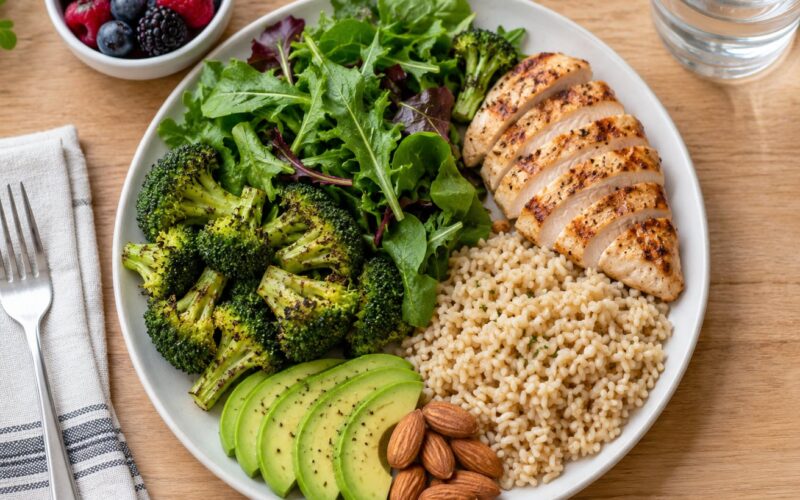
Good combinations look like chicken and rice with a large salad portion, or lentil soup with whole-grain bread and fruit. Protein and fiber together are what keep you full for hours, which is the difference between one planned meal and four unplanned snacks.
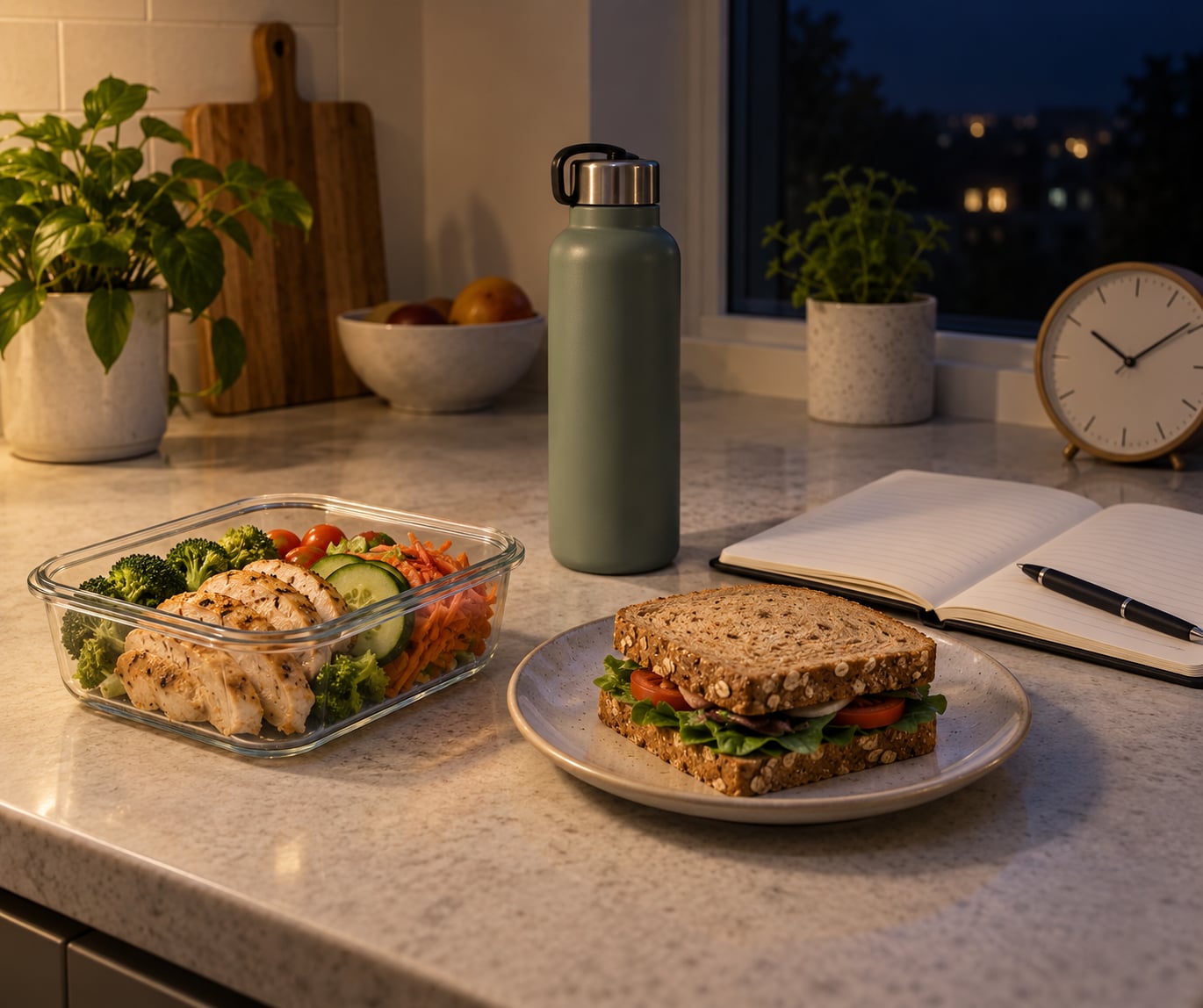
Some people cannot handle a full meal right before work because of digestive discomfort. If that is you, shift it earlier so it is a full meal three hours before the shift with only a small snack just before you leave, or go lighter on fat and volume in that last meal. A sandwich with chicken and salad on whole-grain bread, a boiled egg, and a piece of fruit is plenty.
3. Plan What You Will Eat During the Shift
Plan portable food that gives you protein, fiber, and steady energy, and pack more than you think you need.
Real options that hold up for eight to twelve hours: a sandwich on whole-grain bread with chicken, tuna, egg or cheese; a wrap with hummus, chicken and salad; Greek yogurt with oats and berries; a boiled egg with a handful of nuts; oatcakes with cheese; a portion of cooked grain salad with beans; or a piece of fruit with nut butter. Hot frozen vegetables are worth mentioning too, since their volume and warmth fill you up faster than the same amount of anything cold.
Pack two of these and treat the second as a backup, not a treat. Handling a diet when you work night shifts works because you have made the decision in advance rather than at hour nine with low blood sugar.
One more thing to plan: where the food comes from. If you have no kitchen and only a vending machine, choose the options there deliberately before you start. Trail mix, nuts, a protein bar, crackers with cheese, and milk or yogurt if they stock it. Check the label for added sugar, since the sweet choices are the ones that cause the crash that brings you back twenty minutes later.
4. Manage Hunger Without Overeating
Not every hunger signal is hunger. Fatigue, boredom, and a cold break room all feel identical to your body.
Run a quick three-question check. Are you actually hungry, or just tired and restless? How much time do you have before your next planned eating occasion? Would water, a short walk, or the planned snack solve it?
If the answer is that you are not truly hungry, drink water and move for five minutes. If you are genuinely hungry and it is more than an hour from your next meal, eat the planned snack rather than the nearest thing. Large portions at night sit badly, so keep night eating snack-sized and choose foods with protein and fiber rather than pastries.
5. Manage Caffeine and Evening Drinks
Caffeine works on nights, but timing matters more than quantity, and the right amount is the one you tolerate without losing sleep.
Caffeine stays in your system for roughly five to six hours, so a coffee at the end of an overnight shift can still be working on you when you get into bed at 9am. Most people who complain about never feeling rested find that moving their last cup earlier is the change that fixes it.
Do not let caffeine, energy drinks, or sugary drinks become the main answer to fatigue. They deliver a spike and a fall, and the fall is what triggers the next snack round. Plain water or an unsweetened drink does more for steady energy than another coffee.
Set a personal cutoff and protect it. If caffeine consistently stops you sleeping, cut the amount or move it earlier rather than trying to push through. People with heart conditions, blood pressure problems, anxiety, or a sensitivity to caffeine should ask a clinician what is safe for them.
6. Finish the Shift Without Turning It Into a Feast
Eat something small and easy to digest once you are home, not a large reward meal at the drive-through.
Oatmeal, a boiled egg with toast, yogurt with fruit, or a modest bowl of soup all work. Many night-shift workers treat this meal as the pre-sleep meal, eating it an hour or so before bed, which is a pattern that regulars in night-shift forums describe often. It gives you a small amount of fuel without the heavy feeling that keeps you awake.
If you wake up genuinely ravenous after sleeping, that is your body telling you the shift meal was too small. Adjust portion size or timing within your own overall needs rather than forcing yourself to skip it. Being rigid on nights is a fast route to giving up the whole plan.
7. Review Your Routine Once a Week
Look at your week once, in about ten minutes, and judge the routine rather than a single shift.
Check five things: energy through the shift, hunger spikes, sleep quality, digestion, and how consistent your eating times were. One bad night means nothing. Three nights in a row of skipped meals means the plan is wrong, not you.
When you spot a recurring problem, change one thing. Missing breakfast means your pre-shift meal needs to be easier to eat. Constant 3am snacking means your shift meal needs more fiber. Poor sleep after the post-shift meal means that meal needs to be smaller. Make one adjustment, then give it a week before deciding.
Common Mistakes
Most night-shift eating problems are one of six repeat habits, and each has a straightforward fix.
Skipping the pre-shift meal. You leave the house fast, then rely on a vending machine at 2am. Fix it the night before: two sandwiches in the fridge that you only have to pick up.
Defaulting to vending-machine snacks. They are salty, sugary and designed to be eaten in a hurry, which is why they keep you hungry. Pack one satisfying option and let the machine be the exception.
Letting eating times drift. Monday you eat at 8pm, Wednesday at 11pm, Saturday whenever you wake up. Consistency matters more than precision, so keep the same three occasions even when the shift moves slightly.
Drinking almost nothing. Dehydration gets mistaken for hunger and shows up as a headache by hour six. Keep water within reach and drink before you feel thirsty.
Using caffeine to replace food. The energy drink replaces a meal, works for an hour, and leaves you crashing and hungry. Treat caffeine as an addition, never as a meal substitute.
Making rules that cannot survive night work. Strict bans, perfect macros and no-food-after-8pm schedules fall apart the first busy shift. Keep rules loose enough that a bad night does not end the plan.
For rotating shifts, keep one anchor meal that stays in the same place every day, usually the pre-shift meal. It gives your digestion something familiar while the rest moves around it. For changes at short notice, fall back to the version you can do with no cooking: eggs, sandwiches, yogurt, fruit and nuts.
Frequently Asked Questions
What should I eat before a night shift?
Eat a balanced meal about two hours before you leave: a protein source such as chicken, eggs, beans or tofu, a high-fiber carbohydrate such as brown rice, oats or whole-grain bread, some vegetables or fruit, and a moderate amount of fat. Protein and fiber together keep you full for hours and help hold blood sugar steady. If a full meal right before work causes discomfort, eat it earlier and keep only a light snack before you start.
How many times should I eat while working nights?
Most people do best with two or three eating occasions during an eight to twelve hour shift rather than constant grazing. A workable pattern is a meal at the start of the shift, a substantial meal or snack around the middle, and a smaller snack later. Keep these times roughly the same on every shift, since a consistent pattern settles digestion better than an improvised one.
Can I lose weight while working night shifts?
Weight change on nights depends on overall habits, and the shift itself makes things harder because food is available late, sleep is poor, and energy needs can be lower when you are sitting still. Many regulars report that their weight tracked their activity level more closely than their diet. Eating regular meals, keeping sugary drinks rare, and staying consistent with pre-shift food makes weight management realistic rather than punishing.
What can I eat during a night shift without getting tired?
Choose foods that combine protein, fiber and slow energy: a sandwich on whole-grain bread with chicken or tuna, a wrap with hummus, Greek yogurt with oats and berries, boiled eggs with nuts, or cooked grain salad with beans. Sugary pastries and energy drinks give a fast spike followed by a crash, which is what creates the 3am slump. Water and unsweetened drinks steady you better than another coffee.
How do I stay full until my next meal?
Protein, fiber and fat slow digestion and keep you full for hours, so build your shift snacks around all three. Water helps too, because thirst is often mistaken for hunger. Eating at roughly consistent times also matters, since your body gets used to the pattern. If hunger keeps arriving early every shift, your pre-shift meal probably needs more protein or fiber rather than a stricter rule.
When should I stop eating or drinking caffeine before bed?
Caffeine stays in your system for roughly five to six hours, so if you finish a shift at 7am and sleep at 9am, a coffee at 6am is still working on you when you lie down. Most people improve their sleep by moving the last cup to the first half of the shift or cutting the amount. Your own tolerance matters, so track how you sleep and adjust from there.
What to Do First
Start with four things this week, not a full overhaul. Write your shift times on paper and pick the same three eating occasions inside them.
Then choose one balanced pre-shift meal you will actually cook, pack one satisfying meal for the shift plus a backup snack, and keep water within reach. That is the whole starting routine, and most people build the rest from there after a few shifts.
The goal is steady energy, decent sleep and a routine you can repeat for months, not a perfect week measured against your goals. If something feels off for more than a few shifts, or you have a health condition that affects how you eat, book a chat with a registered dietitian.