Motivation is not the missing piece. To start losing weight when you have no motivation, you need a plan small enough to follow on your worst day, not a bigger plan for your best one.
Most advice begins at the wrong end. It talks about finding your why, waking up early and pushing through a hard session, which all require energy you do not have today. Shrink the action until it feels almost too easy, repeat it until it stops feeling like a decision, and let the results supply the motivation that was missing at the start.
The pattern most people describe is not a character flaw. It is starting on Monday, going well for ten days, losing steam, then beginning again next month feeling worse than before. The same question turns up over and over in weight-loss communities on Reddit, and the answer offered there is almost never more discipline.
This is general information, not medical advice. If you have a health condition, take medication, are pregnant or breastfeeding, or have concerns about your weight, talk with your doctor or a registered dietitian before changing how you eat or move.
Updated for 2026.
Table of Contents
- What You Need
- Step-by-Step: How to Start Losing Weight When You Have No Motivation
- Step 1: Make the starting point smaller
- Step 2: Choose one eating change
- Step 3: Add movement even when you have no motivation
- Step 4: Plan for motivation dips
- Step 5: Track only useful information
- Step 6: Review progress and adjust gradually
- Common mistakes to skip
- Frequently Asked Questions
- Why do I have no motivation to lose weight?
- What is the smallest amount of exercise that helps with weight loss?
- How do I restart weight loss after quitting?
- How long does it take to build a healthy eating or walking habit?
- What should I do when I hit a weight loss plateau?
- How much weight can I realistically lose in six months?
What You Need
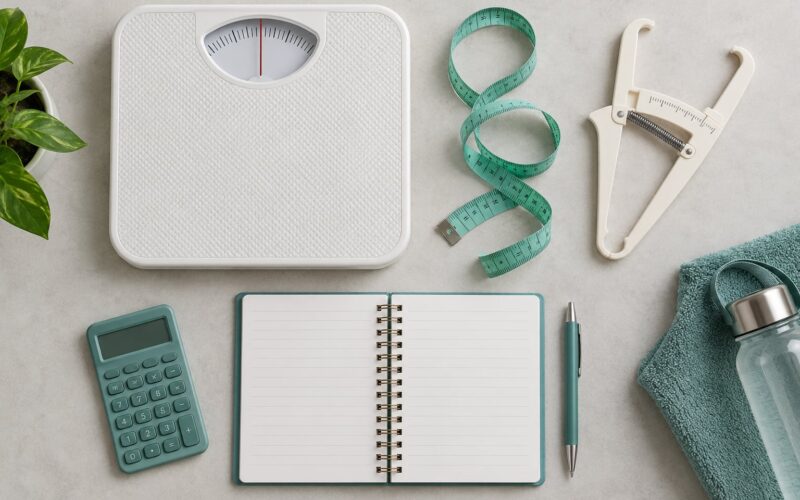
You need almost nothing, which is good news, because wanting things is half of why starting feels expensive. No program, no membership, no special foods. Just a few things you probably already own.
- A tracking method. A pen and paper, a notes app, or a habit tracker. The tool matters far less than using the same one every day.
- Clothing that fits right now. Uncomfortable clothes and shoes create friction before you have moved a step. If your current walking shoes hurt, that alone is a reason to replace them.
- A one-week baseline. Three honest days of noticing what you eat and how much you move. It is a reference point, not a score, and not something to judge yourself against.
- One person who knows. A friend, a family member, or a small online group. People report that simply having someone aware of the goal changes follow-through more than any app reminder.
- Optional: a scale, once a week. If weighing feels unpleasant, skip it. Waist measurement or the fit of your jeans gives you the same trend information without the daily noise.
Step-by-Step: How to Start Losing Weight When You Have No Motivation
Step 1: Make the starting point smaller
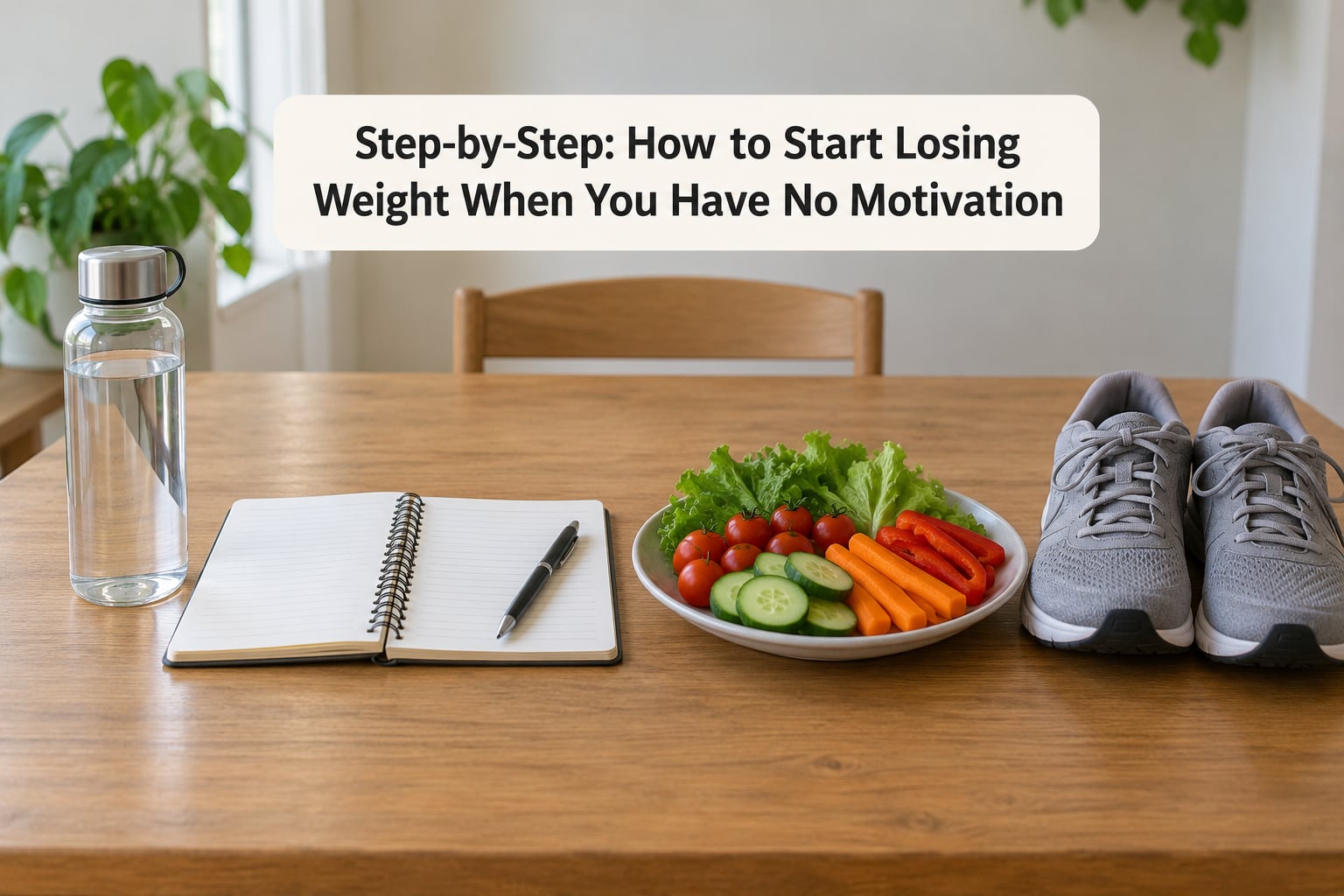
Set the bar where you will clear it even on a bad day. Fill a glass of water and drink it. Walk around the block once. Stand up and stretch for two minutes. The point is that there is nothing to feel motivated about, because the action is almost nothing.
This is where process goals beat outcome goals. Losing a set number of pounds is an outcome you do not control today. Walking ten minutes after dinner is a process you can act on, which means you get a win that actually belongs to you.
Say it in advance in an if-then form, the way researchers describe implementation intentions: if it is 7pm and I have not moved, I will put on my shoes and walk for ten minutes. Deciding while you are tired is the part that fails, so decide now.
How do you know it worked? You did it on a day you did not feel like it. That is the entire test.
Step 2: Choose one eating change
One change, repeated, beats five changes abandoned. Good candidates are small and repeatable: swap one sugary drink for water, add a vegetable to dinner, include a protein source with one meal, or serve the portion you normally eat and stop when the plate is finished.
The most repeated piece of advice in weight-loss communities is stocking food that requires no decision at all: cut vegetables in the fridge, yogurt, frozen fruit, eggs, ready-cooked grains. When the food is already there, you are not negotiating with yourself at 9pm.
Skip restrictive rules, whole food groups you have to ban, and anything promising fast results. If a change makes you dread meals, halve it rather than trying harder.
Step 3: Add movement even when you have no motivation
Five to ten minutes of walking counts, and ten minutes counts even when you are starting from nothing. Take the stairs, stand for one minute each hour, walk one phone call at a time, or dance to a single song in the kitchen.
Movement between workouts matters too. Researchers call the calories burned during ordinary daily activity non-exercise activity thermogenesis, and for someone who was previously inactive it can be a meaningful share of the total.
Adding two sessions of resistance work a week helps you keep muscle as weight comes off, which is what keeps your metabolism from moving against you later. If you have pain, mobility limits, or a medical condition, get individual guidance rather than pushing through it.
How do you know it is working? Your shoes get used. That is a more honest measure than a fitness tracker you stopped opening.
Step 4: Plan for motivation dips
The dip is guaranteed, so plan the low-energy version now, while you are calm enough to think. Keep one easy meal ready in the fridge, pick a walking time and route you do not have to decide on, and write down the smallest acceptable version of each habit.
That floor version is sometimes called a minimum viable day. Two minutes of movement, no sugary drink, one vegetable. It looks trivial, and it is the version that keeps the streak alive through a bad week.
One meal that did not go to plan is not a blown day. The next meal is the one that counts, which is the single most repeated piece of advice in these communities and the most useful thing on this page.
Step 5: Track only useful information
Record what helps you adjust, not what feeds self-criticism. Useful fields: did I do the small action, yes or no; hunger from one to ten; energy level; hours of sleep; and weight, at most weekly, if you are comfortable weighing yourself.
Daily weight changes mostly reflect water, salt, hormones and digestion rather than fat, so a number that moves after dinner tells you nothing useful. Weekly trends in the same conditions do.
Track non-scale wins too, because they show up first: clothes fitting differently, stairs feeling easier, better afternoon energy, steadier sleep. If tracking makes you miserable, drop the scale and keep the yes or no column.
Step 6: Review progress and adjust gradually
After one to two weeks, look at what you actually did. Keep the parts that felt manageable and change one thing at a time, so you always know which change caused a result.
Signs the plan is too difficult: you miss more than half the days, you dread it, you overeat to compensate, or your sleep gets worse. The response is to shrink the habit by half, not to start over on Monday.
Mainstream guidance from health authorities such as the CDC frames a realistic pace as roughly 5 to 10 percent of starting body weight over about six months. Slower than the adverts, and far more durable.
If you plateau for several weeks with nothing changing, or you have symptoms such as heavy sweating, constant fatigue, feeling cold, or a marked change in thirst or urination, that is a good moment to see your doctor or a registered dietitian rather than pushing harder alone.
Common mistakes to skip
- Waiting for motivation to appear. It shows up after action, not before it, and it leaves as quickly as it came.
- All-or-nothing rules. One bad meal becomes a ruined day becomes next Monday. Plan for the bad meal instead.
- Punishing workouts. Hours on a bike the day after a bad night usually ends the whole attempt by week three.
- Daily weigh-ins. Day-to-day swings are noise, and noise reads as failure.
- Skipping meals to compensate. Short-term numbers, long-term rebound, and more hunger than you started with.
- Reading slow progress as personal failure. A 5 percent change in six months is the plan working, not failing.
- Restarting on a Monday with a fresh start every time. Start now, with the smallest thing you can do now.
So: pick the two-minute action, do it tonight, and write down which single eating change you are making this week. Tell one person. Check back in two weeks and adjust by half, not by all.
Frequently Asked Questions
Why do I have no motivation to lose weight?
Usually it is not laziness. Motivation is a feeling that rises and falls, and it drops when you are tired, stressed, short on sleep or surrounded by food you find easy to eat. All-or-nothing thinking makes it worse, because one missed day gets read as a failed month. Treating willpower as a fixed personal quality sets a bar most days cannot clear. Systems, lower friction and smaller actions are what tend to survive a low week.
What is the smallest amount of exercise that helps with weight loss?
For most adults starting from low activity, a ten-minute walk counts as a real session, and it can be done daily. Movement between workouts matters too: stairs, standing breaks, walking during phone calls and carrying shopping add up. Add two resistance sessions a week to help keep muscle while weight comes off. Nobody has to enjoy it at the start. If you have pain, mobility limits or a medical condition, ask a clinician what is appropriate for you.
How do I restart weight loss after quitting?
Do not restart from the top. Go back to the smallest version of each habit you had before, the two-minute floor that worked on your worst days, and run that for a week before adding anything. Write down what derailed the last attempt, whether it was a hard week, a holiday, illness or a slow plateau, and build the plan around that specific problem. Restarting is normal and does not require you to earn it first.
How long does it take to build a healthy eating or walking habit?
There is no fixed number, and anyone who promises one is selling something. Small actions often feel automatic after a few weeks, but research on habit formation shows the timeline varies widely and often plateaus rather than snapping into place. In practice, expect a couple of weeks of active effort before a habit stops feeling like a decision. If a habit still feels effortful after several months, shrink it rather than adding willpower.
What should I do when I hit a weight loss plateau?
Check whether the plan is still realistic, because a plateau usually means the input no longer matches the output, not that your body is broken. Do not cut more food. Look at the last two weeks honestly: has portion size crept up, have drinks or snacks crept in, has weekly weight been measured on the same day. Change one variable, hold everything else, and give it two to three weeks. Persistent fatigue, feeling cold or heavy sweating deserves a medical check.
How much weight can I realistically lose in six months?
Health authorities commonly frame a realistic target as 5 to 10 percent of your starting body weight over about six months, which sounds small but meaningfully improves blood pressure, blood sugar and mobility. Slower than social media suggests. Steady progress in the 5 percent range beats rapid early drops followed by regain, and your own rate depends on age, health, medications and sleep. A registered dietitian can set a target that fits your specific situation.
You do not need motivation to start. You need one action small enough that you cannot talk yourself out of it tonight, and a plan to repeat it. Choose that action now, tell one person, and give it two weeks before you judge anything.