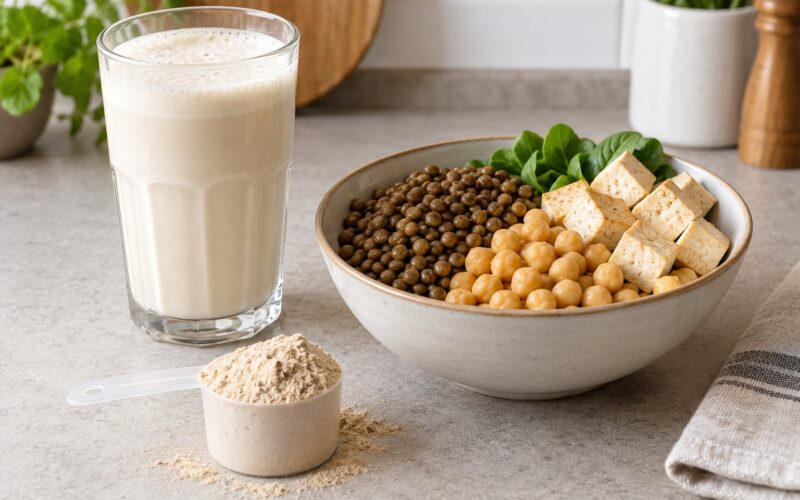
Yes, you can use protein powder if you do not work out. It is a convenient food, not a performance drug, and it supplies the same amino acids you would get from chicken, eggs or tofu. It will not build muscle on its own, and it only earns a place in your kitchen if real food alone leaves you short. Here is how to use protein powder if you do not work out without turning breakfast into a chore.
Most people who ask this question are not looking for a physique. They want to eat a bit more protein, feel full longer, or stop skipping meals on a busy week. That is a reasonable goal, and powder is one of the quickest ways to hit a number.
Table of Contents
- What You Need
- Step-by-Step
- 1. Check Why You Want Protein Powder
- 2. Choose the Right Type and Serving
- 3. Decide When to Use It
- 4. Prepare It Safely and Smoothly
- How to Use Protein Powder Without Workouts
- 5. Use Food to Make It a Balanced Meal
- 6. Judge the Routine After Two Weeks
- Common Mistakes
- Frequently Asked Questions
- Is protein powder necessary if you do not exercise?
- What time should I take protein powder when I do not work out?
- Can protein powder help with weight loss?
- Is whey protein better than plant protein for beginners?
- Can I use protein powder instead of eating a meal?
- What should I do if protein powder causes stomach discomfort?
- Conclusion
What You Need
Nothing fancy. Before you buy anything, work out what you already have.
- The nutrition label. This matters more than the front of the tub. You want protein grams per serving, serving size in grams, added sugars, and the allergen statement.
- A liquid. Water, milk, oat drink or plain coffee all work. Cold water mixes the smoothest.
- A shaker bottle or a blender. A shaker is enough for a drink. A blender is what you want for oats, fruit or anything baked.
- A scoop. The scoop that comes with the tub is the serving size the company used for its numbers. Weighing is better if you care about consistency.
- Real food to go with it. Fruit, oats, yogurt, nuts, vegetables. This is the part most people skip and the part that decides whether the drink is a meal or a milkshake.
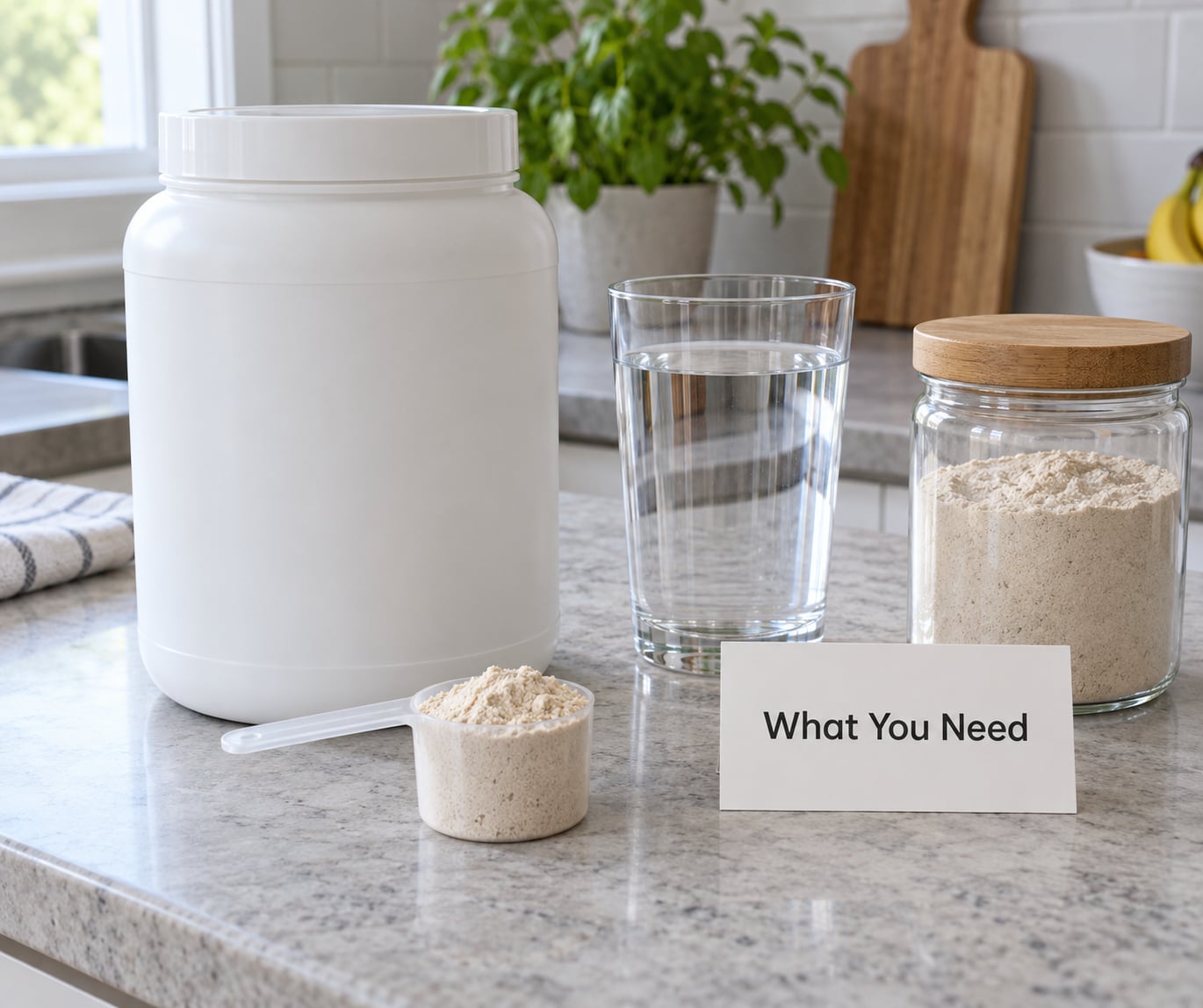
That is the whole kit. If you cannot answer what a serving of your powder contains, buy a cheaper brand with a clearer label instead of a fancier one.
Step-by-Step
1. Check Why You Want Protein Powder
Protein powder helps in two real situations: you are genuinely short of protein, or you want more fullness per calorie than the food you are currently eating.
It does not replace vegetables, fibre or variety. It is a single ingredient in concentrated form, and no label can make that into a balanced diet. If your reason is “I want to be healthier,” food comes first.
It is worth talking to a registered dietitian if you have kidney disease, are pregnant or breastfeeding, take regular medication, or are on a GLP-1 medication such as semaglutide or tirzepatide. Appetite-suppressing drugs change how much food you can comfortably eat, and that is a conversation to have with the prescriber rather than with a label.
2. Choose the Right Type and Serving
There is no single best powder. Pick the one whose ingredients you can tolerate and whose label you can read without a magnifying glass.
- Whey protein comes from milk, mixes thin, and is the mildest introduction for most people. Whey isolate has most of the lactose removed, which helps if you are mildly sensitive.
- Casein is also from milk but digests slowly, so it suits breakfast or a snack you want to hold you until lunch.
- Soy protein isolate is a complete plant option with a solid amino acid profile and no dairy involved.
- Pea protein is plant-based and useful if soy bothers you, though some blends taste a little earthy.
- Collagen peptides are not a muscle protein. They are a different tool entirely, so do not count them toward your daily protein number.
On the label, check three things: protein per serving against serving size, the added sugars line, and whether the product carries third-party testing such as NSF Certified for Sport or Informed Sport.
A serving usually delivers 20 to 25 grams of protein. That is a useful anchor, but the serving size printed on the tub is the one that matters. Some products look high in protein only because the scoop is small.
If you have lactose intolerance, whey isolate or a plant blend will save you a few uncomfortable afternoons. Read the allergen statement rather than guessing from the flavour.
3. Decide When to Use It
Use it at whichever meal you eat least protein at. For most inactive people that is breakfast, and it is also the meal most likely to be skipped entirely.
The advice to drink protein within 30 minutes of training, or inside an anabolic window, was written for people training hard. When you are not training, that window does not apply. Your body is still turning over protein all day, and a serving at breakfast does the same job as a serving after a workout would.
Splitting intake across three meals is a reasonable habit, not a rule you can fail. Most adults do better with about 25 grams at a few meals than with one enormous shake and nothing else.
4. Prepare It Safely and Smoothly
Follow the directions on your product and use its scoop size. Add the liquid first, then the powder, then shake for 15 to 20 seconds.
Liquid amount controls thickness, not nutrition. More water means thinner and easier to drink; less means thicker and closer to a smoothie. Start with the amount on the label and adjust from there.
A few practical habits keep it clean. Wash the shaker and the scoop with hot soapy water after every use, since warm dairy powder is a comfortable place for bacteria to sit. Store the tub somewhere dry, sealed, and away from the scoop so moisture does not get in. And never use a scoop that has been in the powder as a measuring spoon for anything else.
How to Use Protein Powder Without Workouts
Three uses cover almost every case, and all of them work on a day you never move.
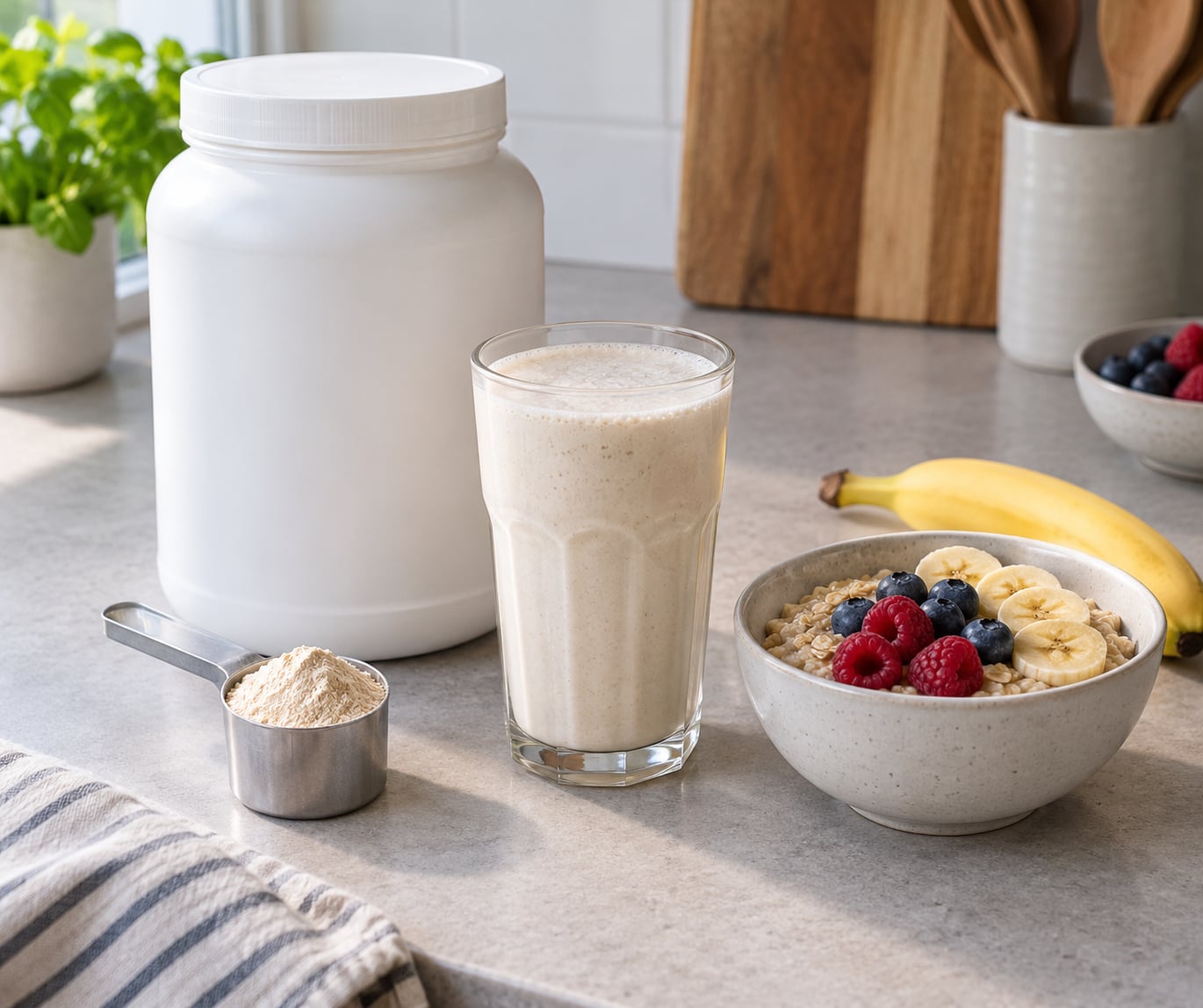
- Blend it into breakfast. Frozen banana, a handful of oats, milk, and one scoop. Blend for 45 seconds and you have something that behaves like a meal rather than a supplement.
- Stir it into hot food. Warm oatmeal, porridge or Greek yogurt. Let the oatmeal cool for a minute first, because heat can make some powders clump or go grainy.
- Build a balanced bowl. Yogurt or milk, a scoop of powder, berries, granola, and a spoonful of nut butter. This is the option most likely to survive a day with no time to cook.
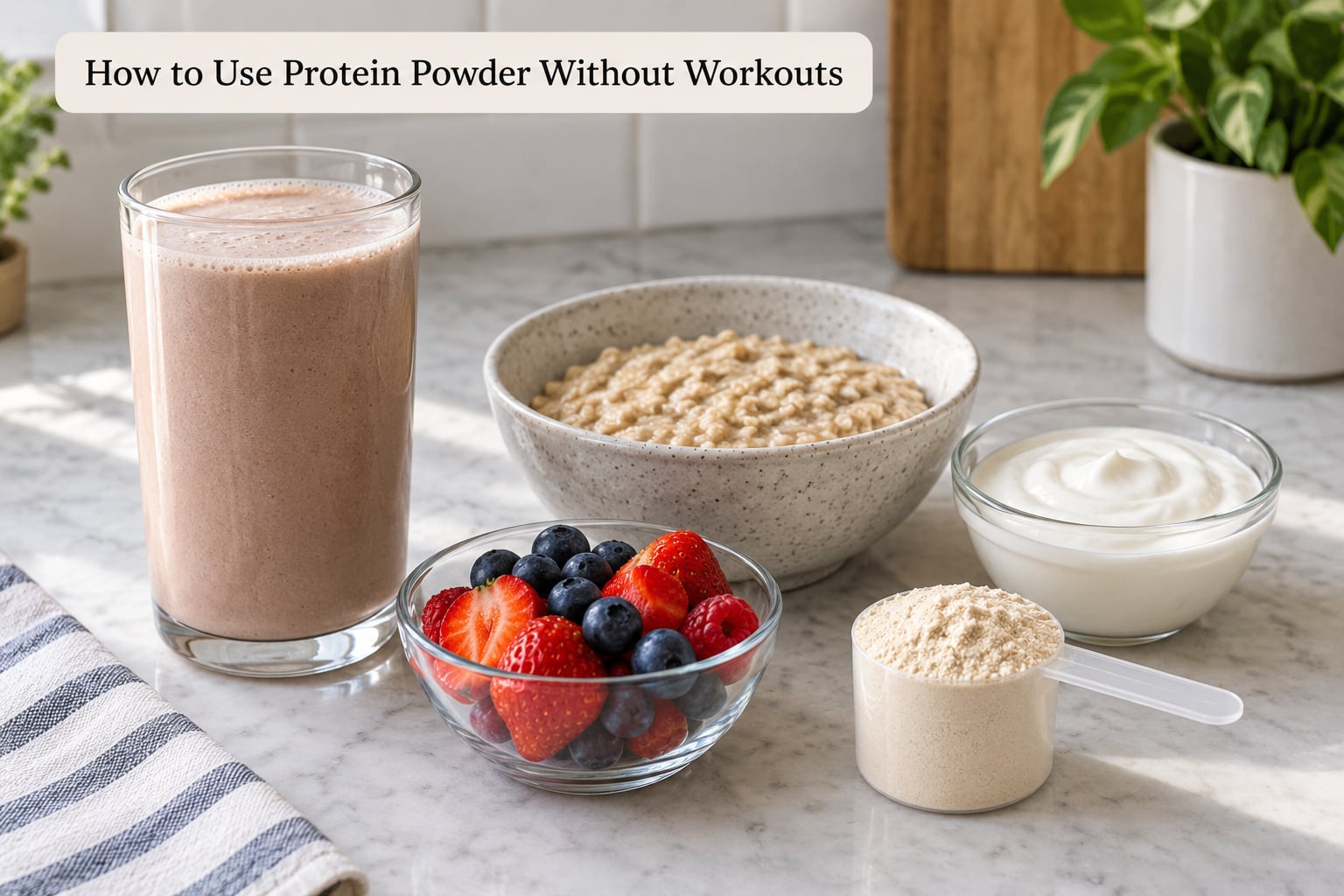
Each of these takes under five minutes, which matters more than it sounds. A routine you enjoy on a good day is one you keep on a bad day.
5. Use Food to Make It a Balanced Meal
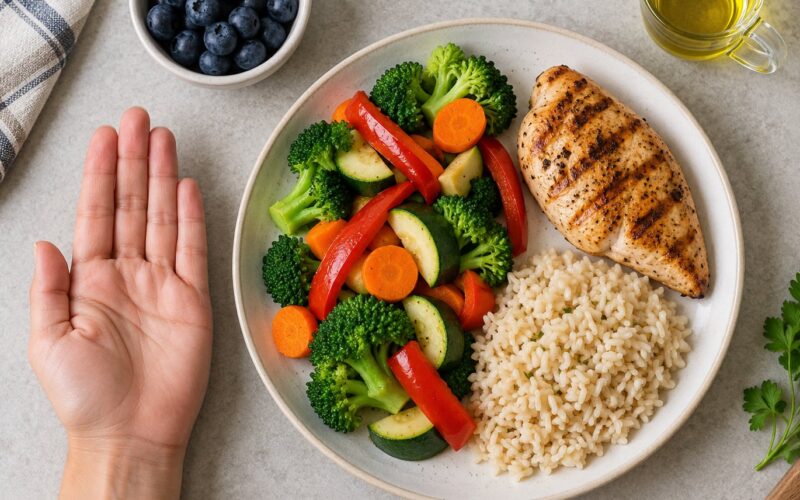
Protein powder is one component. Pair it so the bowl or glass carries carbohydrate, fibre, fat and something colourful.
A banana and oats bring carbohydrate and fibre. Berries or any fruit add volume and sweetness without added sugar. A spoon of peanut butter or a handful of almonds brings fat, which slows digestion and makes the meal feel more complete. A side of vegetables turns a snack into lunch.
This matters more if you are eating fewer calories. During a calorie deficit, protein alongside carbohydrate tends to feel more satisfying than carbohydrate alone, and higher protein meals help people hold onto lean mass while losing weight. That last point matters even more when you are not lifting, since resistance training is normally doing part of the protecting.
6. Judge the Routine After Two Weeks
Give it a fortnight before deciding. Most of the value shows up in small, boring ways.
Check whether breakfast stopped feeling like a chore. Check whether you are eating three meals instead of two and a snack. Check whether your digestion is calm, whether you are spending money you wanted to keep, and whether your energy through the afternoon is steadier.
Be realistic about weight. Powder adds calories, and calories you do not spend become weight. If your goal is fat loss, the powder has to fit inside your existing intake rather than sit on top of it. Nobody should promise you a number from a supplement, and anyone who does is selling something.
Common Mistakes
- Skipping meals and replacing them with drinks. Fix: keep your meals. Use powder to top one up, not to stand in for eating.
- Treating a shake as a complete meal. Fix: add fruit, oats, fat and vegetables. Protein alone is not food for a whole morning.
- Choosing the sweetest flavour on the shelf. Fix: read the added sugars line. Flavoured powders vary a lot, and the sweeter ones add calories you did not plan for.
- Using far too little liquid. Fix: more water, thinner drink. Thickness is a texture issue, not a concentration one.
- Exceeding the label directions. Fix: follow the serving guidance on the tub. Extra grams rarely add extra benefit and often add stomach trouble.
- Using powder to repair an unbalanced diet. Fix: fix the diet. If the problem is that you skip vegetables and eat erratic meals, a shake will not close that gap.
One more worth naming: assuming you need it at all. On days you eat eggs, fish, meat, dairy or tofu in sensible amounts, powder adds nothing. A supplement, as the r/Athleanx threads put it, is a supplement and not a foundation.
Frequently Asked Questions
Is protein powder necessary if you do not exercise?
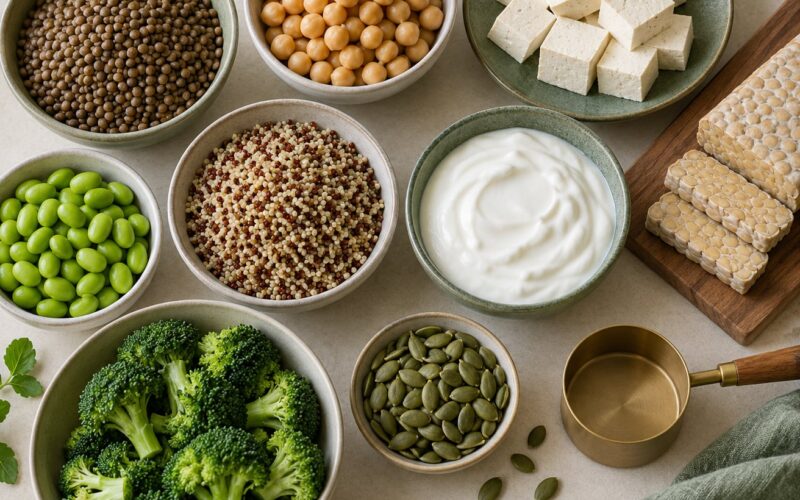
No, it is not necessary. Protein is a nutrient, not a fitness product, and most adults get enough from food. The recommended dietary allowance is 0.8 grams per kilogram of body weight daily for adults, which eggs, dairy, meat, fish, tofu and beans can cover without any powder. It becomes useful when your diet falls short, when you are eating fewer calories, or when meals are rushed.
What time should I take protein powder when I do not work out?
Take it with the meal you eat least protein at, which is usually breakfast. The 30-minute post-workout rule was built for people training hard and does not apply when you are inactive. Eating roughly 25 grams across three meals is a comfortable pattern. The timing matters far less than total intake and whether the meal underneath it is balanced.
Can protein powder help with weight loss?
It can support weight loss indirectly, but it does not cause it. Protein tends to be more filling than carbohydrate or fat at the same calories, and higher protein intake during a calorie deficit helps people keep lean mass while losing weight. The powder only helps if the calories fit your existing intake. Anyone promising you weight loss from a supplement alone is exaggerating.
Is whey protein better than plant protein for beginners?
Neither is better in general. Whey mixes thinner, is often lighter on the stomach and is a dairy product, so it suits most people who tolerate milk. Soy and pea blends avoid dairy entirely and provide complete protein. Collagen is a different ingredient for skin, hair and joints, and it should not be counted toward your daily protein total. Choose on tolerance and label clarity.
Can I use protein powder instead of eating a meal?
You can, but it is a worse option than eating. A powder on water supplies protein and very little else, so you miss fibre, carbohydrate, fats and micronutrients. Skipping meals to drink shakes is a common route to feeling tired and hungry later in the day. If a full meal is genuinely impossible, blend fruit, oats, milk and a scoop so you are eating something.
What should I do if protein powder causes stomach discomfort?
Stop for a few days and look at the likely cause. Dairy is the usual suspect if the discomfort is bloating or gas, so try whey isolate or a soy or pea blend. Using less powder per serving, choosing a thinner drink and not replacing a whole meal all help. If the discomfort continues, speak to a doctor, particularly if you have a history of digestive conditions.
Conclusion
Start with one small decision: pick a single product you tolerate well, read its label for protein per serving and added sugars, and use one scoop at the meal you eat least protein at. Build it into food you already like rather than treating it as a separate ritual.
Give it two weeks, then keep it only if your meals got easier. If a tub is still unopened in 2026 because breakfast stayed a hassle, that is your real answer. And if you have kidney disease, are pregnant, or take medication that affects appetite, ask your doctor or a registered dietitian before adding any supplement to your day.