You can control sugar cravings naturally by eating regular, balanced meals that combine protein, fiber and unsaturated fat, drinking water when a craving hits, getting steady sleep, and planning ahead for the predictable moments when your sweet tooth shows up. None of that requires giving up dessert or joining anything with a strict label on the box. It takes about two weeks of honest tracking before the pattern becomes obvious, and most people find the biggest win comes from catching the craving earlier rather than fighting it harder.
I’ve kept a food and craving journal on and off for years, and every time I do it the same thing stands out. My worst cravings are never random. They sit at 3:30 in the afternoon after a rushed lunch, or at 8pm in front of the television, and they arrive like clockwork. Once I could see that, fixing it stopped feeling like willpower.
This is general nutrition information, not medical advice. If cravings are sudden, extreme or paired with other symptoms, a doctor or registered dietitian can rule out things a journal never will.
Table of Contents
- What You Need
- Step-by-Step: How to Control Sugar Cravings Naturally in Seven Steps
- Identify When Your Sugar Cravings Appear
- Build Meals That Reduce Cravings
- Use a 10-Minute Plan to Control Sugar Cravings Naturally
- Choose Satisfying Foods Instead of Labeled Foods Good or Bad
- Support Your Plan With Sleep and Movement
- Plan for High-Risk Situations
- Review Your Progress After Two Weeks
- Common Mistakes
- Frequently Asked Questions
- What drink can help with sugar cravings?
- Are fruit sugars the same as added sugar?
- Do artificial sweeteners help control sugar cravings?
- Can I eat chocolate while trying to control cravings?
- When should I see a doctor about strong sugar cravings?
- Conclusion
What You Need
Not much, honestly. Five things:
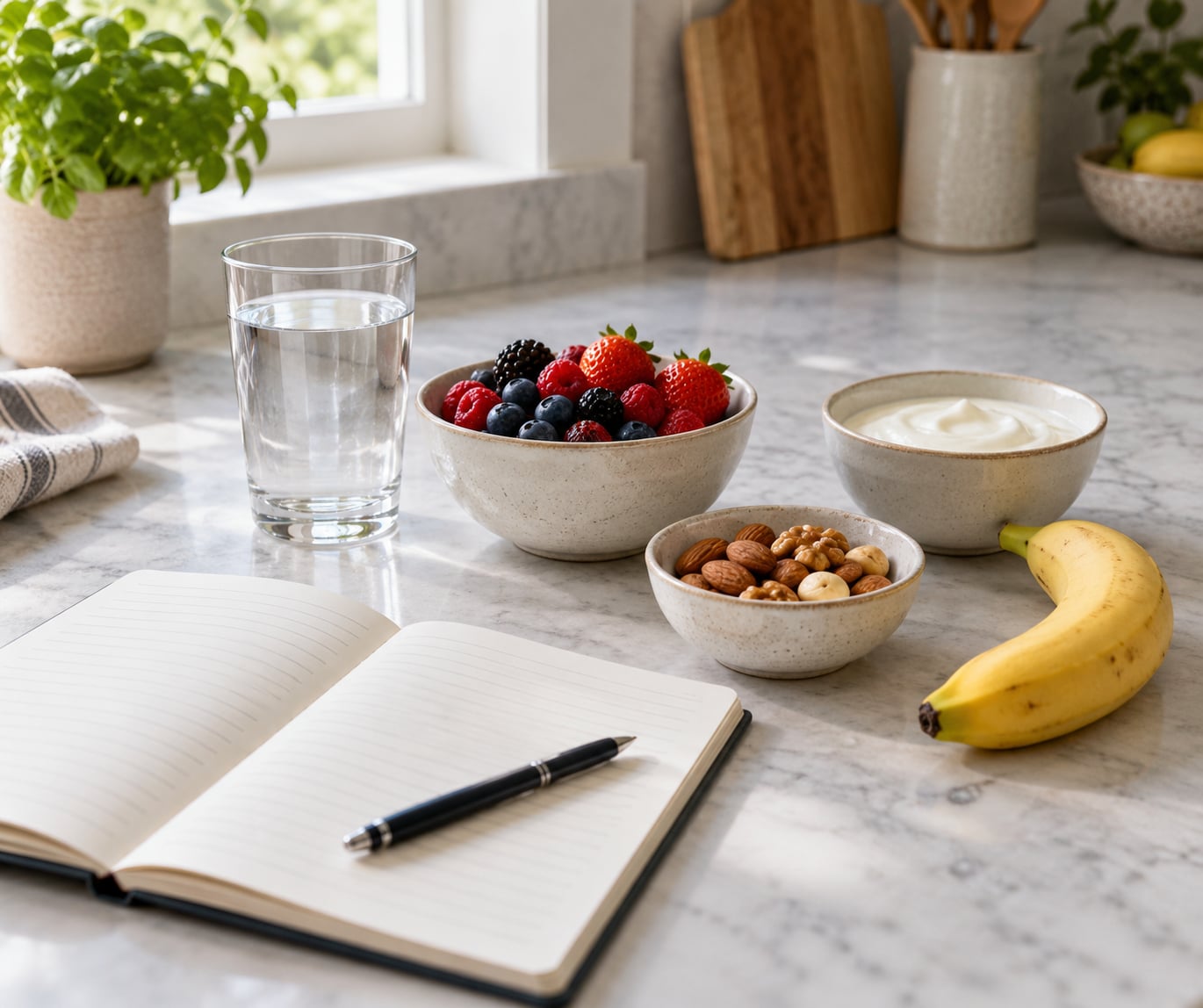
- A small notebook or phone note. You are recording the time, the intensity from one to ten, what you ate before, how you slept, and what was going on. Five minutes a day is enough.
- Meals that actually satisfy you. Three roughly spaced meals, with at least one component of protein, fiber or unsaturated fat in each.
- Water within arm’s reach. Most of the time a craving is partly thirst wearing a costume.
- Seven or more hours of sleep, on as many nights as your life allows. Short nights make cravings louder the next day.
- Willingness to watch patterns instead of following rules. The point is to learn what your own triggers are, not to earn a pass or fail grade.
Step-by-Step: How to Control Sugar Cravings Naturally in Seven Steps
Identify When Your Sugar Cravings Appear
Start by sorting cravings into four kinds, because each one needs a different response. Habitual cravings arrive on cue, like the 8pm television routine. Emotional cravings come with stress, boredom or a hard day. Hunger cravings follow a skipped meal or a meal that was mostly carbs. Boredom cravings fill a gap rather than a stomach.
The journal is how you tell them apart. Write the time, the intensity, the meal that came before, last night’s sleep, and one word for the mood. Two weeks of that gives you something no app can guess for you.
One reader in r/loseit described cutting out processed sugar for a year and still hitting random cravings, mostly around menstruation. That is a good example of why the journal matters: a hormone-driven craving needs a different plan than a television cue.
Build Meals That Reduce Cravings
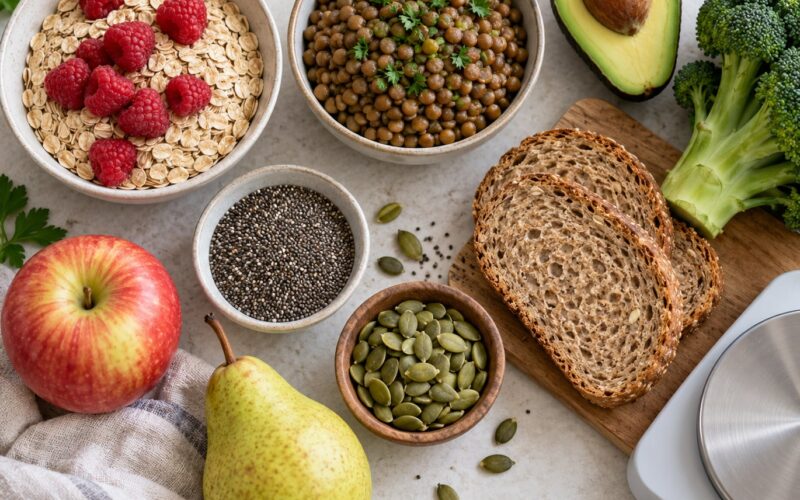
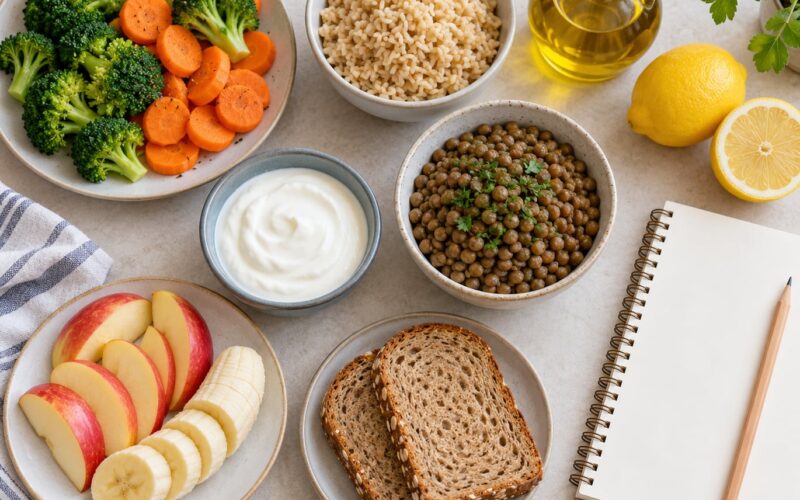
A craving that shows up at 4pm usually started at noon. Meals built from protein, fiber, unsaturated fat and a satisfying carbohydrate digest more slowly, so the afternoon dip is far less likely.
Concrete examples: eggs and beans with toast at breakfast, Greek yogurt with berries and walnuts, apple slices with peanut butter, hummus with raw vegetables, cottage cheese with blueberries. Portion size matters more than ingredient novelty.
No single food cancels a craving. Foods that promise to do that are selling something. A balanced plate does the work quietly, and it works most days rather than on the good ones.
Use a 10-Minute Plan to Control Sugar Cravings Naturally
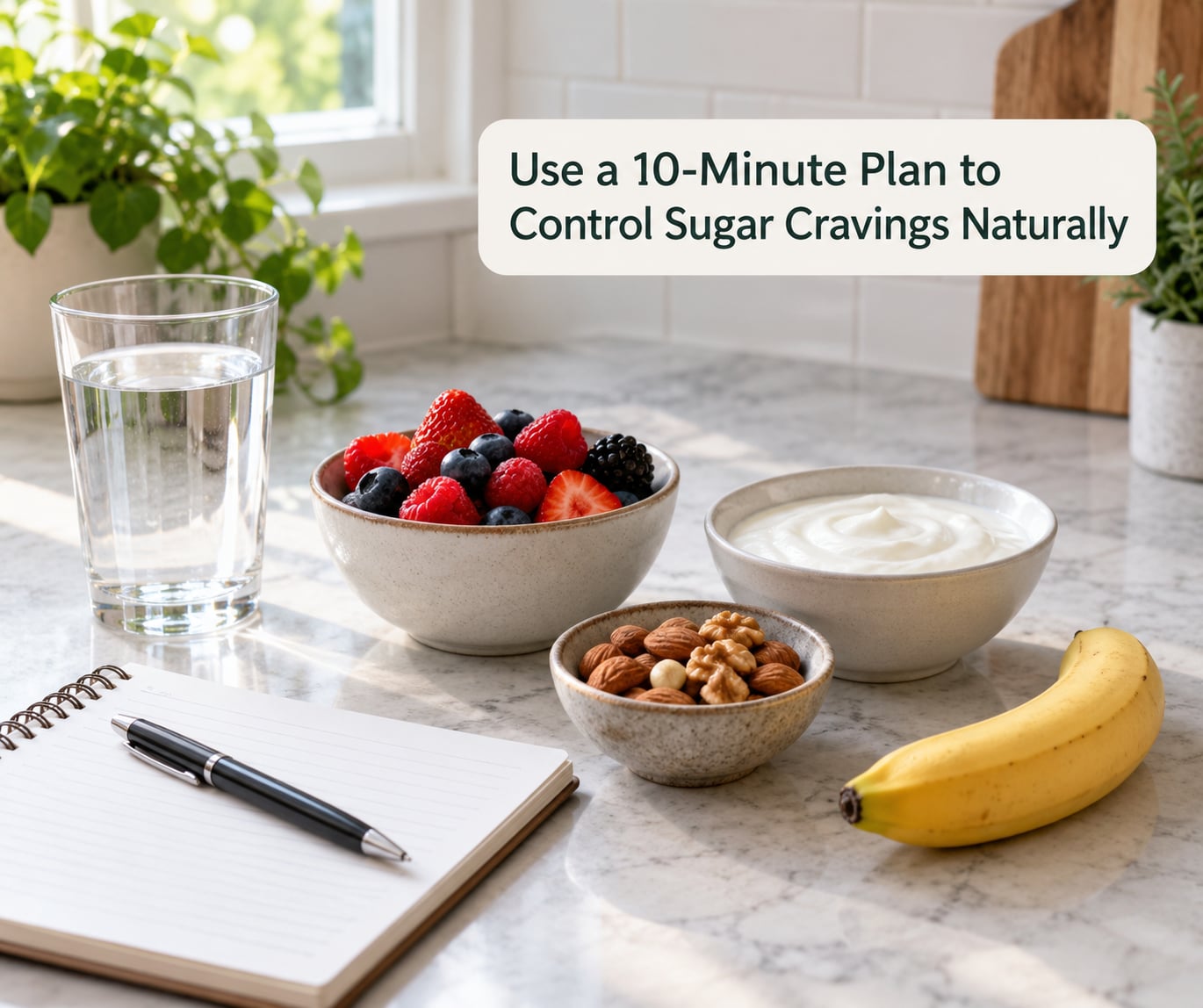
When a craving shows up, run the same short sequence instead of negotiating with it. First, pause and name it: I’m craving chocolate, not sugar in general. Naming the specific thing lowers the urgency a little.
Then drink a large glass of water. A poster on r/keto described it plainly: half the time a dozen ounces takes the edge off. Third, check whether you are actually hungry. If you are, eat something with protein or fat, such as a spoonful of nut butter, rather than reaching for the packaged cookie.
Fourth, move for a couple of minutes: a walk to the kitchen, a few flights of stairs, anything that changes your posture. Fifth, decide with a clear head, and if you want the sweet thing, take it deliberately instead of by autopilot.
Two more tactics come up constantly in community threads. Brushing your teeth works surprisingly well, because peppermint freshness makes sweets unappealing for a while. Sugar-free gum does the same job and travels with you. Both are cheap, immediate and take under two minutes.
Success here looks modest. The craving fades, or you eat a small portion on purpose and feel fine afterward. It does not require the craving to vanish entirely, and expecting that is how people end up disappointed at 9pm on day three.
Choose Satisfying Foods Instead of Labeled Foods Good or Bad
The all-or-nothing frame causes more harm than sugar does for most people. Labeling food as good or bad turns an ordinary Tuesday snack into a moral failure, and the rebound craving that follows is worse than the original one.
A practical middle path: enjoy sweets in realistic portions, keep frequency moderate, and let the rest of the week’s eating carry the load. That means a piece of chocolate after dinner on a Tuesday, not a permanent ban followed by a Saturday blowout.
For naturally sweet options, whole fruit, dates, and yogurt sweetened with fruit all work better than anything marketed as a diet food, mostly because they are not asking your taste buds to be fooled. Denying a craving outright can also backfire, which is another argument for a small deliberate portion over a hard no.
Support Your Plan With Sleep and Movement
Short nights raise cravings the following day. That is not a moral failing, it is how a tired brain handles reward signals, and it is why so many people report cravings that feel unstoppable on weeks of bad sleep.
Aim for seven to nine hours when you can, keep a fairly consistent bedtime, and treat movement as support rather than a cure. A ten-minute walk after dinner is enough to do something for the next evening’s craving. Exercise does not erase sugar cravings, and anyone claiming otherwise is overselling.
A routine that fits a busy adult: wake at the same time, eat a protein-forward breakfast, take a short walk in the afternoon around 3pm before the craving window, keep dinner a few hours before bed, and stop scrolling in the last half hour. Stress awareness fits in too: name the day you had, because a hard day is a craving trigger as often as a skipped meal is.
Plan for High-Risk Situations
Some cravings come with a time and place attached. You can prepare for the common ones.
- Late afternoon. Eat a real snack before 4pm: yogurt, nuts, or fruit with nut butter. The 3:30 dip is the single most reported time in most people’s journals.
- Stressful workdays. Put the alternative within reach. When you are in a hard meeting, you are not making a good decision about food.
- Restaurant meals. Eat something protein-based before you go, and decide your treat before you sit down.
- Shopping. One r/CICO poster suggested ordering groceries online until cravings ease. If the candy aisle is the trigger, skip the aisle.
- Social events. Eat a normal meal first. People who arrive hungry at a party rarely enjoy the dessert as much and remember it longer.
The home environment deserves its own mention. Someone on r/ultraprocessedfood put it sharply: sweets in the house are gone within 48 hours, every time. Whether or not you share their conclusion, the pattern is common enough to test. Two weeks without the trigger in the cupboard is a cheap experiment.
Review Your Progress After Two Weeks
At the two-week mark, count cravings rather than judging yourself. Fewer per week? Lower average intensity? Fewer evening episodes? Those are the wins that matter.
Also look at what surrounds the cravings that remain. Clustered around skipped meals means your meal spacing is the problem. Clustered around short nights means sleep comes first. Clustered around boredom or stress means the response you need is emotional, not nutritional.
Adjust one variable at a time and run another two weeks. If cravings are extreme, come with rapid changes in appetite or weight, or come with symptoms such as thirst, frequent urination, shakiness or persistent low mood, book an appointment rather than tracking further. A clinician can check for things such as thyroid problems, insulin resistance or anemia. If eating is driven by distress rather than hunger, a mental health professional is the right call, and there is no shame in that sentence.
Common Mistakes
Trying to quit sugar cold turkey. It works briefly for some people and ends in rebound cravings for most. Reduce frequency and portion instead, which is harder to fail at.
Skipping meals to avoid cravings. The skipped meal becomes the craving, usually at the worst possible hour. Eat regularly and the problem shrinks.
Labeling foods good and bad. All-or-nothing thinking is the fuel behind relapse cycles. Satisfaction and frequency work better than permission and guilt.
Buying supplements to fix cravings. Appetite and craving symptoms overlap with real medical conditions, so a supplement can delay a diagnosis that matters. Get the diagnosis first.
Confusing thirst with hunger. Drink a glass of water and wait five minutes. It is the cheapest test available and it works a surprising share of the time.
Expecting perfection. You are changing a cue-driven routine that may be decades old. Treat a relapse as data rather than failure. One reader on r/LifeProTips described the all-or-nothing spiral exactly: eat one, decide the day is ruined, keep going. Breaking that sentence in the middle is the whole skill.
Start with three things today: put a glass of water where the cookie jar used to be, eat a snack before 4pm for the next five days, and write down the time and intensity of every craving. That is enough to begin.
Frequently Asked Questions
What drink can help with sugar cravings?
Water is the simplest answer. Drink a large glass and wait five minutes before deciding, because thirst often registers as a craving. Sparkling water with a squeeze of citrus gives the sweet-ish sensation without sugar, and unsweetened tea or coffee works too. What you avoid is anything sweetened, since a sugary drink brings the craving back stronger.
Are fruit sugars the same as added sugar?
No. Sugar in whole fruit comes packaged with fiber, water and vitamins, which slows absorption. Added sugar is refined and separated from the food it originally came from, so it absorbs quickly. A banana is not a candy bar with better marketing, though portion size still matters. Most nutrition labels list total sugar and added sugar separately.
Do artificial sweeteners help control sugar cravings?
Mixed results. Some people find they take the edge off a craving, and others report that diet drinks and sweeteners left them wanting sweets more. Evidence for a strong appetite increase is limited, but the reaction is real for enough people that it is worth testing on yourself for two weeks. If cravings clearly worsen, drop them rather than forcing them.
Can I eat chocolate while trying to control cravings?
Yes, and keeping a planned portion of chocolate is often more sustainable than banning it. Two squares of a high-cocoa dark chocolate, eaten slowly and after a meal with protein and fiber, delivers the pleasure without the crash. The portion matters more than the ingredient list, and enjoying it on purpose beats the forbidden-snack effect that follows a strict ban.
When should I see a doctor about strong sugar cravings?
See a doctor or registered dietitian if cravings are sudden and extreme, if they started after a medication change, or if they come with frequent thirst, urination, shakiness, unexplained weight change or persistent low mood. Those signs can point to blood sugar problems, thyroid issues or anemia rather than a sweet tooth. Bring your two-week journal with you; it makes the conversation much faster.
Conclusion
Controlling sugar cravings naturally is mostly pattern work: notice when cravings arrive, fix the meal or the sleep or the stress that precedes them, and have one repeatable ten-minute response ready for the rest.
So here is your first step, today. Pick the single craving that hits most often, track its time and intensity for five days, and build two responses: one balanced meal to fix the pattern and one ten-minute sequence for when it shows up anyway. If it is still running strong in 2026, take the journal to a registered dietitian and let them check what a notebook cannot.