Intermittent fasting for beginners is simple to explain: you eat all of your meals inside a set window each day, and take in no calories for the hours in between. On a 16:8 schedule that means eight hours of eating and sixteen hours of fasting. No special food is required. What you eat inside the window is what decides whether the plan works.
This guide is for someone who wants a less complicated way to control how much they eat, and who does not want to give up dinner with their family or coffee in the morning. If you have never fasted before, the food side matters more than the clock side.
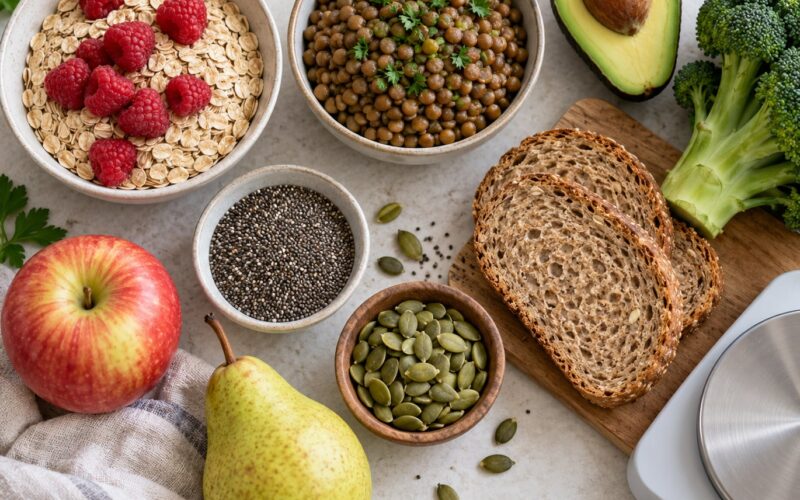
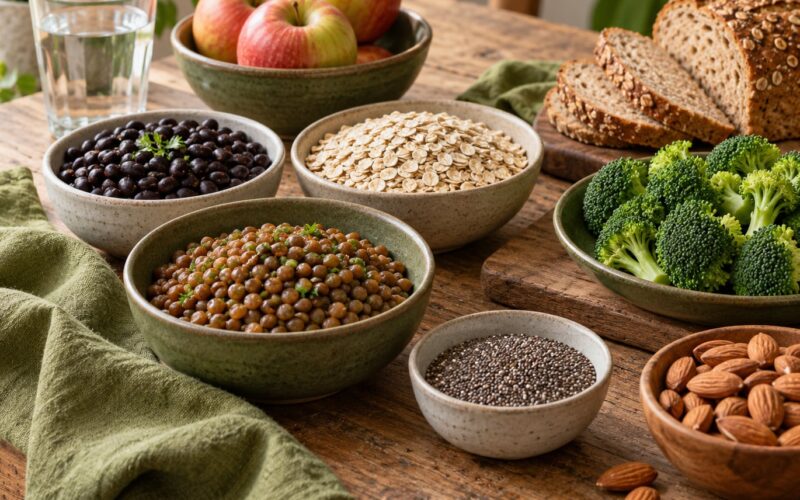
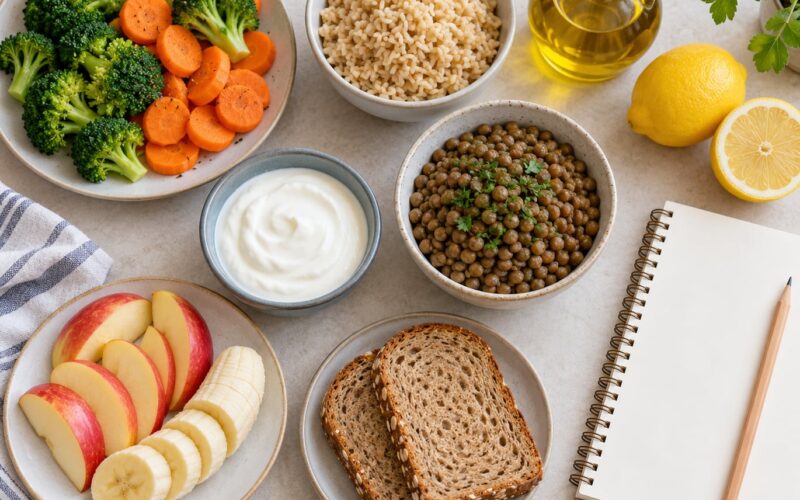
Before the detail, here is the short answer to what to eat during intermittent fasting. Build every meal around protein, vegetables, a slow carbohydrate and a small amount of fat. Twelve foods cover almost every eating window:
- Eggs — cheap, fast to cook, and they hold you steady for hours.
- Oily fish — salmon, sardines, mackerel and trout bring protein and omega-3 fats together.
- Chicken, turkey and other poultry — lean protein that keeps a meal from feeling flat.
- Greek yogurt and cottage cheese — high protein, and easy when breakfast has to happen at 2pm.
- Beans, lentils and chickpeas — fibre and protein in one bowl, and the cheapest option on the list.
- Tofu and tempeh — the plant-based anchor for a vegetarian or vegan window.
- Broccoli, spinach, kale and courgette — low in calories, high in volume, so hunger drops fast.
- Avocado — fibre and monounsaturated fat in a single ingredient.
- Nuts and seeds — a portable snack, and easy to portion out in advance.
- Berries — the fruit with the best track record for a filling portion size.
- Whole grains — oats, brown rice, wholegrain bread and buckwheat for slow energy.
- Plain water, black coffee and unsweetened tea — the only drinks most beginners need during the fasting hours.
That is the whole food philosophy. Everything below is about how to fit these foods into a day without white-knuckling it.
Table of Contents
- What You Need
- A fasting window you can actually keep
- Three meals worth of food, planned
- Drinks for the fasting hours
- A protein anchor in every meal
- A clear answer from a healthcare professional
- Step-by-Step: Start Intermittent Fasting and Choose What to Eat
- Step 1: Start with a 12-hour window
- Step 2: Hold the same window for three or four days
- Step 3: Stretch to 14:10, then 16:8 only if week one felt easy
- Step 4: Plan the meals before the window opens
- Step 5: Break the fast gently
- Step 6: Get through the first two weeks of hunger
- Step 7: Review after two weeks, not after two days
- What to Eat During Your Eating Window
- The four-part plate for intermittent fasting for beginners
- What to eat in your first meal
- What to eat in your second meal
- What to eat in your third meal
- Snacks that fit inside a short window
- Foods to limit rather than ban
- Low-cost swaps that keep the plate balanced
- Sample 12-Hour and 14-Hour Beginner Schedules
- Fasting and skipping meals are not the same thing
- A sample eight-hour day, hour by hour
- How to Manage Hunger, Energy, and Social Events
- Hunger in the first two weeks
- Low energy, headaches and irritability
- Social events, family meals and shift work
- When to stop and call a doctor
- Common Mistakes Beginners Make on Intermittent Fasting
- Frequently Asked Questions
- What should I eat first when starting intermittent fasting?
- Can I drink coffee while fasting for weight loss?
- How long should a beginner fast before eating?
- Can I exercise during an intermittent fasting window?
- Does intermittent fasting work without counting calories?
- Who should ask a doctor before trying intermittent fasting?
- Conclusion
What You Need
Intermittent fasting fails more often from poor planning than from hunger. Ten minutes of setup before the first fast saves a lot of miserable evenings later.
A fasting window you can actually keep
Pick a schedule that matches the part of the day you already eat in. If you currently have dinner at 8pm, an eating window of 12pm to 8pm asks for no behaviour change at all — you simply skip breakfast. Beginners who shift to a late window, eating lunch around 2pm and a light dinner, report it feels easier than skipping their usual morning meal.
Three meals worth of food, planned
Fewer meals means each one carries more nutritional load, so buy for three solid meals rather than nine snacks. Cook the protein component in bulk on the day before you start. Have the vegetables washed and cut in the fridge. Decide your first meal before you open the fast-ending meal, not after.
Drinks for the fasting hours
Water is the default. Black coffee, unsweetened tea, sparkling water and plain mineral water are fine and keep the fasting hours comfortable. Many beginners survive the late morning on black coffee and a large glass of water with a pinch of salt, because hunger is often thirst and mild sodium depletion in disguise.
A protein anchor in every meal
Protein is the single ingredient that separates a satisfying meal from a snack. A portion roughly the size of your palm — commonly 25 to 40 grams — is the figure most dietitians use as a starting point for an adult, and it is a rough guide rather than a prescription. Pair it with fibre and fat and the meal stops being about hunger at all.
A clear answer from a healthcare professional
Talk to a doctor, pharmacist or registered dietitian before starting if you take any regular medication, if you have type 1 or type 2 diabetes, if you are pregnant or breastfeeding, if you are under 18, or if you have a history of disordered eating or yo-yo dieting. Fasting changes how medications and fat-soluble vitamins are absorbed, and that interaction is worth checking rather than guessing at.
Step-by-Step: Start Intermittent Fasting and Choose What to Eat
Here is the progression I would hand a first-timer. Each step is a week or less, and every one of them has a simple signal that tells you whether to move on.
Step 1: Start with a 12-hour window
Skip nothing. Just stop eating at 8pm and start again at 8am. Twelve hours is a genuine fast and it is easy enough that you will not be thinking about food. Signal it is working: you go to bed at a normal hour and wake up without food noise.
Step 2: Hold the same window for three or four days
Consistency beats intensity for a beginner. Keep the same eating window on the same days, including weekends. Most people find the second and third day noticeably easier than the first. Signal: you stop dreading the morning and start looking forward to lunch.
Step 3: Stretch to 14:10, then 16:8 only if week one felt easy
Push the first meal back ten minutes every few days, or move straight to 14:10 for a few days. Beginners on r/intermittentfasting consistently describe 14:10 as the sweet spot — long enough to feel different, short enough to keep breakfast-adjacent. Signal: mild hunger arrives but passes within a few minutes.
Step 4: Plan the meals before the window opens
Write down three meals with a protein in each, before you get hungry. The forum advice that recurs most often is unglamorous and correct: protein and fibre control hunger, not willpower. Signal: the window opens and you eat what you planned rather than whatever is nearest.
Step 5: Break the fast gently
Your first meal should be small, protein-led and easy to digest. A portion of plain yogurt with berries, a few olives and a boiled egg is plenty after a 14-hour fast. Give it 20 minutes before you add anything else. Signal: no bloating, no energy crash an hour later.
Step 6: Get through the first two weeks of hunger
Hunger in week one is a schedule problem, not a willpower problem. Move your eating window later by an hour, drink more water, and add salt to your first meal. Signal: hunger peaks and drops on its own instead of building all morning.
Step 7: Review after two weeks, not after two days
Judge the plan on energy, sleep, strength in the gym and how much you are actually eating — not on the scale alone. Weight change in the first fortnight is mostly water. Signal: you can predict your hunger pattern, which is the sign that this has become a habit rather than a test.
What to Eat During Your Eating Window
Intermittent fasting restricts when, not what. The window is narrower, so the food inside it has to do more work. Here is the simplest version that works.
The four-part plate for intermittent fasting for beginners
Fill half the plate with vegetables or salad, a quarter with protein, a quarter with a starchy carbohydrate such as potatoes, rice, oats or bread, and add a small portion of fat. That is the whole template. Everything below is an example of it.
What to eat in your first meal
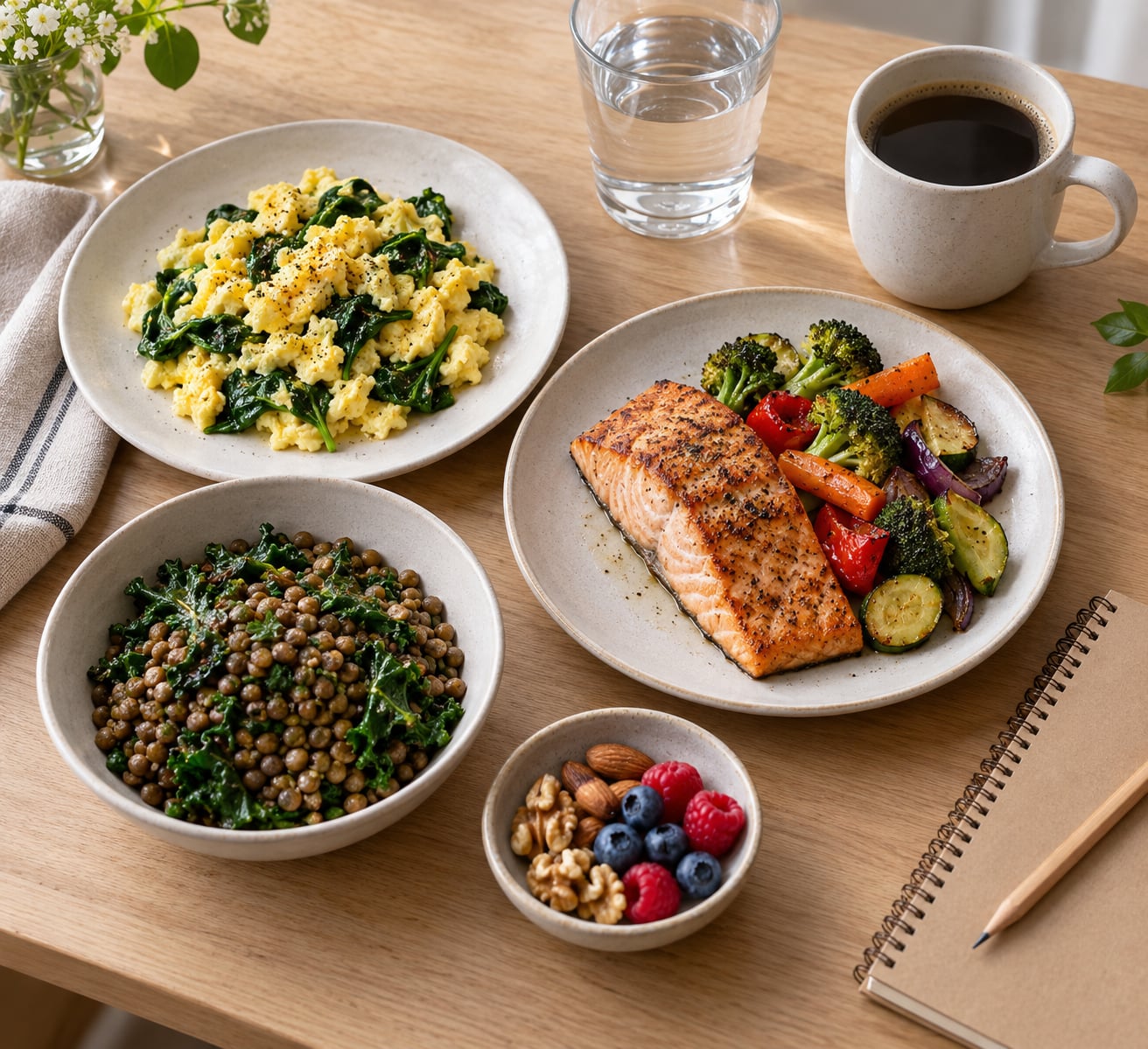
Three or four eggs scrambled with spinach and a slice of wholegrain toast. It is about 30 grams of protein, cooks in ten minutes, and works just as well at 1pm as at 8am. A tofu scramble with mushrooms and a handful of spinach is the plant-based version, with a spoon of tahini for staying power.
Beans on wholegrain toast with an egg, or plain Greek yogurt with berries and walnuts, are the two options people reach for most. Both are affordable and both hold for three hours.
What to eat in your second meal
Make this your largest meal, because it sits in the middle of your day. A palm-sized portion of chicken, salmon or tofu, half a plate of roasted vegetables, and a medium portion of potatoes or brown rice dressed with olive oil. The oil and the carbohydrate are not optional extras here — both blunt the hunger that arrives in the late afternoon.
What to eat in your third meal
Keep it lighter and earlier than your first instinct. An omelette with a handful of greens, a bowl of lentil soup with a side salad, or grilled sardines on a slice of rye all work. If you train in the evening, put the carbohydrate here rather than skipping it.
Snacks that fit inside a short window
Yes, you can snack inside the eating window, and most beginners need one. A small handful of nuts, a piece of fruit with a spoon of nut butter, cheese and cucumber, or a boiled egg are all fine. What you cannot do is graze continuously from 12pm to 8pm — a compressed window only works if your meals still exist as meals.
Foods to limit rather than ban
Nothing is forbidden. But refined carbohydrates, added sugars, trans fats and ultra-processed foods eat the volume your window should be filled with, and they are the most common reason people overeat at the start of the fast. Alcohol is the hardest one, because it disrupts sleep and lowers judgement about how much you just ate. Protein bars marketed for fasting often contain sugar alcohols and enough carbohydrate to be a snack in disguise — read the label.
Low-cost swaps that keep the plate balanced
Dried lentils instead of meat, tinned sardines and mackerel instead of salmon, frozen vegetables instead of fresh, and oats instead of granola. These keep the same protein and fibre structure for a fraction of the cost, and a compressed window is exactly the situation where a good deal on protein matters more than usual.
Sample 12-Hour and 14-Hour Beginner Schedules
These are the schedules that come up most often. For a first attempt, only the first two are worth considering.
| Schedule | Fasting hours | Eating window | Meals that fit | Beginner fit |
|---|---|---|---|---|
| 12:12 | 12 overnight | 8am to 8pm | Skipped breakfast, two or three meals | Easiest starting point |
| 14:10 | 14 hours | 1pm to 9pm, or 10am to 8pm | Two to three meals | Good first upgrade |
| 16:8 | 16 hours | 12pm to 8pm, or 10am to 6pm | Two meals plus one snack | Popular, manageable |
| 18:6 | 18 hours | Six-hour window | Two meals, no snack | Only after 16:8 feels routine |
| 20:4 or 5:2 | 20 hours, or two low-calorie days a week | Four hours, or two normal days | One or two meals, strict | Not a beginner schedule |
Fasting and skipping meals are not the same thing
Skipping breakfast on a normal day means eating again at lunch and dinner, twelve hours later. That is a meal-skipping pattern, not a fast, even though the two often get confused. The difference is what happens between the last meal and the first: nothing at all, not even a snack, in a real fast. Alternating which meal you skip each day is not intermittent fasting either — it is a different pattern with different results.
A sample eight-hour day, hour by hour
This is what a 16:8 window looks like when it is planned rather than improvised. Adjust the clock times to your life, keep the spacing.
- 12:00pm — water, black coffee or unsweetened tea. Nothing to eat yet.
- 1:00pm — first meal: three eggs with spinach and wholegrain toast, plus a handful of berries.
- 2:30pm — sparkling water or tea. This is the point where most beginners get hungry.
- 4:00pm — snack: a small handful of walnuts and a piece of fruit, or plain yogurt.
- 5:30pm — second meal: palm-sized chicken or salmon, half a plate of vegetables, a medium portion of potatoes with olive oil.
- 7:00pm — water or herbal tea. Close the kitchen prep and eat sitting down.
- 7:45pm — optional third meal: lentil soup and a green salad, or an omelette and greens.
- 8:00pm — window closes. Rinse your cup, brush your teeth, go to bed.
How to Manage Hunger, Energy, and Social Events
Everyone finds the first fortnight harder than they expect. The hunger curve is real and it passes. Here is what actually helps.
Hunger in the first two weeks
Drink water before you conclude you are hungry, and keep a large bottle within reach during the fasting hours. Black coffee and unsweetened tea take the edge off for most people. Eating more fibre and more protein in the previous evening’s meal does more good than anything you do during the fast itself. A pinch of salt in the water, or a glass of mineral water, addresses the mild sodium drop that makes hunger feel worse than it is.
Distraction works too, and not as a gimmick. People who keep their fasting hours busy tend to report far less difficulty than people who sit and wait for it. If you are still ravenous after two weeks on a 12-hour window, move your eating window later by an hour rather than extending the fast — a later window usually fixes it.
Low energy, headaches and irritability
Headaches in week one are usually dehydration and caffeine withdrawal, not the fast itself. Drink more, keep your coffee timing the same as it has always been, and expect your energy to settle once the meal is behind you. If you feel genuinely unwell — faint, dizzy, unable to work — that is a signal to eat, not a challenge to push through.
Social events, family meals and shift work
Shift your window, do not cancel dinner. On a day when the family eats at 7pm, open your window at 11am and close it at 7pm. Breakfast becomes an 11am brunch, dinner stays exactly as it was. This is the version that survives a normal life, and it is the version the long-term users on r/intermittentfasting describe.
For a late window on a night-shift roster, eat your main meal before you sleep rather than waking to eat. Drink water through the night and keep the meal moderate, because heavy food right before sleep is what breaks the fast in practice, not the clock.
When to stop and call a doctor
Stop fasting and speak to a healthcare professional if you faint, feel dizzy or confused, find your heart racing, cannot sleep, notice your thinking is foggy, or if fasting is triggering obsessive thoughts about food or body shape. The same applies if you are taking insulin or sulfonylureas, since those medications need adjusting when meals move. Persistent or severe symptoms are a reason to get individual advice, not to try a stricter window.
Common Mistakes Beginners Make on Intermittent Fasting
Almost every bad first month traces back to one of these seven things.
- Fasting with no meal plan. You cannot improvise an eight-hour window three times a week. Fix: decide the three meals before the first fast, and repeat them until the pattern is automatic.
- Starting at 16:8 or 20:4 straight away. The harder version produces the worst results for a beginner. Fix: run 12:12 for a week, then 14:10.
- Treating the first meal as a reward. A large, fast meal after a long fast is the most common route to feeling worse and to rebound overeating. Fix: small and protein-led first, then wait 20 minutes.
- Drinking calories you think are free. Juice, a latte with milk, or several coffees with cream are not fasting drinks. Fix: water, black coffee, unsweetened tea, sparkling water.
- Filling the window with refined carbs and snacks. Grazing crackers, chips and sweets inside the window adds calories without satiety. Fix: three meals with protein in each, and one snack if you need it.
- Going too long too fast. A 20-hour or one-meal-a-day window in week one invites fatigue, poor sleep and quitting. Fix: shorten the fast when hunger, mood or training suffers.
- Expecting supplements to fix the gaps. Fasting plans that require a shelf of pills are a sign the plan is unbalanced. Fix: eat varied whole food; talk to a professional before adding fat-soluble vitamins or any medication-timing changes.
Frequently Asked Questions
What should I eat first when starting intermittent fasting?
Start with something small, protein-led and easy to digest. Plain Greek yogurt with berries, a boiled egg with a few olives, or a short tofu scramble all work. After a 14-hour fast your stomach handles a modest portion better than a large one, and a big first meal is the most common reason beginners feel bloated and tired an hour later. Eat slowly, then wait about 20 minutes before deciding whether you want more.
Can I drink coffee while fasting for weight loss?
Yes — black coffee, tea with no sugar, and sparkling water are all generally considered fasting-friendly because they carry few or no calories. What breaks the fast is the calories: milk, cream, sugar and flavoured syrups add up faster than people expect, and two milky coffees are closer to breakfast. If a small amount of milk in your coffee matters more to you than strict rules, that is a reasonable personal choice, but know which one you are making.
How long should a beginner fast before eating?
Begin at 12 hours and build up slowly. Most people do 12:12 for a week, then 14:10 for another week, and only move to 16:8 if the shorter fasts felt routine. There is no magic number at which fasting suddenly starts working, which is why 16 hours became the popular benchmark — it is simply the point where the eating window is narrow enough to notice. Moving faster than your hunger allows is how people quit in week two.
Can I exercise during an intermittent fasting window?
Yes, and many people train in the morning before their first meal without trouble. Lift heavier sessions and long endurance efforts work better once you have a first meal in you, since your first meal is usually the highest-carbohydrate of the day. If you feel light-headed, dizzy or unusually weak during a session, eat — training quality matters more than sticking to a clock. Anyone with a heart condition or a history of disordered eating should discuss this with a doctor first.
Does intermittent fasting work without counting calories?
For most beginners, yes, and you do not need to count anything at all. A compressed eating window removes opportunities to graze, which quietly reduces intake for a lot of people. The catch is that the window only helps if you eat proper meals inside it rather than several small snacks. If you are not losing weight after a month of steady effort, checking portion sizes on two meals is usually more useful than tracking every gram.
Who should ask a doctor before trying intermittent fasting?
Ask a doctor or registered dietitian first if you are pregnant or breastfeeding, under 18, have type 1 or type 2 diabetes, take insulin or glucose-lowering medication, have a history of disordered eating, or are managing a condition affected by blood sugar or blood pressure. Fasting changes how medications are absorbed, so timing often needs adjusting with a pharmacist. The same applies to anyone who has been told to avoid dietary restrictions by their medical team.
Conclusion
Choose one schedule and write it down — 12:12 or 14:10, with an eating window that fits the meals you already love. Plan three meals with a protein in each, keep water, black coffee and unsweetened tea on hand for the fasting hours, and give yourself two weeks before you judge it.
Start tomorrow, not on Monday. If you take medication or have a health condition, that conversation with a doctor comes first, and persistent or severe symptoms while fasting mean you should stop and get advice.