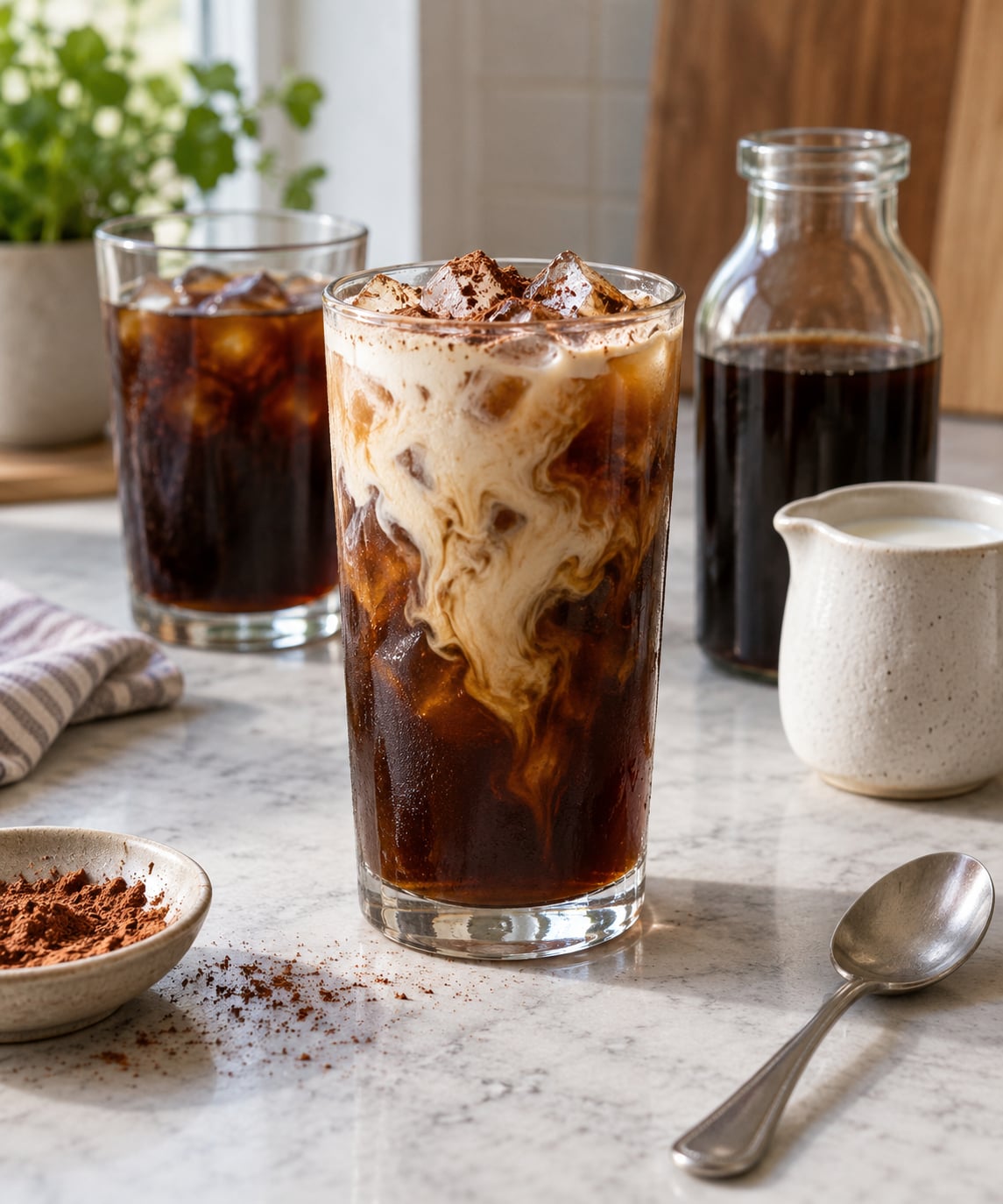
You can make a low calorie iced coffee at home in about two minutes, and a 16-ounce glass built from black coffee, ice, unsweetened almond milk and a zero-calorie sweetener lands right around 35 to 40 calories. The whole trick is knowing where the calories come from: black coffee has almost none, so the milk, the sweetener and the syrups are doing nearly all of the damage in a café version.
Compare that with what the same drink costs when you buy it. A Starbucks 2% iced caramel latte sits just under 220 calories, and most sugary cold coffees land somewhere between 200 and 400. Liquid calories also fill you up far less than solid food, which is how they quietly eat a big slice of a calorie deficit.
Nothing below needs a blender or a machine. A tall glass, a spoon and a mug of coffee you already brewed will do.
Table of Contents
- What You Need to Make a Low Calorie Iced Coffee at Home
- Step-by-Step
- 1. Choose a Low-Calorie Coffee Base
- 2. Add Ice and a Light Creamer
- 3. Sweeten Your Low Calorie Iced Coffee Without the Sugar Load
- 4. Flavor It with Low-Calorie Extras
- 5. Shake or Stir Until Smooth
- 6. Check the Calories and Adjust Your Next Glass
- Common Mistakes
- Sweetener straight into cold coffee
- Assuming the café version is already light
- Letting the ice dilute it
- Using cream and full-fat milk for mouthfeel
- Pouring a 24-ounce glass
- Frequently Asked Questions
- How many calories are in a low calorie iced coffee?
- What is the best milk or creamer for a low calorie iced coffee?
- Can I make low calorie iced coffee without sugar?
- Does cold brew or regular iced coffee have fewer calories?
- Can prepared iced coffee be stored in the refrigerator?
- Why does my homemade iced coffee taste different from a café drink?
- Conclusion
What You Need to Make a Low Calorie Iced Coffee at Home
You need four things: a coffee base, ice, a low-calorie milk and a zero-calorie sweetener. Everything past that is flavour, and flavour is where most of the accidental calories hide.
- Coffee base (1 cup / 240ml): cold brew concentrate diluted with water, brewed coffee cooled for two hours, one or two espresso shots poured over ice, or instant coffee dissolved in a splash of hot water then cooled. If you are cutting caffeine or want a no-coffee version, cold brew tea or a chilled herbal infusion works the same way and costs about the same.
- Ice (1 to 1.5 cups): standard cubes are fine. Smaller chips or crushed ice melt slower, which matters more than most people expect.
- Low-calorie milk (60 to 120ml): unsweetened almond milk is the usual pick. Skim milk is the lowest-calorie dairy option.
- Zero-calorie sweetener (1 to 2 teaspoons or pumps): liquid stevia or monk fruit drops, or a sugar-free vanilla or caramel syrup. Liquid forms dissolve straight into cold coffee; powders do not.
- Optional flavour: half a teaspoon of vanilla extract, unsweetened cocoa powder, cinnamon, or the zest of one lemon or orange.
Two things decide the final number: the brand and the pour size. Milk labels differ between products and syrup formulas get changed, so treat any figure here as a typical range and check the label on what is actually in your cupboard. A tablespoon of the wrong thing is 50 calories, and a tablespoon is not much coffee.
Step-by-Step
Six steps, and the active work is about two minutes. The slow part, if you brew at home, happens well before the glass.
1. Choose a Low-Calorie Coffee Base
Start with the strength you want and control the serving size, because the base is where you decide how much room is left for everything else. Cold brew concentrate is the most forgiving option: brew it at roughly a 1:5 to 1:7 ratio of coffee to water, then dilute it with an equal amount of water or milk. A stronger concentrate lets you pour in milk without the drink tasting thin, which is the single most common complaint about low-cal versions.
Brewed coffee cooled in the fridge for two hours works just as well, espresso gives you a small concentrated serving with almost no volume, and instant coffee is the fastest route when you have nothing brewed. Black coffee of any kind sits at roughly 0 to 5 calories per cup, so whatever you choose is doing your weightlifting for free. Aim for a finished glass of 12 to 16 ounces and stop there.
2. Add Ice and a Light Creamer
Fill a tall glass about halfway with ice, then pour the coffee over it. Freezing cold brew concentrate into ice cube trays is the most-repeated trick in coffee forums, and it works: the drink keeps its strength as the ice melts instead of getting thinner and weaker, so you never feel the urge to add more syrup to compensate.
Add 60 to 120ml of milk and pour it slowly down the side of the glass so it layers over the ice rather than shocking it. Keep milk to roughly a third of the finished drink or less. Past that point, creaminess starts buying you calories rather than flavour.
3. Sweeten Your Low Calorie Iced Coffee Without the Sugar Load
Add the sweetener last, a little at a time, and taste after each pump. Liquid drops and sugar-free syrups mix into cold coffee without any trouble, so they are the easy choice.
Granulated stevia, erythritol and monk fruit powders are the trap. They will not dissolve in a cold drink, and the gritty layer at the bottom of the glass is the most widely reported home failure. Stir the powder into a tablespoon of hot coffee first, or dissolve it in the last warm splash before the glass goes cold.
Sugar moves the number fast. One tablespoon of white sugar is roughly 50 calories, and bottled caramel or vanilla syrups commonly run 60 to 120 calories a serving at two pumps. If your drink tastes thin, more sweetener is usually the wrong fix.
4. Flavor It with Low-Calorie Extras
Vanilla extract and cinnamon give you a mocha-adjacent profile for about 12 calories in total. Unsweetened cocoa powder stirred into the coffee before the milk goes in adds a chocolate note for a couple of calories and a few grams of fibre. An espresso shot plus one pump of sugar-free caramel syrup makes a caramel-flavoured version that still stays in the low tens.
Cold brew with a strip of orange or lemon peel, or a pinch of nutmeg over black coffee, are the other combinations worth knowing. Leave out whipped cream, full-fat cream, honey and maple syrup if the calorie count matters, since those are what push a drink from a drink into a dessert.
5. Shake or Stir Until Smooth
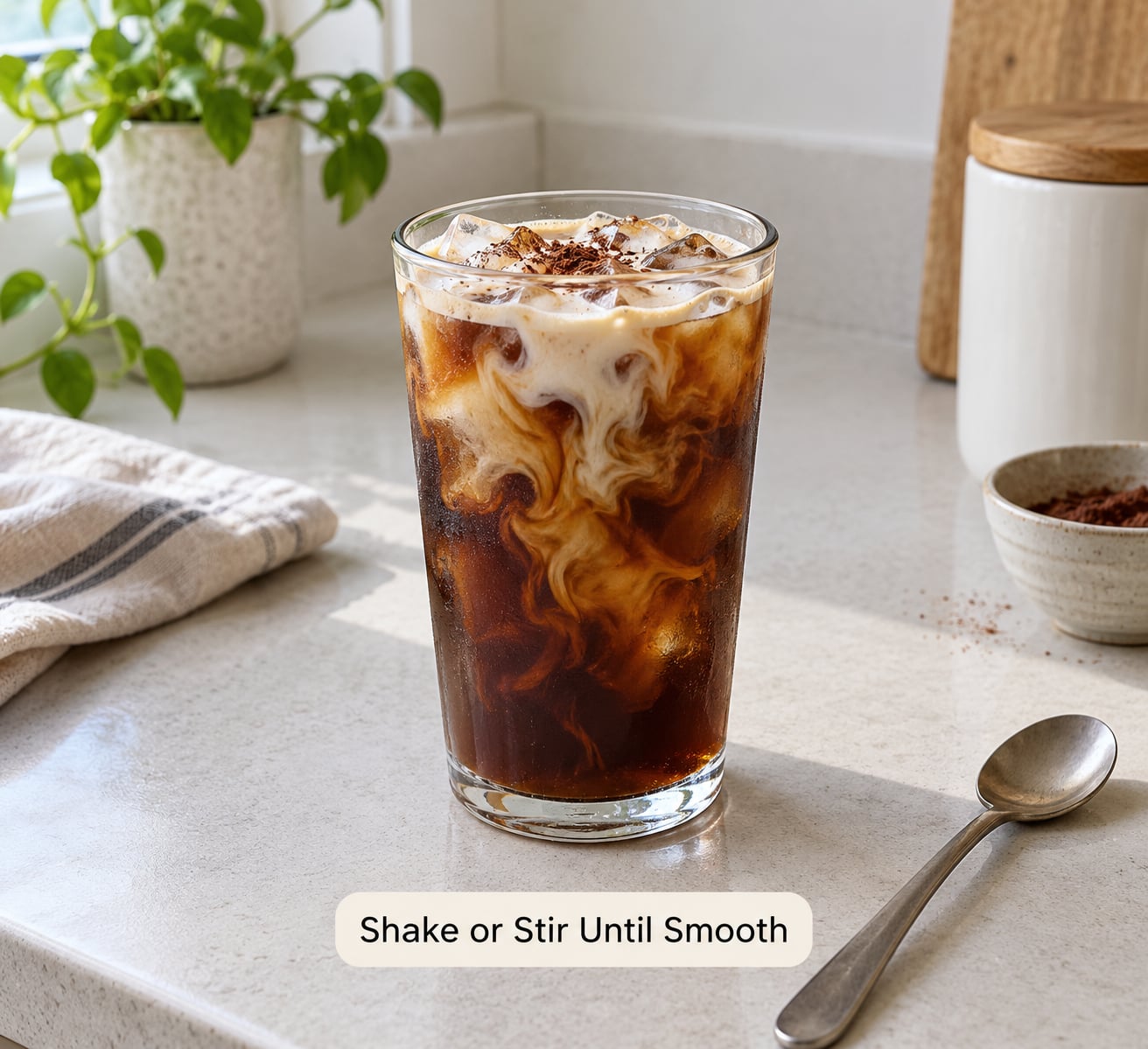
Stir from the bottom of the glass for about ten seconds, lifting the ice through the milk as you go, and the drink mixes evenly instead of separating into a dark layer under a pale one. A mason jar with a lid, shaken for fifteen seconds, does the same job faster and whips a little air into it, which makes the texture read as creamier than it is.
If you would rather not have ice in the drink at all, blend the same ingredients for about twenty seconds with 1 cup of ice, then strain it. Blended versions get better reviews than poured ones for a good reason: the texture hides the absence of fat and sugar better than a clear glass ever will.
6. Check the Calories and Adjust Your Next Glass
Add up the label numbers rather than guessing. A typical build looks like this: black coffee 0 to 5 calories, 60ml of unsweetened almond milk 15 to 20, one pump of sugar-free syrup 0 to 5, half a teaspoon of vanilla extract about 12. That is roughly 35 calories for the whole glass, and the same arithmetic works for any combination you prefer.
When a glass comes in over your target, change one thing at a time in a fixed order. Drop the sweetener first, then cut the milk back to 60ml, then dilute the base with more water and ice. Changing all three at once means you never learn which one you actually needed to give up. Keep a note of the mix you liked, because a repeatable recipe is worth more than a lower number.
Common Mistakes
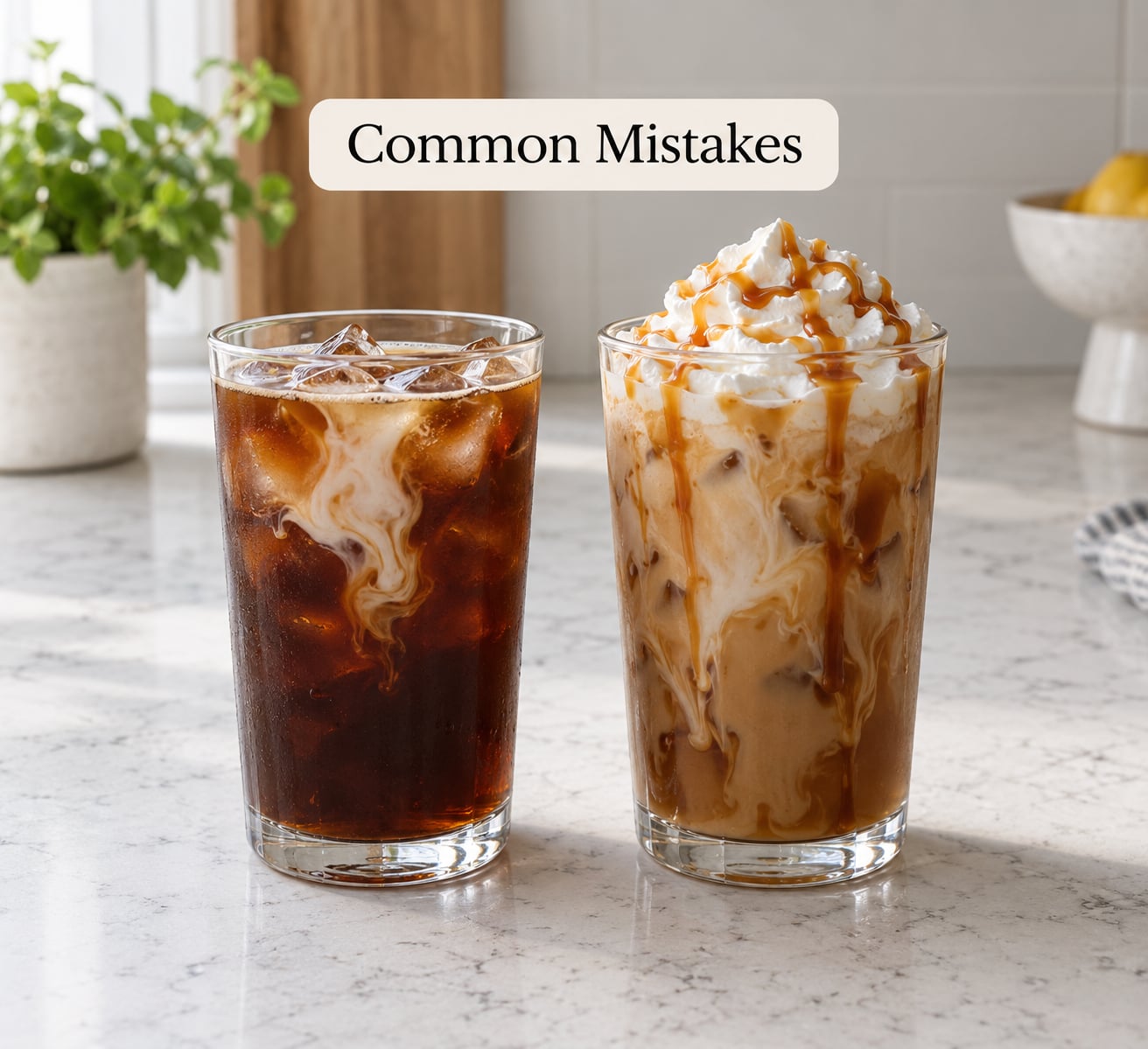
Most high-calorie home iced coffees are not built that way on purpose. They happen, and each one has a quick fix.
Sweetener straight into cold coffee
It sits at the bottom undissolved, tastes bitter at the top, and people compensate by adding more. Use liquid drops instead, or dissolve the powder in a tablespoon of hot coffee first. A liquid sweetener kept in the fridge is the version that survives week three.
Assuming the café version is already light
A drink described as skinny still lands near 220 calories, because the sugar in the syrup does not shrink just because the name did. Order it with no syrup, a non-dairy milk and an extra shot, or make the same thing at home for a fraction of the calories.
Letting the ice dilute it
A drink that tastes weak at the bottom pulls you toward more syrup, which is exactly backwards. Use coffee ice cubes, use smaller chips, or add fresh ice at the end instead of letting the first batch sit and melt.
Using cream and full-fat milk for mouthfeel
One tablespoon of whipped cream or heavy cream is around 80 to 100 calories, and it is the fastest way to lose a low-calorie drink. Unsweetened almond milk plus a shake in a lidded jar gives you a similar weight and texture for a fraction of it. Oat milk is the accepted step up when almond tastes too thin, and it costs roughly 30 calories more per 120ml.
Pouring a 24-ounce glass
Double the milk and the ice and you double the calories, even though the coffee is unchanged. A 12 to 16-ounce tall glass keeps the numbers where you planned them, and a second serving later in the day is easy to make from the same batch.
Frequently Asked Questions
How many calories are in a low calorie iced coffee?
A homemade iced coffee built from black coffee, ice, 60ml of unsweetened almond milk and a zero-calorie sweetener usually lands between 30 and 45 calories per 16-ounce glass. Black coffee is near zero, the milk contributes 15 to 20, and a pump of sugar-free syrup adds 0 to 5. Flavours matter: vanilla extract adds about 12 calories per teaspoon.
What is the best milk or creamer for a low calorie iced coffee?
Unsweetened almond milk is the lowest-calorie choice that still reads as creamy rather than watery, at roughly 15 to 20 calories per 60ml. Skim milk is the lowest dairy option, around 40 calories per 120ml. Oat milk is the tastier step up if almond feels thin, costing about 30 more calories. Avoid cream and full-fat dairy, which add 80 to 100 calories a tablespoon.
Can I make low calorie iced coffee without sugar?
Yes, and it is the version most people settle on. Use liquid stevia or monk fruit drops, or a sugar-free syrup, and sweeten to taste rather than to a fixed number of pumps. Granulated sweeteners do not dissolve in cold coffee, so stir them into hot coffee first or use a liquid form. Nothing about the drink needs sugar to work.
Does cold brew or regular iced coffee have fewer calories?
Barely, and the difference is negligible. Plain black coffee of any strength is close to zero calories, whether it is cold brew concentrate, drip coffee cooled down, espresso or instant. Strength changes flavour, not calories. The calories come entirely from what you add afterwards, which is why a diluted concentrate lets you pour in more milk without the drink going thin.
Can prepared iced coffee be stored in the refrigerator?
Store it in a sealed container in the fridge and drink it within 24 to 48 hours, stirring before each pour because the ice and liquid separate as they sit. A batch cold brew concentrate keeps considerably longer, usually one to two weeks refrigerated in a closed jar. Leave prepared drinks out of the fridge for no more than about two hours in warm conditions.
Why does my homemade iced coffee taste different from a café drink?
Three things. Cafés pour syrups in multiple pumps, and a drink with no sugar reads as thin until you add something with body to it. They also pulse the drink with a shaker, which makes it frothier and fuller in the mouth. Blending at home for twenty seconds gets you most of the way there for none of the extra calories.
Conclusion
Start with the simplest version: brew a measured 240ml serving of black coffee, pour it over ice, add a 60ml splash of unsweetened almond milk, then sweeten and flavour only to taste. That single glass is about 35 calories, takes two minutes, and tells you quickly where your own version needs to sit.